US Military Imposes Naval Blockade on Iranian Ports and Launches Fresh Wave of Strikes
Washington, July 15, 2026
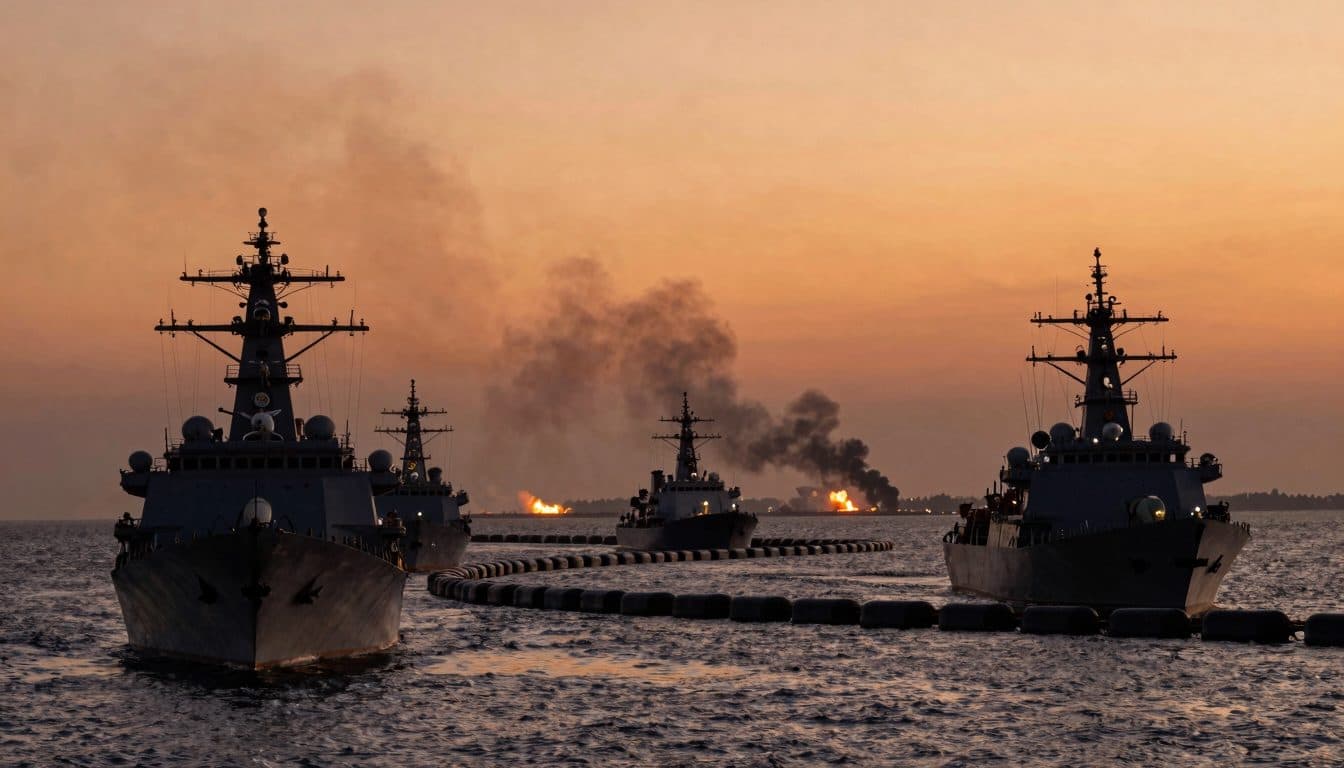
AI-generated image (z-image via Kie.ai)
Summary
On Tuesday evening (local time), US forces launched a new wave of strikes on Iranian targets and simultaneously imposed a naval blockade on Iranian ports and coastal areas. US President Donald Trump also threatened Iran with the destruction of power plants and bridges if Tehran did not return to the negotiating table.
Washington, July 15, 2026
On Tuesday evening (local time), US forces flew a new wave of strikes on Iranian targets and, in parallel, put a naval blockade on Iranian ports and coastal areas into effect.
According to Centcom, the US regional command responsible for the region, the wave of strikes lasted around seven hours and ended on Wednesday morning German time. The naval blockade had been initiated at 10:00 p.m. CEST (4:00 p.m. US Eastern Time), it was reported. Centcom announced the measure on the platform X.
According to US accounts, dozens of military targets — including missile positions and defense systems — were struck near the Strait of Hormuz and in Iranian coastal areas. Iranian media reported several explosions in different locations across the country overnight into Wednesday. The island of Hengam, for example, was hit by US ordnance.
Trump's Threats Against Iranian Infrastructure
US President Donald Trump threatened Iran with strikes on civilian infrastructure in an interview with the US broadcaster Fox News. "Nächste Woche wird es für sie richtig schlimm. Nächste Woche sind die Kraftwerke dran. Nächste Woche sind die Brücken dran. Wir legen alle Kraftwerke in Schutt und Asche. Wir werden alle ihre Brücken lahmlegen – es sei denn, sie verhandeln", Trump said. Back in April he had threatened to destroy all bridges and power plants within a matter of hours, but at the time did not follow through on his threat.
According to Trump's account, the wave of strikes and the renewed blockade are linked to Iranian attacks on commercial vessels in the Strait of Hormuz. According to US accounts, the Iranian side attacked seven commercial vessels over the past week. Nearly a dozen crew members were reported killed, injured, or missing.
Justification: Attacks on Commercial Ships
According to US accounts, the new strikes were intended to prevent Iranian attacks on commercial ships in the Strait of Hormuz. The US military also cited the protection of civilians as a reason for its operations. Trump said US forces were acting "sehr behutsam mit der Zivilbevölkerung um".
The naval blockade is intended to prevent ships from heading to or departing from Iranian ports and coastal areas. The US had already enforced such a naval blockade during the Iran war from mid-April, lifting it in mid-June as part of a framework agreement with Tehran.
Blockade and Ceasefire
The background is a renewed breach of the already fragile ceasefire. Trump had declared the ceasefire in place since April — which had already been broken numerous times — to be over last week and subsequently announced further hard strikes on the Islamic Republic. He cited an attack by Iranian forces on ships in the Persian Gulf as the reason. He also accused Iran of repeatedly breaking agreements.
In mid-June, Washington and Tehran, in an effort to end the war, agreed on a framework agreement intended to serve as a starting point for deeper negotiations. The agreement, signed under Pakistani mediation, set a deadline of 60 days for a final peace settlement. However, the talks had already stalled before the latest strikes.
Framework Agreement Under Pakistani Mediation
Trump announced that combat operations would continue "bis ich sage, dass es genug ist". In his view, negotiations with the Iranian leadership were only possible through "militärische Stärke". According to him, US representatives were still in contact with Tehran shortly before the Fox News interview.
Parallel to the US strikes, the US ally Kuwait reported Iranian drone attacks that led to the activation of air defenses. As in previous nights, there were also retaliatory strikes by Iran. The Iranian Revolutionary Guard confirmed attacks on US bases in Kuwait and Jordan. Iranian attacks on Kuwait and Bahrain injured four people.
Retaliation and Affected Gulf States
Air-raid sirens also sounded again in Bahrain, another Gulf state allied with the US. In both countries, the population was called on to seek shelter. US military bases are located in Kuwait, Bahrain, and Jordan.
In the interview, Trump reaffirmed that the US would hit Iran "sehr hart" three nights in a row: "Wir werden sie heute Nacht sehr hart treffen, wir werden sie morgen Nacht sehr hart treffen. Und in der Nacht danach auch." Addressing Tehran, he added: "Ihr solltet besser eine Einigung erzielen. Es wird keiner von euch übrig bleiben."
In the same interview, Trump also made the case for negotiations and demanded a "fairer und offener Zugang zur Straße von Hormus". The strait is considered a central route for the global trade in oil and liquefied gas. Back in April, Trump had tried to pressure Tehran into opening the Strait of Hormuz with a threat; at the time, Iran had blocked it with attacks and threats.
Background: The War Since February 28
There is also criticism of the course of the war on the US political side. According to reports, Trump urged Israeli Prime Minister Benjamin Netanyahu to withdraw from Syria and Lebanon. The Israeli prime minister, for his part, warned Iran against further attacks.
The US and Israel had jointly begun the war on February 28. According to Centcom, the latest US strikes on Iranian targets lasted a total of seven hours and were part of a broader wave of escalation. Similar attacks had already taken place on previous nights.
As of now, it is unclear whether the new wave of strikes and the reinstated naval blockade will get the negotiations between Washington and Tehran, which have been deadlocked for weeks, moving again. Pakistani mediation and the framework agreement reached in mid-June had already lost momentum before the latest strikes.
Outlook for Energy and Negotiations
The developments are also likely to have an impact on international energy markets. Should the blockade of the Strait of Hormuz persist, rising prices for oil and liquefied gas are probable. Several US allies in the Gulf region are directly affected and have already taken protective measures for the civilian population.
The reports on the renewed escalation were disseminated, among others, by Deutschlandfunk on July 15, 2026. The APA also dated its report to 15.7.2026. Trump had already announced the resumption of the naval blockade on Monday.
Questions & Answers
When and why did the US military reimpose the naval blockade on Iranian ports?
US forces reimposed the naval blockade on Tuesday evening (local time) at 10:00 p.m. CEST, after US President Trump had declared the ceasefire in place since April to be over the previous week. The US cited Iranian attacks on commercial ships in the Strait of Hormuz as the trigger.
What targets did the US military strike in the latest wave of attacks?
According to Centcom, dozens of military targets near the Strait of Hormuz and in Iranian coastal areas were struck, including missile positions and defense systems. Iranian media reported explosions at multiple locations, including on the island of Hengam.
What did Donald Trump threaten Iran with in the Fox News interview?
Trump announced he would destroy power plants and bridges in Iran if Tehran did not return to the negotiating table. He also said combat operations would continue, "bis ich sage, dass es genug ist".
US Naval Blockade Iran: Wave of Strikes and Trump's Threats | allfacts360