
Graz, July 16, 2026
A foldable and tracking solar system from TU Graz automatically follows the sun and delivers around 40 percent more electricity on average than conventional, fixed-mounted photovoltaic modules.
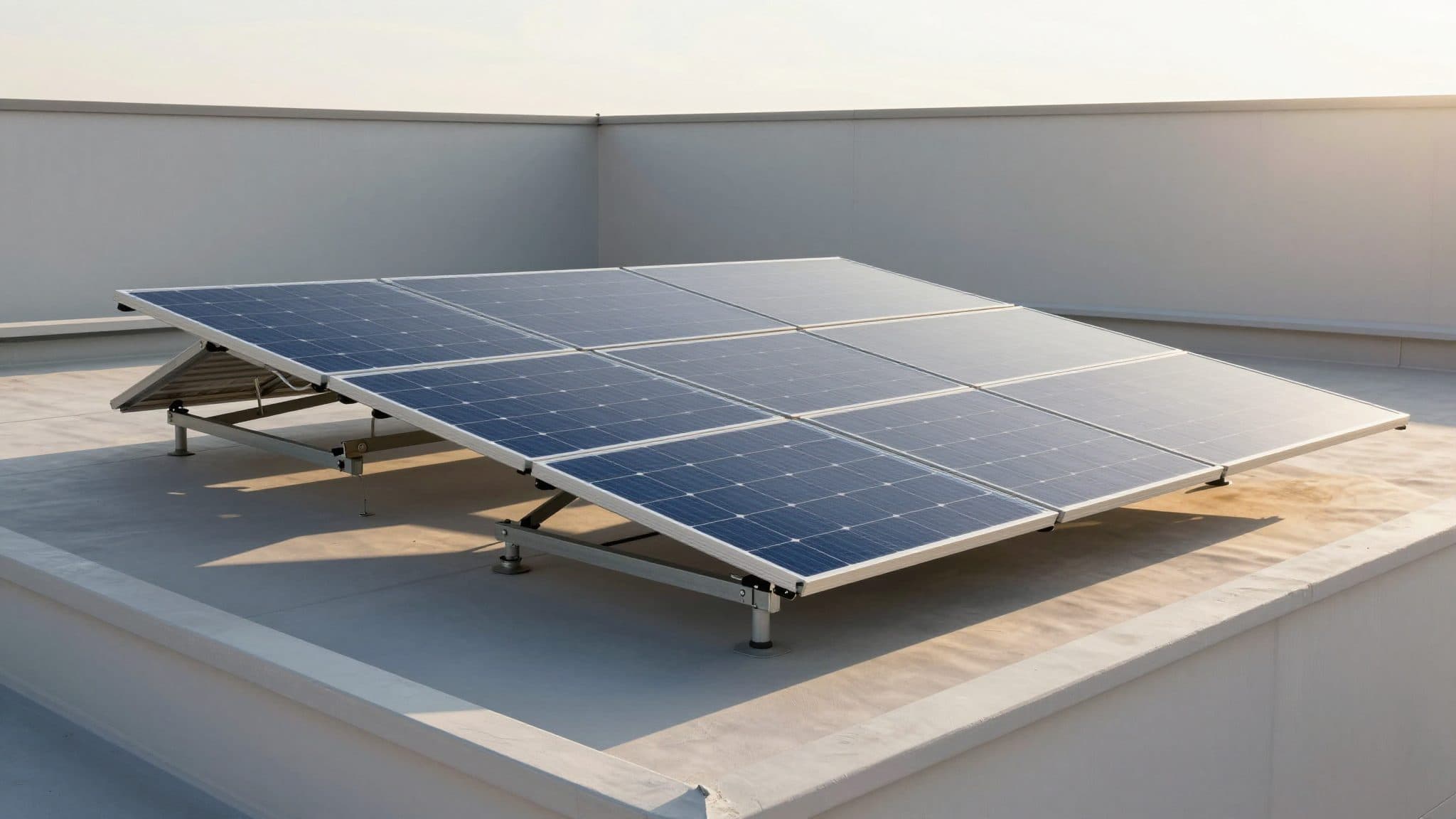
A demonstration system with a peak output of 1.8 kilowatts has been installed for several months on an office building at TU Graz's Inffeldgasse campus, designed to utilize sunlight significantly more efficiently than classic rooftop systems. The system can actively orient its modules toward the sun and fold them together when needed to protect them from extreme weather.
Patented Actuator as the Core Component
According to the research team, the core of the development is a patented linear actuator. It performs two tasks simultaneously: it aligns the modules toward the sun and folds them together when needed. Through this dual function, installation and operating costs are reduced, improving economic viability, as explained by Armin Buchroither, group leader at the Institute of Electrical Measurement and Sensor Technology at TU Graz.
Compared to fixed-installed PV modules, the tracking and foldable solar system delivers an average surplus yield of just under 40 percent, according to the team's measurements. On individual days, up to 56 percent more output was achieved, as the researchers observed at their test installation.