US imposes new tariffs against 60 trading partners – EU reacts with incomprehension
Washington, July 25, 2026
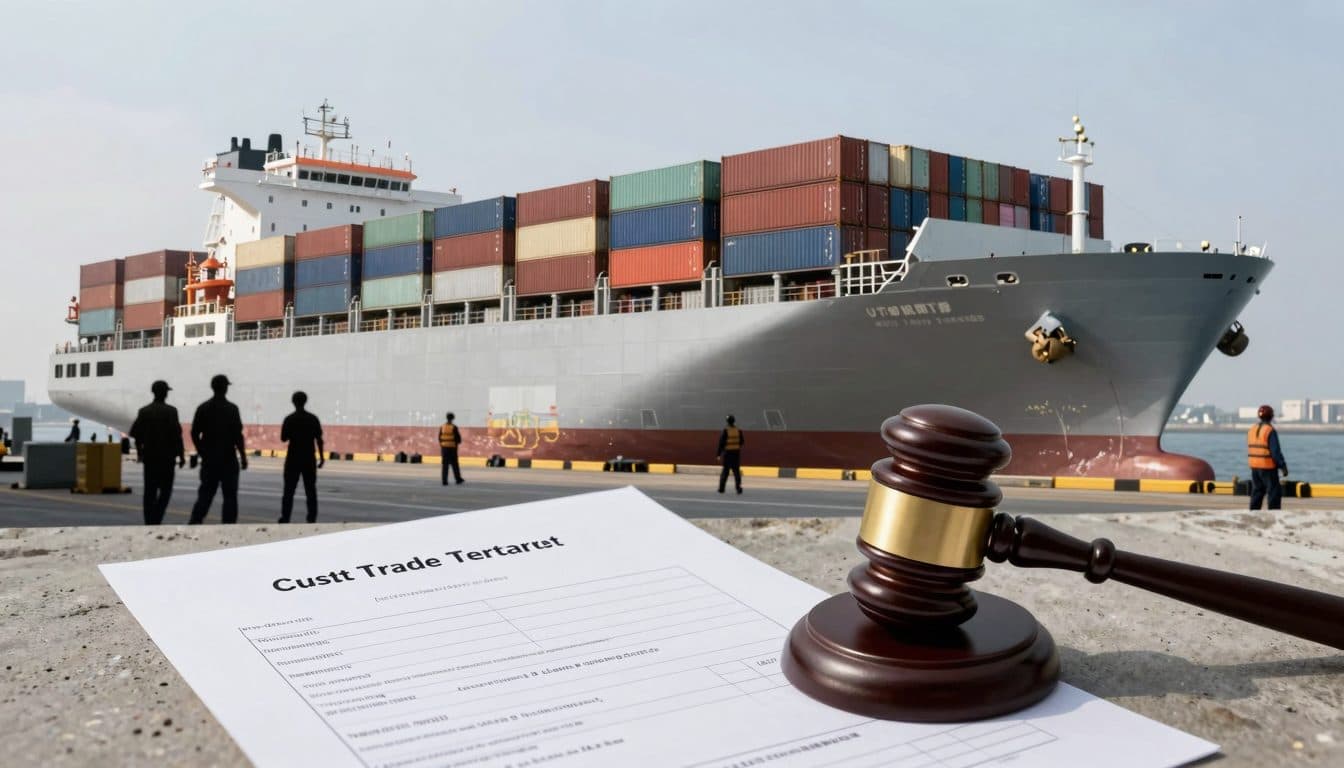
AI-generated image (z-image via Kie.ai)
Summary
The US government put new import tariffs on more than 60 trading partners into effect overnight into Friday. A rate of 10 percent applies to the EU, and 12.5 percent to countries such as China, Japan, and Switzerland – justified by allegedly insufficient measures against forced labor.
Washington, July 25, 2026
The US government put new import tariffs on more than 60 trading partners into effect overnight into Friday, amounting to 10 or 12.5 percent depending on the country and based on Section 301 of the Trade Act of 1974.
What is new since July 24
Update from July 25, 2026: The US government has put its new import tariffs against more than 60 trading partners into effect as announced. EU Foreign Affairs Commissioner Kaja Kallas expressed surprise on the sidelines of the ASEAN meeting in Manila: "Das haben wir nicht erwartet," she said. A European Commission spokesperson stated: "Die EU hat ihren Teil der Abmachung bereits erfüllt."
What is new since July 24
Since the last reporting, reactions from Europe in particular have intensified. EU Foreign Affairs Commissioner Kaja Kallas said on the sidelines of the ASEAN meeting in Manila: "Das haben wir nicht erwartet" and "Das kann man für die Europäische Union nicht sagen." A spokesperson for the Brussels authority emphasized: "Die EU hat ihren Teil der Abmachung bereits erfüllt." The EU is thereby making clear that it considers the "Turnberry Deal" agreed with the US last year to have been fulfilled – and views the new tariffs as a breach of this bilateral agreement.
Background: The "Turnberry Deal" with the EU
It also became known that the new tariffs are no longer based on Section 122, but on Section 301 of the Trade Act of 1974. This section allows punitive tariffs when a country applies "unjustifiable, unreasonable, or discriminatory" trade practices – provided the government has previously solicited comments and enabled hearings. According to Trade Representative Jamieson Greer, "more than 1,600 written comments" were reviewed and "more than 100 witnesses" were heard publicly.
Background: The "Turnberry Deal" with the EU
The new legal basis: Section 301
The basis of EU-US trade is a bilateral agreement that European Commission President Ursula von der Leyen and US President Donald Trump reached in August 2025 to avert a trade war. This is the bilateral trade agreement between the EU and the US also known as the "Turnberry Deal." Under this deal, the maximum tariff on goods from the EU is 15 percent.
For around 93 percent of EU exports to the United States, tariffs of a maximum of 15 percent have applied to date, as an EU official confirmed. For the remaining products, however, the rate is higher – for example, cheese, which is effectively tariffed at just under 25 percent. The EU considers itself protected by the "Turnberry Deal" and views the new US tariffs as a violation of the agreement.
What is known about the tariffs
The new legal basis: Section 301
Instead of Section 122, Trump is now relying on Section 301, which gives the government the ability to act in cases of demonstrably "unjustifiable, unreasonable, or discriminatory" trade practices. This allows the government to invoke the same 1974 trade law to impose new tariffs based on a different section.
Justification: Forced labor
A prerequisite for tariffs under Section 301 is that the government has previously solicited comments and enabled hearings. This was most recently the case with Brazil, when Greer announced a 25 percent tariff on certain goods from the South American country. Section 301, which Greer and Trump are now using, gives the American president the right to impose punitive tariffs if he can prove unfair trade practices by another country.
What is known about the tariffs
Timing and entry into force
Depending on the trading partner, the investigations had resulted in tariffs of either 10 or 12.5 percent as an "appropriate rate," according to the Trade Representative's notice. According to information from the White House, a general rate of 10 percent will apply to the European Union going forward. For China, Japan, South Korea, and dozens of other countries, the higher tariff rate of 12.5 percent was announced.
According to the information, whether 10 or 12.5 percent is due also depends on whether trading partners effectively enforce bans on goods produced with forced labor. The US applies the somewhat lower rate of 10 percent to 19 economies. For Switzerland, the higher tariff rate of 12.5 percent generally applies according to documents – Switzerland belongs to the large group of countries that must now pay 12.5 percent.
Legal uncertainty
Justification: Forced labor
In early June, the US had threatened tariffs against 60 economies because they had failed to prevent imports of products from alleged forced labor or had not sufficiently reviewed existing import bans. According to its own statements, the US government concluded after a weeks-long investigation that around 60 trading partners are allegedly taking insufficient action against forced labor.
International reactions
To justify the announcement, it was stated that the affected states – which account for 99 percent of US imports – had not sufficiently enforced bans on goods produced under forced labor. According to US figures, the new tariffs affect 99.4 percent of all imports. US Trade Representative Jamieson Greer stated: "Die Vereinigten Staaten haben seit fast einem Jahrhundert ein Verbot von Waren aus Zwangsarbeit und setzen dieses konsequent durch. Es ist höchste Zeit, dass unsere Handelspartner dasselbe tun."
Timing and entry into force
Criticism from Germany
The tariffs take effect from Friday morning at 06:01 German time (midnight US East Coast time). They replace a previous transitional tariff of 10 percent, which the government was legally required to lift again after 150 days. Since it could impose these 10 percent tariffs without the consent of the US Parliament for a maximum of 150 days, Friday would have marked the end of that.
Economic impact
Exempted are products that were already loaded onto a ship beforehand, are on the last leg of transport to their destination, and arrive before July 28. For goods on which more than 12.5 percent was already due, the tariff level does not change.
Legal uncertainty
The American president's two previous attempts to push through a protectionist new tariff regime failed in court: In February, the Supreme Court declared Trump's sweeping 2025 tariffs – which he had based on the IEEPA emergency law – illegal. The Supreme Court had already declared the reciprocal tariffs Trump announced in early April 2025 unlawful, whereupon the US government promptly introduced the previously valid global special tariff of ten percent.
In May, a trial-level trade court found that the transitional tariffs expiring overnight into Friday were also unlawful: Section 122 of the Trade Act of 1974, which Trump used for this purpose, only permits tariffs in the event of a serious balance-of-payments crisis. Wifo chief Gabriel Felbermayr said on this: "Man kann sich nicht vorstellen, dass es vor Gerichten halten kann."
International reactions
Australia's Trade Minister Don Farrell stated on Friday: "Diese Zölle sind ungerechtfertigt und stehen im Widerspruch zu unserem Freihandelsabkommen." The Japanese government expressed "Bedauern" and emphasized: "Japans Industrie und Handel richten sich nach internationalen Regeln." New Zealand's Prime Minister Christopher Luxon called Washington's announcement "äußerst enttäuschend" and said: "Die US-Untersuchung hat keine stichhaltigen Beweise für die Behauptungen im Zusammenhang mit Zwangsarbeit geliefert."
Canada announced that it would examine possible countermeasures should the tariffs take effect as planned. Prime Minister Mark Carney said: "Wir intensivieren unsere Handelsverhandlungen mit den USA und werden nicht zögern, unsere Interessen zu verteidigen, wenn es sein muss." Brazil described the tariffs as "willkürlich und ungerechtfertigt" and announced that it would activate its reciprocity law, which could enable retaliatory tariffs.
Criticism from Germany
The German foreign trade association BGA sharply criticized the US government's approach: "Der Kampf gegen Zwangsarbeit darf nicht als Vorwand dienen, um längst geplanten Protektionismus nachträglich zu rechtfertigen." BGA President Dirk Jandura stated: "Die EU hat ein umfassendes Verbot von Produkten aus Zwangsarbeit beschlossen und bereitet dessen Umsetzung vor."
Economic impact
Experts assume that it is above all Trump's fellow citizens who are the ones suffering: The nonpartisan think tank Tax Foundation estimates that US households will bear an additional burden of $700 on average this year due to the tariffs – the Tax Policy Center puts the burden even higher at $960. Ryan Mulholland of the Center for American Progress stated: "Die beispiellose und chaotische Zollpolitik der Trump-Regierung hat der US-Wirtschaft schweren Schaden zugefügt."
Mulholland criticized that the United States' trade deficit in May stood at $77.6 billion – 41 percent higher than at the time of the tariff announcement. It is conceivable that Trump will follow up with further tariffs under Section 301 as early as next week, which are distributed less evenly. In addition, Trump this week signaled 100 percent tariffs on generic drugs through 2028.
Questions & Answers
What is the "Turnberry Deal" between the EU and the US?
The "Turnberry Deal" is a bilateral trade agreement between the EU and the US
Trump tariffs 2026: New duties against 60 countries | allfacts360