
Washington/Tehran, July 12, 2026
The US Central Command (Centcom) launched a third wave of strikes against Iran overnight into Sunday and, according to its own statements, hit approximately 140 military targets, after which the Iranian Revolutionary Guards (IRGC) declared the Strait of Hormuz closed and air raid sirens were triggered in several Gulf states.
Third wave of strikes within a week
The escalation overnight into July 12, 2026 marks the provisional climax of a week in which tensions between Washington and Tehran have steadily intensified despite a framework agreement reached in mid-June. The US Central Command (Centcom) announced that the armed forces had launched the third wave of strikes against Iran this week at 7:15 PM Eastern Time. Approximately 140 military targets were hit in total, including missile and drone positions, naval facilities, ammunition depots, communications networks, and coastal surveillance installations.
Over the three nights of strikes this week, more than 300 targets have been hit, Centcom added. The strikes were carried out on the orders of US President Donald Trump. US Secretary of Defense Pete Hegseth wrote on the platform X: "Jetzt muss er dafür bezahlen." According to the department, the wording referred to a diplomatic opportunity missed by Iran from Washington's perspective.
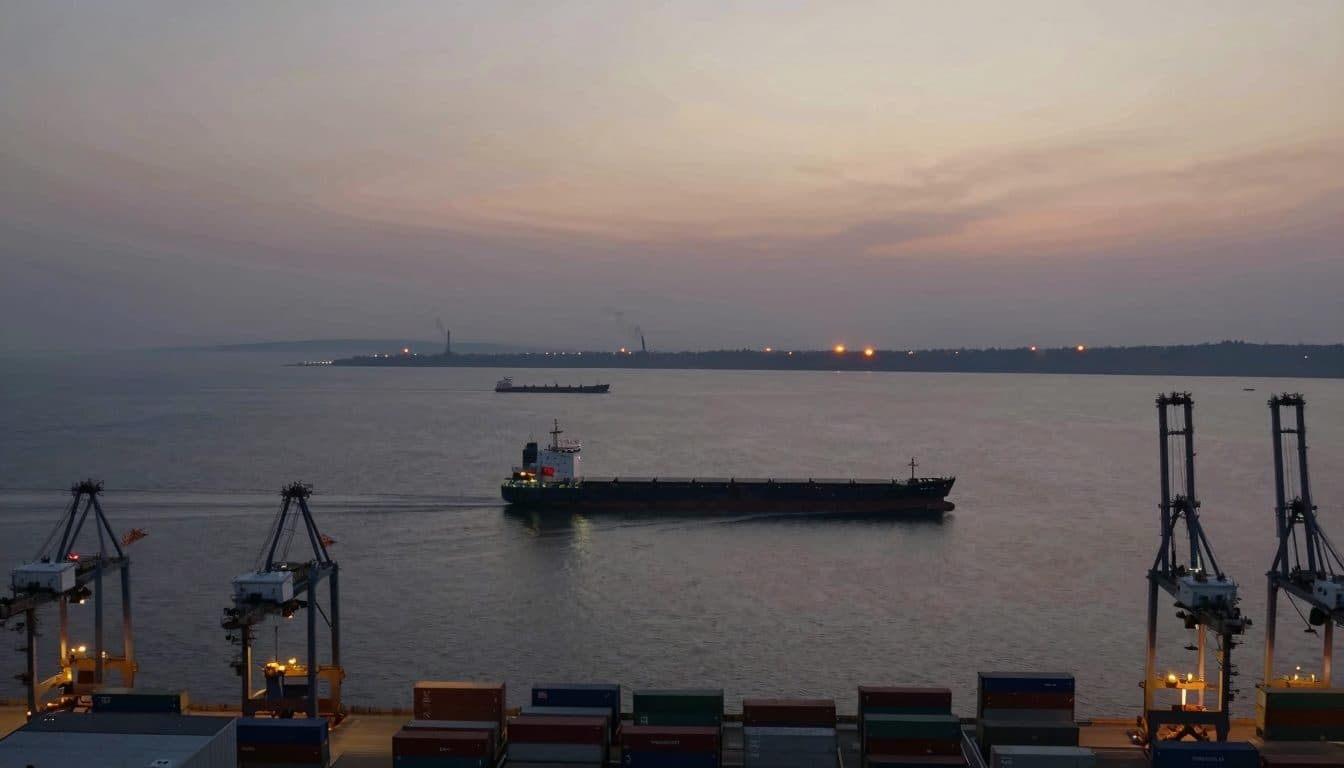
According to Centcom, the trigger for the latest wave was an attack by the Iranian Revolutionary Guards on the container ship "GFS Galaxy," sailing under a Cypriot flag, in the Strait of Hormuz. Military authorities reported that the ship was damaged at the stern nine nautical miles east of Oman, causing a fire. The 300-meter-long ship is unable to continue its voyage due to an onboard fire and significant damage to the engine room.
Ship under Cypriot flag burning
According to the British maritime trade security authority UKMTO, the crew has abandoned the burning ship, and the seafarers are in a lifeboat. One civilian crew member of the "GFS Galaxy" is missing according to Centcom. The IRGC Navy stated that a ship named M/V GFS Galaxy had taken an unauthorized route in the strait and was brought to a halt after a warning shot. A second ship in the Strait of Hormuz was also put out of action.
Retaliation and attacks on US bases
The Iranian Revolutionary Guards announced that they would close the strategically important strait until further notice. The IRGC Navy declared that the Strait of Hormuz would now remain closed until the US ended its "interference" in the region, and no ship would be allowed through. The Revolutionary Guards also threatened further retaliatory strikes: should the "aggressor" launch new attacks against Iran, they would respond with further strikes on "enemy bases" in the region.
The retaliation did not take long. The IRGC said it had struck, among other targets, the strategically important US Al Udeid Air Base in Qatar with ballistic missiles. The Revolutionary Guards claimed to have destroyed a command and control center as well as hangars for MQ-9 drones with several ballistic missiles. Qatar reported that air defenses had repelled a missile attack. Explosions in the Qatari capital Doha were also reported.
In Bahrain, sirens sounded again in the morning, and the Interior Ministry called on the population to remain calm and seek a safe location. Sirens also sounded in the United Arab Emirates; the Defense Ministry said attacks with missiles and drones were being repelled there, and civil defense warned residents of a missile threat. In Iran, state media reported explosions in the port city of Bushehr and in other locations along the Persian Gulf; explosions on Qeshm Island were also reported overnight into Sunday.
Air raid sirens in several Gulf states
The IRGC also claimed responsibility for attacks on the Prince Hassan Air Base in Jordan. The air force had attacked "important military infrastructure and facilities" at the Prince Hassan Air Base in Jordan in an initial phase. Overall, Iranian forces carried out retaliatory strikes on targets in several Gulf states considered allies of the US.
Background: failed framework agreement
The background to the escalation is the framework agreement concluded between Washington and Tehran in mid-June, which was intended to pave the way for a permanent end to the war. It had been agreed to negotiate a final deal within 60 days. Following the conclusion of a framework agreement between Washington and Tehran last month, there had been a period of relative calm in the region. A ceasefire had also been in place since early April. Nevertheless, new attacks occurred repeatedly.
The main point of contention is the passage of ships through the strait. According to media reports, the US is demanding that Iran publicly guarantee free and safe navigation in the Strait of Hormuz. The US had previously issued Iran an ultimatum to provide a written security guarantee for shipping in the strait, with a deadline of Saturday. After the third wave of strikes this week, Iran accused the US of breaching the agreement.
Iranian military spokesman Amir Akraminia stated, according to the Tasnim news agency, that responsibility lay with Iran under the framework agreement. Tehran is working with Oman on joint arrangements for the region. At the same time, he criticized: "Die Amerikaner versuchen, südlich der Straße von Hormus eine regelwidrige Route durchzusetzen, die der mit der Islamischen Republik Iran unterzeichneten Vereinbarung widerspricht."
Oman as mediator
On Saturday, negotiations on a solution for the Strait of Hormuz were held in the Omani capital Muscat. Iranian Foreign Minister Abbas Araghchi met his Omani counterpart Badr al-Busaidi in Muscat to discuss the Strait of Hormuz. No agreement had yet been reached, according to reports. Iranian Foreign Minister Araghchi had held talks in Oman on shipping traffic in the strait.
According to media reports, Oman proposed toll-free shipping. According to CNN information, the proposal envisages two separately managed routes through the strait: a southern route in Omani waters with free passage as before the war, and a northern route in Iranian waters requiring prior approval from Tehran, but without fees. According to CNN, the proposal has not yet been finalized, and acceptance by Iran is still pending, according to Axios reporter Barak Ravid.
Iranian Parliament Speaker and chief negotiator Mohammad Bagher Ghalibaf wrote on X: "Die Zeit der einseitigen Abmachungen ist VORBEI. Wir haben es euch gesagt: Haltet euer Wort oder zahlt den Preis." The Iranian foreign minister stated, according to Iranian state television, that both sides had discussed "appropriate mechanisms to ensure the safe passage of ships." Insiders also reported that the US, Iran, Qatar, and Pakistan were planning a conference call.
Impact on global trade
The economic consequences of the closure of the strait are significant. The Strait of Hormuz is considered one of the world's most important trade routes; a large share of global oil shipments passes through the narrow strait between Iran and the Arabian Peninsula; according to statistics, approximately 20 percent of global trade in oil and natural gas passes through this route. The major crude oil exchanges such as ICE for Brent and NYMEX for WTI had closed on Friday evening; electronic trading will resume at the earliest during the night from Sunday to Monday, with NYMEX/WTI around midnight Central European Time, and ICE/Brent usually a good hour later.
The US military emphasized that commercial vessels could continue to use the sea route. The report was broadcast on 12.07.2026 on Deutschlandfunk. US President Trump declared the ceasefire ended, after massive US strikes on Iran had already resumed overnight into Wednesday. The phase of relative calm following the framework agreement is thus definitively over, and the region stands on the brink of a comprehensive regional conflagration.