US strikes over 80 targets in Iran – Trump declares ceasefire over
Washington/Tehran, July 9, 2026
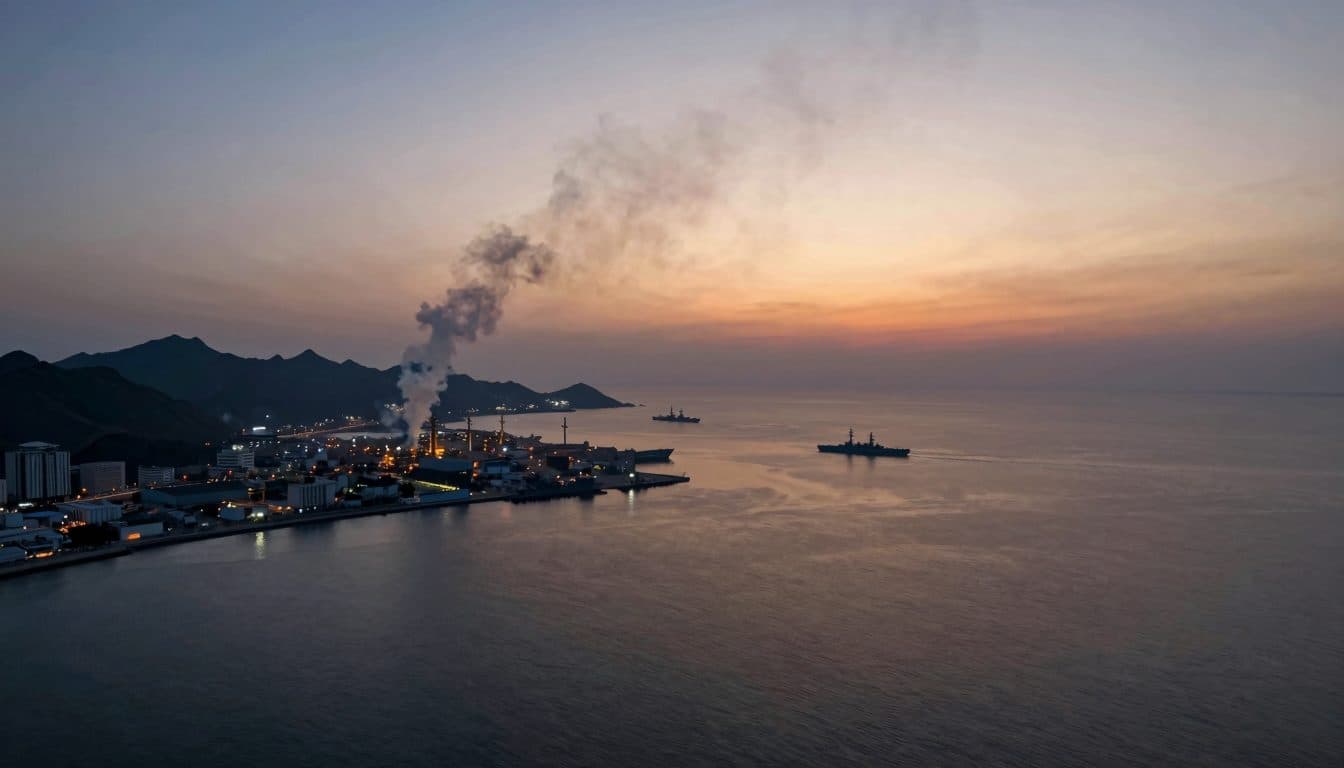
AI-generated image (z-image via Kie.ai)
Summary
The US military bombed more than 80 targets in Iran overnight Wednesday, including air defense systems, anti-ship missiles, and over 60 Revolutionary Guard boats. US President Trump declared the ceasefire with Iran over and called the Iranian leadership "scum" – Tehran's counter-response was not long in coming.
Washington/Tehran, July 9, 2026
After the shelling of three tankers in the Strait of Hormuz, the US military attacked more than 80 targets in Iran according to its own statements, whereupon Tehran in turn attacked 85 US military facilities in Kuwait and Bahrain, and US President Trump declared the ceasefire with Iran over.
Trigger: Shelling of Tankers
US forces carried out massive airstrikes against targets in Iran overnight Wednesday. According to the responsible regional command Centcom, air defense systems, anti-ship missiles, radar installations, and more than 60 boats of the Iranian Revolutionary Guard in or near the Strait of Hormuz were hit. The US military described the attack as a response to Iranian strikes on commercial vessels in the strategically important waterway.
Before that, several tankers had been hit in or near the Strait of Hormuz overnight Tuesday. Particularly severe damage was reported by the crew of the Qatari liquid gas tanker "Al-Rekayyat," which according to the ship's crew was hit by an "unknown projectile." It initially remained unclear whether individual reports referred to the same incident and who was behind the attacks.
Washington speaks of "punishment"
A US official described the subsequent US military strikes to the US broadcaster CNN as "punishment." Iran's behavior in the Strait of Hormuz was "completely unacceptable," according to Washington. The portal "Axios" quoted a US government official as saying the US military had attacked air defense systems, coastal surveillance systems, and drone positions, among other things.
Trump declares the ceasefire over
US President Trump had recently threatened Iran again, saying there would either be a deal or the US would "finish the job." On the sidelines of the NATO summit, he declared the ceasefire with Iran over. "As far as I'm concerned, the matter is done. As for me, it's over," Trump said. The negotiators "can talk, but I think they're wasting their time," he added.
Trump described the US strikes on Iranian targets overnight Wednesday as "very heavy" and added: "We hit them very hard last night, very hard." He called the Iranian leadership "scum" and "sick people." When asked whether a previous declaration of intent still stood, he said: "I don't want anything to do with them" – and added on the sidelines of the NATO summit: "I don't want anything more to do with them."
Tehran announces retaliation
Iranian Deputy Foreign Minister Kazem Gharibabadi condemned Washington's actions as a "serious violation" of the framework agreement to end the war. He wrote on the platform X that Iran would "take resolute measures to safeguard its national interests and security." The Revolutionary Guard also threatened: "Any miscalculation will be answered with a resolute and even harder response than ever before," according to a statement by the elite force.
The Iranian counter-response followed promptly: The Revolutionary Guard announced through the state news agency Irna that they had in turn attacked 85 targets at US military facilities. According to Iranian state television, facilities in the area of the US Fifth Fleet off Bahrain as well as at the Ali Al Salem Air Base in Kuwait were hit, among others. The Iranian armed forces had attacked "85 important US army facilities" in the two countries with missiles and drones.
Gulf states come under fire
The Gulf states thus found themselves caught directly between the front lines. Kuwaiti air defense said it was "currently repelling hostile missile and drone attacks" – without providing information on the origin of the attacks. Bahrain's Interior Ministry said it had triggered an air alarm. "Citizens and residents are urged to remain calm and proceed to the nearest safe location," it said. The "General Staff of the Army" reported that the explosions being heard were due to the interception of "hostile attacks by air defense systems."
The Qatari Foreign Ministry called on Wednesday via the online service X to "continue on the path of dialogue and diplomacy." Doha also condemned the Iranian attacks on Kuwait and Bahrain and stressed the need to "protect the region from the consequences of these unjustified attacks."
Washington received backing from NATO Secretary General Mark Rutte, who called the recent US strikes "absolutely necessary." Iran had "essentially violated" the existing ceasefire, Rutte argued on the sidelines of the NATO summit in Ankara. It was "absolutely crucial that the US responds decisively," he added. The US had "not been treated well" by the NATO partners, Trump said in the presence of Turkish President Recep Tayyip Erdogan – and in doing so explicitly named Germany once again.
A spokesperson for CENTCOM Commander Brad Cooper said the Iranian aggression had been "unjustified and dangerous" and had constituted "a flagrant violation of the ceasefire." Iran would "pay a high price," he warned. Iranian air defense was engaged against the "hostile" attacks, the country's army stated Wednesday on the online service X.
Impact on the oil market
Iran had, according to its own statements, attacked US bases in Kuwait and Bahrain. In addition, Tehran attacked three commercial vessels in the Strait of Hormuz – which the US took as the occasion for its massive bombardment. Trump had previously threatened Iran again, saying there would either be a deal or the US would "finish the job."
The tensions hit the financial markets immediately. A barrel (159 liters) of the North Sea Brent grade for delivery in August rose to $78.50. This pushed up the price of the global benchmark grade by 5.85 percent. At the beginning of July, the price of a barrel of Brent had fallen as low as $70, and thus to the lowest level since the start of the Iran war at the end of February. A barrel of the benchmark Brent grade had at one point already cost somewhat more than $126.
The background to the latest escalation is an already fragile ceasefire between the US and Iran, which according to Washington's account was broken by Tehran's renewed tanker attacks. Iran, on the other hand, accuses the US of having violated the framework agreement by reimposing sanctions on Iranian oil and the subsequent attacks.
The strait is one of the most important trade routes in the world. A significant share of global oil and liquid gas traffic passes through the Strait of Hormuz. Should the region become a combat zone over the longer term, the impact on energy prices and the global economy would be substantial. Iran rejects international mine-clearing operations in the strait, according to its own statements.
The US stated that Iran must pay a high price for attacks on tankers. At the same time, Trump indicated that the door to diplomacy remains closed from his perspective for the time being. A declaration of intent on which the negotiators had agreed no longer stood, in his view. Iran announced "resolute measures" to safeguard its national interests – an indication that further escalations are likely.
Questions & Answers
How many targets did the US attack in Iran?
According to its own statements, the US military bombed more than 80 targets in Iran, including air defense systems, anti-ship missiles, radar installations, and over 60 boats of the Iranian Revolutionary Guard in or near the Strait of Hormuz.
How did Iran react to the US attacks?
After the US attacks, the Iranian Revolutionary Guard announced that they had in turn attacked 85 targets at US military facilities, including facilities in the area of the US Fifth Fleet off Bahrain and at the Ali Al Salem Air Base in Kuwait.
What did Trump say about the ceasefire with Iran?
US President Trump declared on the sidelines of the NATO summit in Ankara that the ceasefire with Iran was over "as far as I'm concerned." He called the Iranian leadership "scum" and "sick people" and said: "I don't want anything more to do with them."
US strikes Iran: Ceasefire ends, oil prices rise | allfacts360