US Nuclear Deal with Saudi Arabia: Critics Warn of Nuclear Double Standards and Arms Race in the Middle East
Washington, 23 July 2026
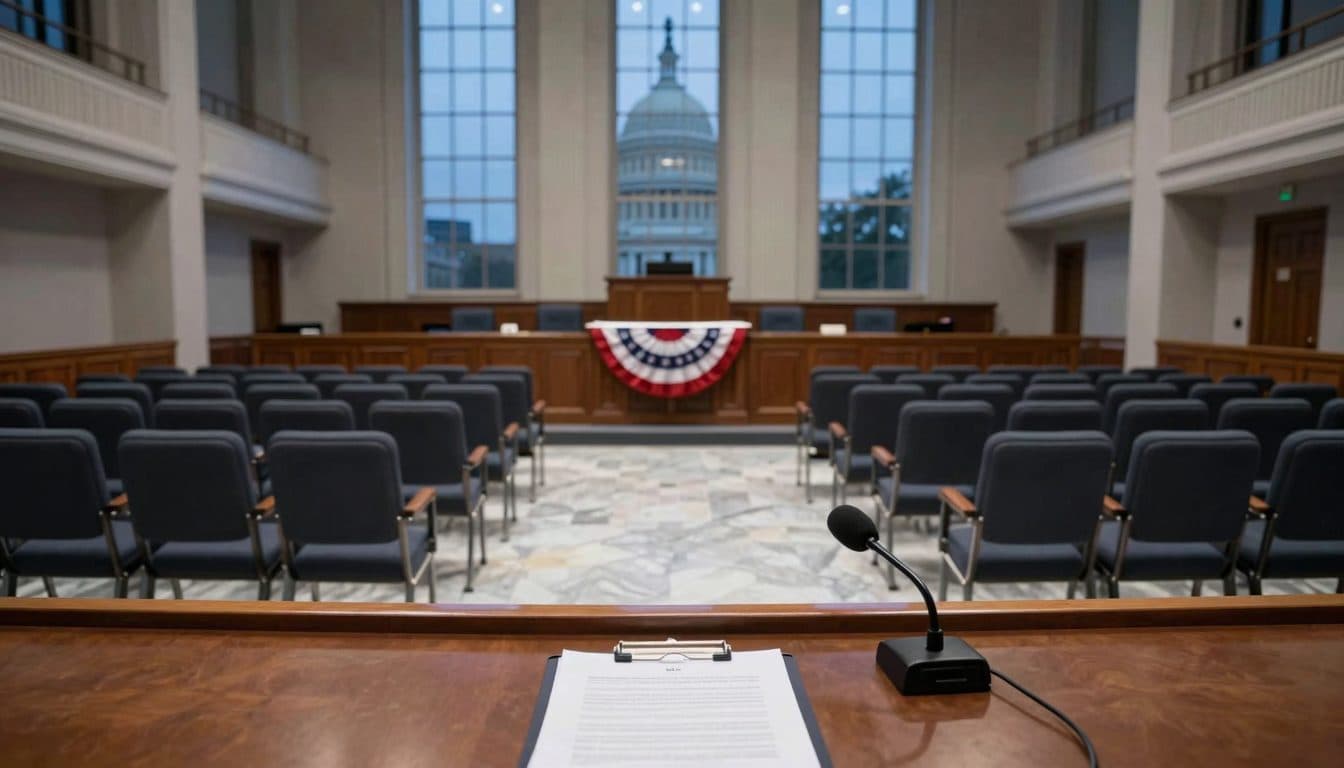
AI-generated image (z-image via Kie.ai)
Summary
A new US-Saudi nuclear agreement with a 30-year term provides for the delivery of modern nuclear technology and the right to domestic uranium enrichment – without the strict IAEA Additional Protocol. Security experts warn of a nuclear arms race in the region and a threat to Israel.
Washington, 23 July 2026
The administration of US President Donald Trump has announced a controversial nuclear deal with Saudi Arabia that grants the kingdom modern nuclear technology and the right to domestic uranium enrichment, but does not include the strengthened Additional Protocol of the International Atomic Energy Agency (IAEA).
The agreement provides for a term of 30 years and envisages the participation of US companies in the development of the Saudi nuclear program. According to government circles, however, the agreement does not include the Additional Protocol of the International Atomic Energy Agency (IAEA), which provides for more extensive monitoring, inspection and control options. This omits a central instrument designed to make the diversion of nuclear material for weapons programs more difficult.
When asked by journalists about the danger that the agreement could trigger a new nuclear arms race in an already unstable region, he said: "Die Vereinigten Staaten werden mit keinem Land der Welt ein Abkommen schließen, das ein Risiko der Weiterverbreitung von Atomwaffen schafft." The statement contradicts the contents of the agreement, as critics note.
Trump's Condition: Rapprochement with Israel
Trump is also tying the deal to a political condition: he is demanding a rapprochement between Saudi Arabia and Israel. Several Arab countries had begun to do so in 2020 – during Trump's first term in office – normalizing their relations with Israel. Whether Riyadh will now take this step remains open. Congress must in any case still approve the agreement – within 90 days.
Crown Prince Mohammed bin Salman has repeatedly stated that while his country does not seek nuclear weapons, it would follow suit "so schnell wie möglich" should Iran take such a step. This stance carries even more weight given that Saudi Arabia and Iran are considered regional rivals and a nuclear arms race in the region is feared.
Israel's Concern Over a Snowball Effect
From the circles of Prime Minister Benjamin Netanyahu, it is said that the agreement is "eine Gefahr für Israels Sicherheit". Israel fears that the agreement could have a kind of "Schneeballeffekt" in the Middle East – that is, encourage further states to develop or expand their own nuclear programs.
Yoel Guzansky of the Institute for National Security Studies (INSS) describes the agreement in a commentary as a "Geschenk an Riad". Israel, on the other hand, "trägt die Risiken", Guzansky says – "und geht leer aus". The asymmetry between the benefits for Saudi Arabia and the risks for Israel is causing displeasure in Jerusalem.
Steinberg of the German Institute for International and Security Affairs warns that the agreement is a "Katastrophe für die Nicht-Verbreitung" of nuclear weapons in the region. International observers also see the danger that other countries, such as the United Arab Emirates, will want to renegotiate. The Emirates had contractually secured the right to renegotiate in their 2009 agreement with the USA should a neighboring state receive better terms.
Domestic Dispute Over Information Policy
Hakeem Jeffries, the Democratic caucus leader, is outraged – not over the content, which he does not even know, but over Trump's lack of an information policy. "Keine Ahnung, ob die hier enthalten sind", Jeffries said with regard to non-proliferation standards. Senator van Hollen remains skeptical: "Saudi-Arabien hat bisher keine Änderung dieser Haltung signalisiert – aber wir werden werden sehen", van Hollen said.
Energy-wise, the deal makes sense for Saudi Arabia: the country of more than 35 million inhabitants must seek new energy sources. Because at constant production levels, the kingdom's known oil reserves are expected to last only another 60 to 70 years. His «Vision 2030» has had to be significantly trimmed by Crown Prince Mohammed bin Salman – this deal with the USA can be sold as a success in Saudi Arabia.
Energy Policy Backgrounds of Saudi Interest
Historically, the step carries weight: just twelve years before the last Shah fled into exile before the Islamic Revolution, the USA had provided the University of Tehran with a small nuclear research reactor in 1967, including highly enriched, weapons-grade uranium. In 1979, the Islamic Revolution swept over Iran, the mullah regime took power – and with it that US technology that later became the basis of Iran's nuclear program.
Rubio added: "Wenn sich Länder dazu entscheiden, dass sie ein friedliches ziviles Atomprogramm wollen, dann ist es uns lieber, sie machen das mit uns als mit einem anderen Land." This stance is in tension with US nuclear oversight: it was precisely the USA that, after 1945, drove forward many programs for nuclear disarmament.
Historical Burden: From Tehran 1967 to the Present
Critics see the deal as further evidence of declining US influence in the region. The US president is thus cementing the historical decline of US power in the Middle East, according to the analysis. The simultaneous delivery of technology and the waiver of strict controls raise questions about the credibility of American non-proliferation policy.
For Israel, the situation remains precarious: should Saudi Arabia actually begin uranium enrichment, this could give further impetus to Iran's nuclear ambitions. The concern in Jerusalem is that a strengthened Saudi program will lower the nuclear threshold in the region overall. Netanyahu's government is therefore pushing for binding security guarantees as part of the deal.
The coming 90 days until the Congressional vote are considered a decisive phase. Whether the agreement in its current form will gain Congressional approval is uncertain. Jeffries and van Hollen have already voiced sharp criticism, and there are also reservations within the Republican Party regarding the lack of IAEA control. The discussion over the agreement also comes at a time of heightened tensions in the Middle East.
Congressional Vote and Open Questions
The news was broadcast on 23.07.2026 on Deutschlandfunk and categorized in several media outlets as a dramatic development. Observers see the deal as a mix of big business and a highly controversial political signal – with far-reaching consequences for the nuclear order of the region.
Donald Trump wants to help Saudi Arabia develop a nuclear program – that is the core message of the agreement. The agreement combines economic and security interests but leaves central questions of non-proliferation open. How exactly the balance between civilian use and military control will look remains to be seen.
The role of Iran also remains a factor. Should Tehran expand its nuclear capabilities, Saudi Arabia could come under pressure to follow suit. The spiral of mistrust, armament and counter-armament threatens to continue turning – with unforeseeable consequences for the stability of the entire region.
For the international community, the agreement is a litmus test: Can the world community prevent civilian nuclear programs from being used militarily? The IAEA and its member states face the task of enforcing clear standards and maintaining confidence in non-proliferation. The Saudi agreement could become a precedent – both positively and negatively.
Questions & Answers
Was sieht das neue US-saudische Atomabkommen konkret vor?
Das Abkommen hat eine Laufzeit von 30 Jahren und sieht vor, dass US-Unternehmen Saudi-Arabien beim Aufbau eines zivilen Atomprogramms unterstützen. Saudi-Arabien erhält zudem das Recht auf eigene Urananreicherung, das verschärfte Zusatzprotokoll der IAEA ist jedoch nicht Teil der Vereinbarung.
Warum warnen Experten vor einem nuklearen Wettrüsten?
Kronprinz Mohammed bin Salman hat erklärt, Saudi-Arabien werde "so schnell wie möglich" Atomwaffen anstreben, falls der Iran diesen Schritt gehen sollte. Israel fürchtet zudem einen "Schneeballeffekt", durch den weitere Staaten in der Region eigene Atomprogramme ausbauen könnten.
Welche Rolle spielt der US-Kongress bei dem Abkommen?
Der Kongress muss der Vereinbarung noch zustimmen – innerhalb einer Frist von 90 Tagen. Bis dahin ist unklar, ob das Abkommen in seiner jetzigen Form Bestand haben wird, da bereits Kritiker aus beiden Parteien Vorbehalte angemeldet haben.
US-Saudi Nuclear Deal: Criticism of Double Standards | allfacts360