US Sanctions Against Cuban President Díaz-Canel and Castro Family Take Effect
Washington, June 5, 2026
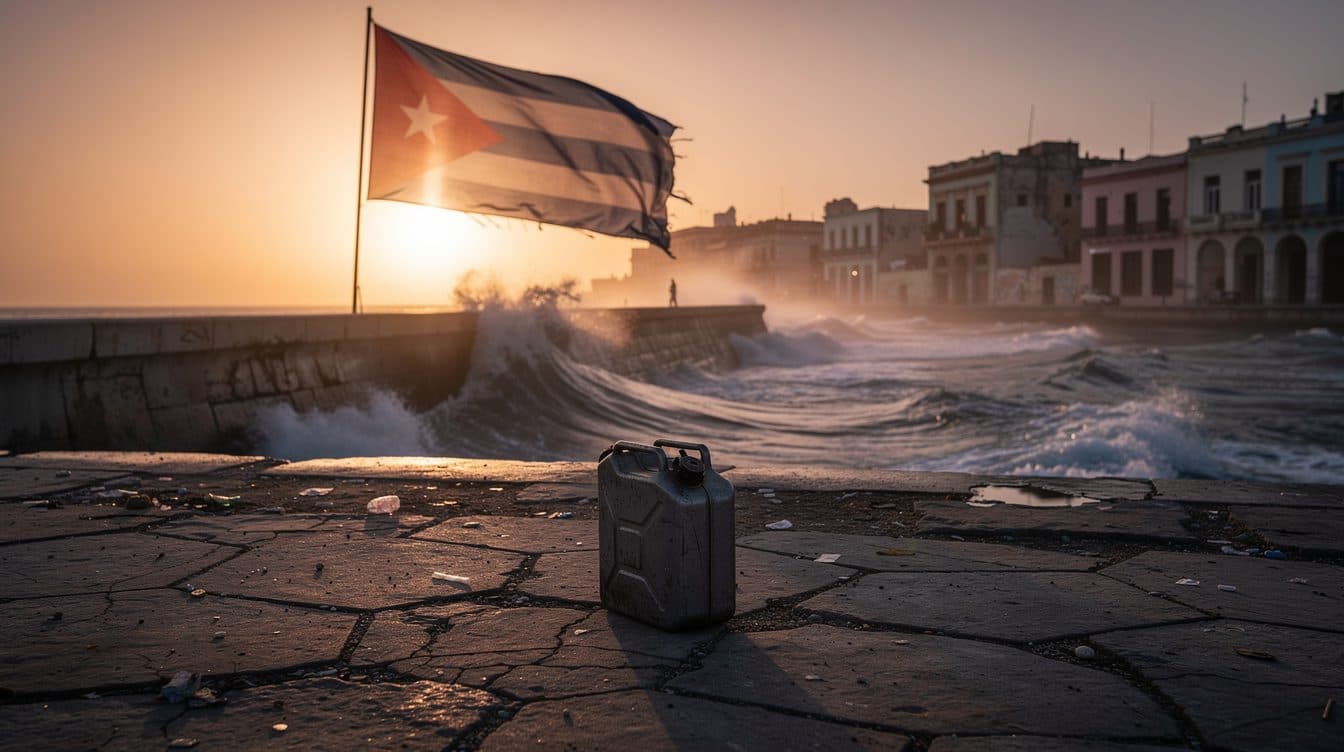
AI-generated image (flux-2/pro-text-to-image via Kie.ai)
Summary
On June 5, 2026, the US government imposed economic sanctions against Cuban President Miguel Díaz-Canel. Family members, as well as the Cuban Ministry of Defense and the Committees for the Defense of the Revolution, are also affected.
Washington, June 5, 2026
The US government, under the leadership of Secretary of State Marco Rubio, has imposed sanctions against Cuban President Miguel Díaz-Canel, his family, as well as members of the Castro family and several state institutions.
Background: What the Sanctions Encompass
The measures were announced by the US Department of State and became effective on June 5, 2026. The US Department of the Treasury placed Díaz-Canel on a sanctions list, which could lead to the freezing of any assets he may have in the United States. US citizens and US companies are now prohibited from conducting business with the sanctioned individuals and institutions.
In addition to the 66-year-old head of state, his wife Lis Cuesta Peraza and his stepson Manuel Anido Cuesta were also subjected to sanctions. Furthermore, the punitive measures targeted Alejandro Castro, a son of former President Raúl Castro, 95, as well as Raúl Castro's grandson Raúl Alejandro Castro. The Castro family has been among the most influential players in Cuban politics since the 1959 revolution.
Justification from Washington
Washington also expanded the sanctions at the institutional level. Affected are the Cuban Ministry of Defense, the Committees for the Defense of the Revolution (CDR), and other state organizations. The CDR are present in almost all neighborhoods in Cuba. Government critics describe them as instruments for monitoring political dissidents.
Secretary of State Marco Rubio justified the sanctions on the platform X with the accusation that Cuba supports international terrorism. "For decades, Cuba has been the world capital of radical left-wing terrorism," Rubio wrote. He also announced a tougher line from the Trump administration towards left-wing governments in the region: "The Trump administration will no longer tolerate radical Marxist regimes in our hemisphere." Rubio also spoke of a network that has enabled and financed Cuba's subversive operations in other countries.
Trump's Threats Towards Cuba
In recent weeks, US President Donald Trump had repeatedly brought up a possible "takeover" of Cuba. Speaking to reporters at the White House, he stated that Cuba "is starving, and it has no energy, it has no oil, it has no money, it has nothing." Cuba should become a "well-governed country." In another context, Trump said with regard to the conflict with Iran: "We will take care of the Islamic Republic of Iran, and when that's done, we'll just make a short stop on the way back." This signaled that Cuba could be next after Iran.
The Cuban government reacted sharply to the new sanctions. President Díaz-Canel spoke on X of the US government's "aggressiveness and perversion." He announced that Cuba would resist the "imperialist campaign." The sanctions were aimed at harming the Cuban population. In a further statement, Díaz-Canel declared: "Gentlemen imperialists: we are absolutely not afraid of you."
Havana's Response to the Punitive Measures
Foreign Minister Bruno Rodríguez also condemned the measures, calling them "abhorrent." The sanctions would provoke "greater unity and determination from our people." Rodríguez described the punitive measures as "the latest example of the US's interventionist strategy of portraying Cuba as a threat to the national security of the United States."
The background to the escalation is the deep economic crisis that Cuba has been experiencing for years. The island is going through one of the most severe economic crises since the 1959 revolution, with ongoing power outages, fuel shortages, and significant supply bottlenecks. The earlier revolution, which overthrew dictator Fulgencio Batista and established a socialist state, was led by Raúl Castro and his brother Fidel Castro, who died in 2016.
An additional factor is the blockade of oil supplies that Washington has imposed on Cuba. Venezuela, long Cuba's most important oil supplier, had suspended its deliveries after the arrest of Venezuelan President Nicolás Maduro by the US military in January and his transfer to the United States. As a result, Cuba has repeatedly experienced power outages and supply shortages. The eastern part of the island is also still suffering from the consequences of Hurricane Melissa, which caused severe damage last October.
Economic Crisis and Humanitarian Situation
Cuba's UN Ambassador Francisco Pichón warned at a United Nations session in New York that the country is in a "humanitarian emergency" that is worsening day by day. He described the combination of economic crisis, fuel shortage, and the risks of the hurricane season as an "explosive cocktail."
In parallel with the sanctions, the US government also published a lawsuit against Raúl Castro. In it, the former president is held responsible for the downing of two aircraft belonging to a Cuban exile organization by the Cuban air force in 1996, which resulted in the deaths of four people. Raúl Castro was the Cuban Minister of Defense at the time. The 95-year-old, who no longer holds an official position, is still considered an influential figure behind the scenes of Cuban politics.
Lawsuit Against Raúl Castro for 1996 Plane Downing
Relations between Washington and Havana have been strained for decades. A comprehensive US economic embargo against Cuba has been in place since 1962. However, tensions have further intensified under the Trump administration. International observers assume that business with the now-sanctioned individuals and institutions will become considerably more difficult, as many companies avoid the risk of conflict with US sanctions.
The Cuban leadership sees itself confirmed in its defensive stance against the USA by the measures. However, the new sanctions are hitting a population already suffering from an acute shortage of energy, food, and medical supplies. Humanitarian organizations have repeatedly pointed to the precarious situation of the civilian population.
Overall, the move from Washington illustrates a comprehensive approach: sanctions against the political leadership, against family networks of the revolutionary elite, and against the state's security and surveillance structures are intended to force economic and political change on the island. Whether this will succeed depends, not least, on the reaction of the Cuban population and the international community.
Questions & Answers
Who is affected by the US sanctions against Cuba?
The sanctions target President Miguel Díaz-Canel, his wife Lis Cuesta Peraza, stepson Manuel Anido Cuesta, family members of the Castro family, as well as the Cuban Ministry of Defense and the Committees for the Defense of the Revolution.
Why has the US government imposed the sanctions?
US Secretary of State Marco Rubio accuses Cuba of supporting international terrorism and financing subversive operations in other countries. According to Washington, the measures are intended to force economic and political change on the island.
How is the Cuban government reacting to the sanctions?
President Díaz-Canel spoke of "aggressiveness and perversion" and announced resistance, while Foreign Minister Bruno Rodríguez called the measures "abhorrent" and warned of a worsening humanitarian situation.
US Sanctions Against Cuba: Díaz-Canel and Castro Family | allfacts360