Vingegaard Crash Tour de France 2026: Nighttime Doping | allfacts360
Vingegaard abandons after crash on Stage 15 – Debate over nighttime doping controls
Paris, 20 July 2026
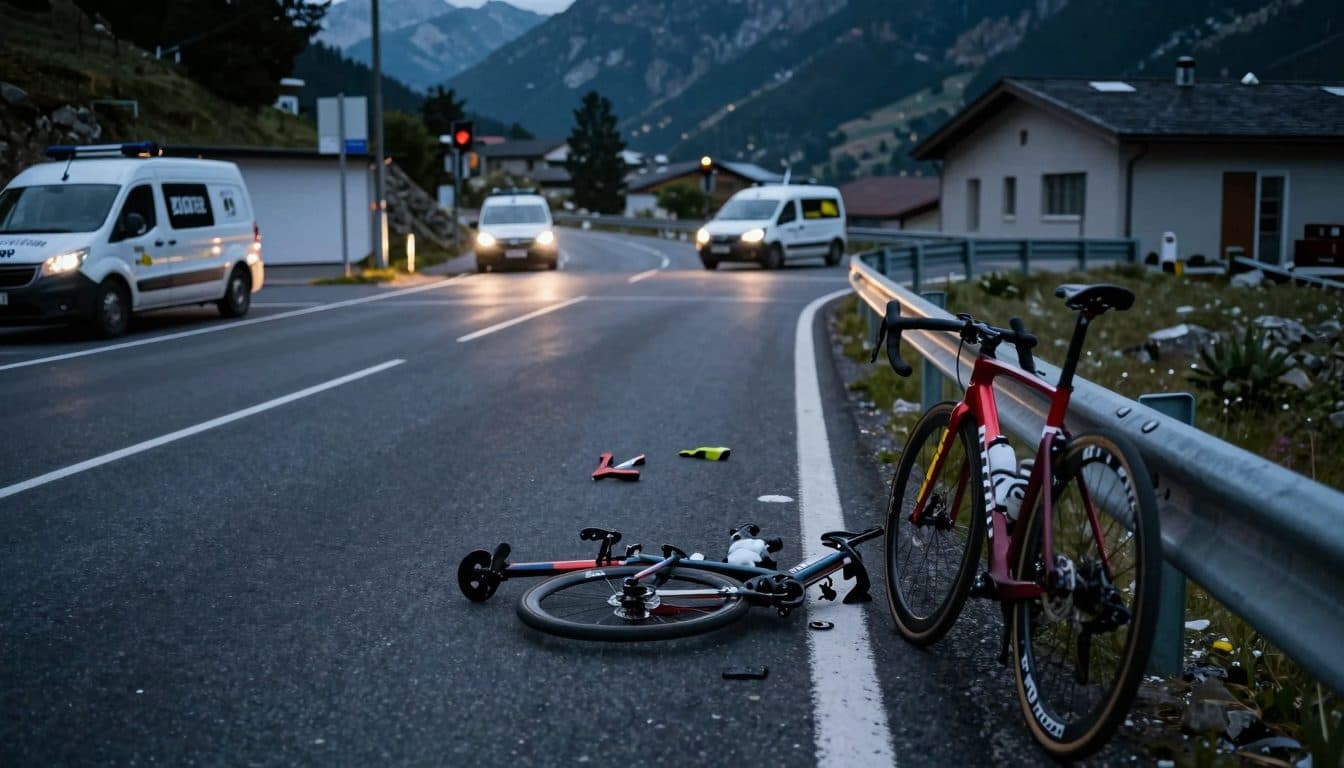
AI-generated image (z-image via Kie.ai)
Summary
Danish cycling star Jonas Vingegaard has abandoned the Tour de France after crashing on Stage 15 with a broken collarbone. Top athletes such as Tadej Pogacar and Remco Evenepoel have accused anti-doping authorities of waking riders in the middle of the night and thereby sabotaging their recovery.
Paris, 20 July 2026
Two-time Tour champion Jonas Vingegaard crashed on Saturday on Stage 15 of the Tour de France in a roundabout roughly 22 kilometers from the finish and abandoned the race due to a broken collarbone, while leading riders sharply criticized the nighttime doping controls.
The Crash in the Roundabout
Stage 15 of the Tour de France was one of the most demanding mountain stages of this year's race. Roughly 22 kilometers from the finish came the incident that fundamentally reshaped the general classification: Jonas Vingegaard, who began the day second overall, went down in a roundabout and had to abandon the race as a result of his injuries.
The 29-year-old Danish cycling star suffered a broken collarbone in the crash. Speaking to Danish broadcaster TV2, Vingegaard described the cause of the crash matter-of-factly: "Vielleicht sind wir etwas zu schnell in diesen Kreisverkehr gefahren, und dann ist mir einfach das Vorderrad weggerutscht. Da kann man nichts machen."
Vingegaard reacted to his premature exit calmly, if disappointed. "Natürlich ist es sehr enttäuschend für uns, dass die Tour auf diese Weise endet. Aber so ist der Radsport nun mal," he said. He added to TV2: "Es bringt nichts, den Kopf hängenzulassen. Das macht alles nur noch schlimmer." At the same time, he acknowledged that a particular set of circumstances may have affected his performance.
Nighttime Doping Control as a Possible Factor
Background to the crash: the night before the stage, Vingegaard had been pulled from sleep around 2 a.m. to undergo an anti-doping control. Overall leader Tadej Pogacar was also tested that same morning at 5 a.m. and said afterward that he had been unable to sleep any further. Vingegaard commented: "Man kann wohl sagen, dass es sicher nicht förderlich war. Ob das der Grund ist, darüber wage ich nicht zu spekulieren. Es mag durchaus eine Rolle gespielt haben."
Pogacar, wearing the Yellow Jersey, also expressed concern about the timing of the controls. "Nach einer Nacht, bei der der Schlaf ruiniert wird, liegt es vielleicht daran. Seine Tour ist ruiniert. Es ist wirklich traurig," he said. The Slovenian also stressed the importance of sleep and recovery during the three-week race: "Schlaf ist wichtig. Die Erholung des Körpers ist entscheidend. Wenn man auch nur ein bisschen die Konzentration verliert…" Pogacar further criticized the course layout through the town as dangerous: "Und die Strecke dort in der Ortschaft war wirklich gefährlich."
Pogacar's Criticism of the Course and Sleep Deprivation
The harshest criticism of the nighttime controls came from Belgian Remco Evenepoel, who won Stage 15 and was thus able to celebrate a stage victory. Evenepoel, a double Olympic champion, called the practice "unmenschlich" and "respektlos." He stated explicitly: "Ich kann nur sagen, dass es ziemlich respektlos ist, die Fahrer mitten in der Nacht zu wecken. Kontrollen um 2.00 und 5.00 Uhr morgens sind etwas, das wir als Fahrer eigentlich nicht hinnehmen können. Es ist schlicht unmenschlich, uns mitten in der Nacht aus dem Schlaf zu reißen."
Evenepoel's Sharp Attack
Evenepoel announced that he would involve the riders' union CPA. He also described the role of sleep for the professionals during the three-week Tour: sleep is the only time riders can recover between stages. He likewise called the practice a "Schande" and demanded consequences.
In unusually sharp terms, Evenepoel also threatened retaliation: "Das ist ziemlich respektlos. Ehrlich gesagt: Wäre mir das passiert, würde ich mein Team heute Nacht losschicken, um die Verantwortlichen ebenfalls um 3.00 Uhr morgens zu wecken und ihnen am eigenen Leib spüren zu lassen, wie das ist – und ihnen mitten in der Nacht Blut abnehmen." He himself, by his own account, had not been tested that night.
Rules and Practice of Anti-Doping Controls
The outrage among top athletes was directed at the timing practices of the anti-doping authorities. In principle, nighttime controls during the Tour are possible, but they are tied to stricter requirements, such as the existence of concrete suspicions. In this specific case, this precondition has not been publicly substantiated so far. The last official doping proceeding in connection with the Tour dates to 2022, when Colombia's Nairo Quintana tested positive for the banned painkiller Tramadol.
The controls also raise a fundamental technical question: some substances – including the blood-doping agent EPO – are no longer detectable after just a few hours when used in microdoses. Supporters of nighttime controls point to this fact, while critics point to the burden placed on the athletes.
Consequences for the General Classification
Vingegaard's exit fundamentally changes the general classification of the Tour de France. The Dane was sitting in second place before the crash and was regarded as one of the few riders who could have posed a threat to Pogacar on the upcoming mountain stages. With his departure, the path is clearer for the Slovenian leader over the remaining stages, even though Pogacar himself stressed that the crash was "wirklich traurig."
In the public debate, the question remains of how the balancing act between effective anti-doping efforts and the protection of athletes' health can be managed going forward. The riders' union CPA must now clarify whether and under what conditions nighttime controls may take place in the future. The anti-doping organizations have not publicly responded to the allegations so far.
Regardless of the controversy, the human aspect remains: Vingegaard, who won the Tour in 2023 and 2024, left the race with an injury that alters the course of his season. To TV2, he expressed the thought that shapes many professionals' understanding of the sport: "Natürlich ist es sehr enttäuschend für uns, dass es so ausgeht und die Tour auf diese Weise endet. Aber so ist der Radsport nun mal. Zum Glück ist es nur ein Schlüsselbeinbruch."
Stage 15 thus brought together three storylines: the sporting loss of a co-favorite, questions about the state of the race route, and the organizationally critical debate over anti-doping controls. While Evenepoel celebrated the stage win and Pogacar defended the Yellow Jersey, the Tour ended abruptly and unexpectedly for one of its great protagonists.
Reporting on the incident was picked up on 20 July 2026 by outlets including Deutschlandfunk and is based on reports from the Deutsche Presse-Agentur (dpa). At the center of the reactions from the peloton are the words "unmenschlich," "Schande," and "Respektlos" – buzzwords that are likely to shape the sports-political discussion around the Tour de France in the days to come.
The stage was also marked by another result: Swiss rider Schmid had already won Stage 13 of the Tour. That success too stands in the shadow of the events surrounding Vingegaard's crash and the controversy over the nighttime controls.
Questions & Answers
Wie kam es zum Sturz von Jonas Vingegaard auf der 15. Etappe?
Vingegaard stürzte laut eigenen Angaben rund 22 Kilometer vor dem Ziel in einem Kreisverkehr, als er nach eigener Einschätzung zu schnell in die Kurve fuhr und ihm das Vorderrad wegrutschte. Er brach sich dabei das Schlüsselbein und gab die Tour auf.
Warum stehen die nächtlichen Doping-Kontrollen in der Kritik?
Jonas Vingegaard wurde in der Nacht vor der Etappe gegen 2 Uhr morgens geweckt, Spitzenreiter Tadej Pogačar um 5 Uhr; beide Fahrer gaben an, danach kaum noch geschlafen zu haben. Remco Evenepoel nannte das Vorgehen „unmenschlich" und „respektlos" und kündigte an, die Fahrergewerkschaft CPA einzuschalten.
Welche Folgen hat Vingegaards Ausstieg für die Tour de France 2026?
Vingegaard lag vor der Etappe auf Gesamtrang zwei und schied verletzt aus, womit einer der wenigen ernsthaften Konkurrenten von Gesamtleader Tadej Pogačar aus dem Rennen ist. Der Verlust verändert die Ausgangslage der verbleibenden Bergetappen grundlegend.