Asian online retailers lift market share in Germany to record high
Berlin, 06 July 2026
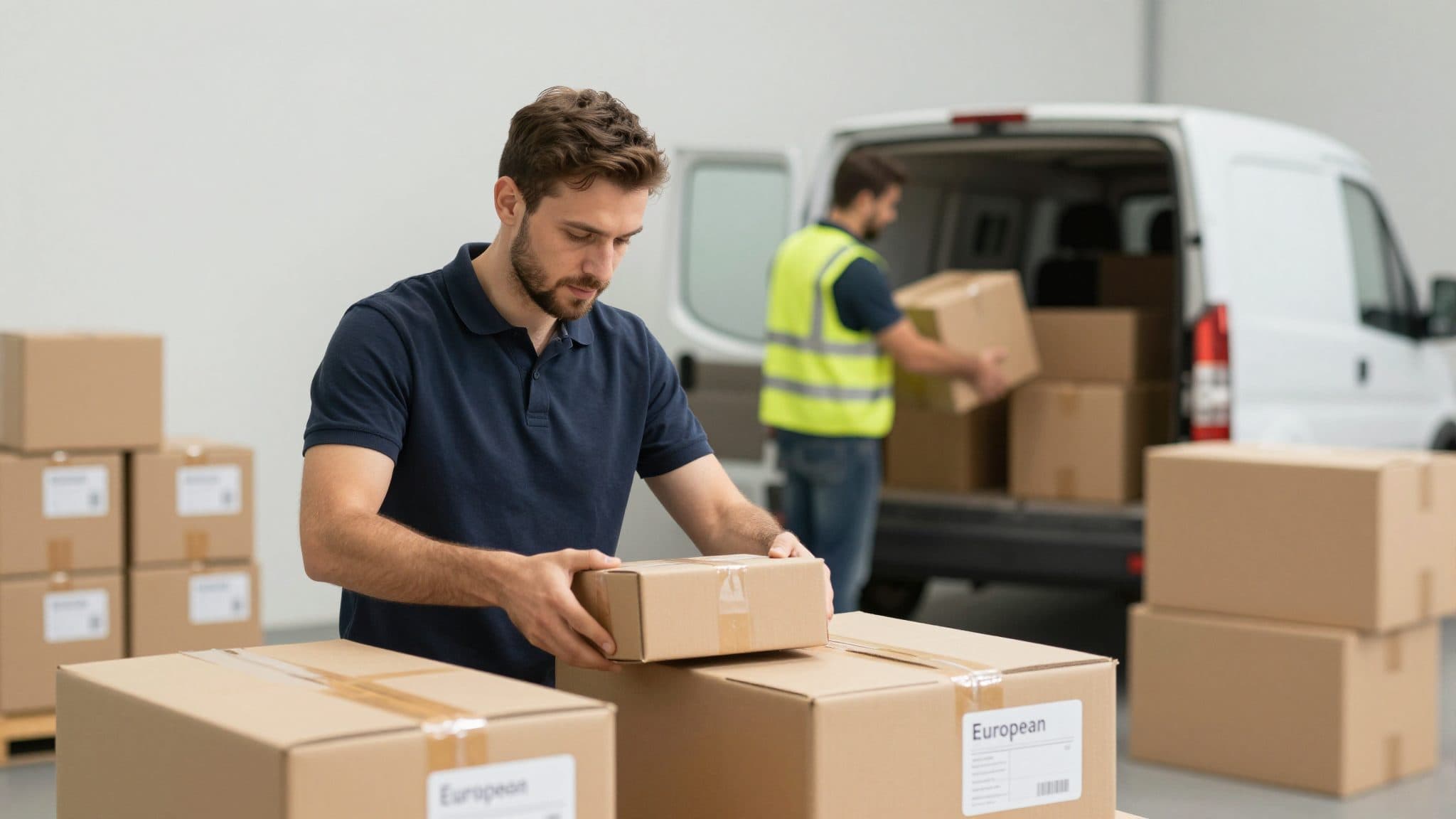
AI-generated image (z-image via Kie.ai)
Summary
Asian online shops such as Temu, Shein and AliExpress reached a record 5.3 percent share of Germany's online retail sales in the second quarter of 2026, industry data showed. Their sales jumped more than 20 percent year on year to just over 1.1 billion euros, even as the overall market grew only 5.1 percent.
Berlin, 06 July 2026
Asian online retailers Temu, Shein and AliExpress captured a record 5.3 percent share of Germany's online retail sales in the second quarter of 2026, with combined revenues rising more than 20 percent year on year to just over 1.1 billion euros.
The figure, drawn from the latest data of the Bundesverband E-Commerce und Versandhandel Deutschland (Bevh), marks a new high for Asian platforms in the German market. Between April and June, the portals increased their revenues by more than 20 percent compared with the same period a year earlier, reaching just over 1.1 billion euros. By contrast, the overall German online retail market grew by only 5.1 percent in the same window.
Fashion is the front line
Their grip is particularly visible in fashion. According to the German Retail Federation (Handelsverband Deutschland, HDE), Asian providers now account for more than 16 percent of all orders in the online fashion segment. "Die asiatischen Plattformen seien vor allem wegen ihrer niedrigen Preise beliebt", said Martin Groß-Albenhausen, the deputy managing director of Bevh, attributing the appeal primarily to low prices.
Industry observers say the platforms have been investing in their own European infrastructure to insulate themselves from new trade frictions. "Billigimporten aus Asien wird die Abgabe wenig anhaben. Die Anbieter haben bereits begonnen, eigene Logistikstrukturen innerhalb Europas aufzubauen", said Alien Mulyk, managing director of Bevh.
New EU customs rules take effect
The customs change she referred to took effect on 1 July. EU rules were amended so that goods ordered from outside the bloc are now subject to a customs charge even when their value is below 150 euros. A flat fee of 3 euros per product category applies to such orders. The previous exemption for cheap deliveries from third countries has been removed.
The Bevh nonetheless expects the new fee to do little to curb demand for cheap Asian imports. Groß-Albenhausen considers it possible that the providers will further expand their sales share. According to Groß-Albenhausen, many consumers report a positive shopping experience with these platforms — "Viele Verbraucher berichteten von einem positiven Einkaufserlebnis", he noted.
Chemical safety concerns linger
Behind the boom lie concerns that go beyond market share. Tests have repeatedly shown that clothing sold via Shein is sometimes heavily contaminated with chemicals. Recent investigations by the Bremer Umweltinstitut on behalf of Deutsche Umwelthilfe (DUH) found that 7 out of 18 tested clothing items violated EU limit values.
Consumer sentiment across Germany remains subdued, according to the HDE's current consumer barometer. The association assesses overall consumer sentiment as tense, even though the barometer shows a positive trend. The HDE attributes the subdued mood largely to the ongoing conflict in Iran, which it says has massive impacts on economic development.
Consumer mood remains tense
For the consumer barometer, 1,600 households are surveyed monthly on a representative basis, including questions on their propensity to purchase and save. The methodology underlines how the HDE and Bevh are tracking purchasing patterns against the backdrop of geopolitical strain and shifting supply chains.
Groß-Albenhausen summed up the competitive picture in a single line: Asian platforms are popular above all because of their low prices. That price advantage, combined with European logistics investments, appears to be blunting the impact of the new EU customs regime, at least in the short term.
The new levy is unlikely to close the gap with established German retailers, the Bevh argues, because the platforms have already routed goods through warehouses inside the EU. As long as those structures continue to expand, a small customs charge on direct shipments from Asia will not materially reshape the German online market.
Industry data also suggest the platforms are not only winning price-sensitive shoppers. The fact that more than 16 percent of all online fashion orders in Germany now go to Temu and similar portals indicates that the Asian players have moved beyond bargain hunters and into the mainstream of digital apparel shopping.
Regulatory backdrop
EU regulators have not stood still. The European Commission earlier imposed a 200-million-euro fine on online retailer Temu, signalling that competition authorities are willing to act against practices they consider harmful. The fine has done little, so far, to slow the platform's expansion in Germany.
Taken together, the figures paint a picture of a market in transition: aggregate growth is modest, sentiment is cautious, yet a handful of cross-border players are pulling away from the pack. The Bevh's quarterly reading is the clearest indicator yet that the German online retail landscape is being reshaped by Asian platforms.
What the numbers mean
Whether the 5.3 percent share represents a ceiling or a stepping stone will depend on several factors, including the scale of further European logistics investments, the evolution of EU customs enforcement, and the willingness of German consumers to keep trading familiar brand names for cheaper, faster-delivered alternatives.
For now, the platforms are riding a wave of price-led demand that the new customs charge, the geopolitical backdrop and ongoing chemical-safety concerns have so far failed to break.
He is the deputy managing director (stellvertretender Hauptgeschäftsführer) of the Bundesverband E-Commerce und Versandhandel Deutschland (Bevh), the German e-commerce and mail-order trade association, and has spoken publicly about the rise of Asian platforms.
Why did the EU change its customs rules on 1 July?
The EU removed the previous exemption that had allowed goods valued under 150 euros to enter the bloc without a customs charge; such orders are now subject to a fee, including a flat 3 euros per product category on direct shipments from outside the EU.
What share of German online fashion orders go to Asian platforms?
According to the Handelsverband Deutschland (HDE), Asian providers including Temu and Shein now account for more than 16 percent of all orders in the online fashion segment.
Temu and Shein hit record share of German online retail | allfacts360