Grain Harvest Austria: 20 Percent Loss Due to Drought | allfacts360
Chamber of Agriculture Expects 15 to 20 Percent Less Grain in Austria
Vienna, July 24, 2026
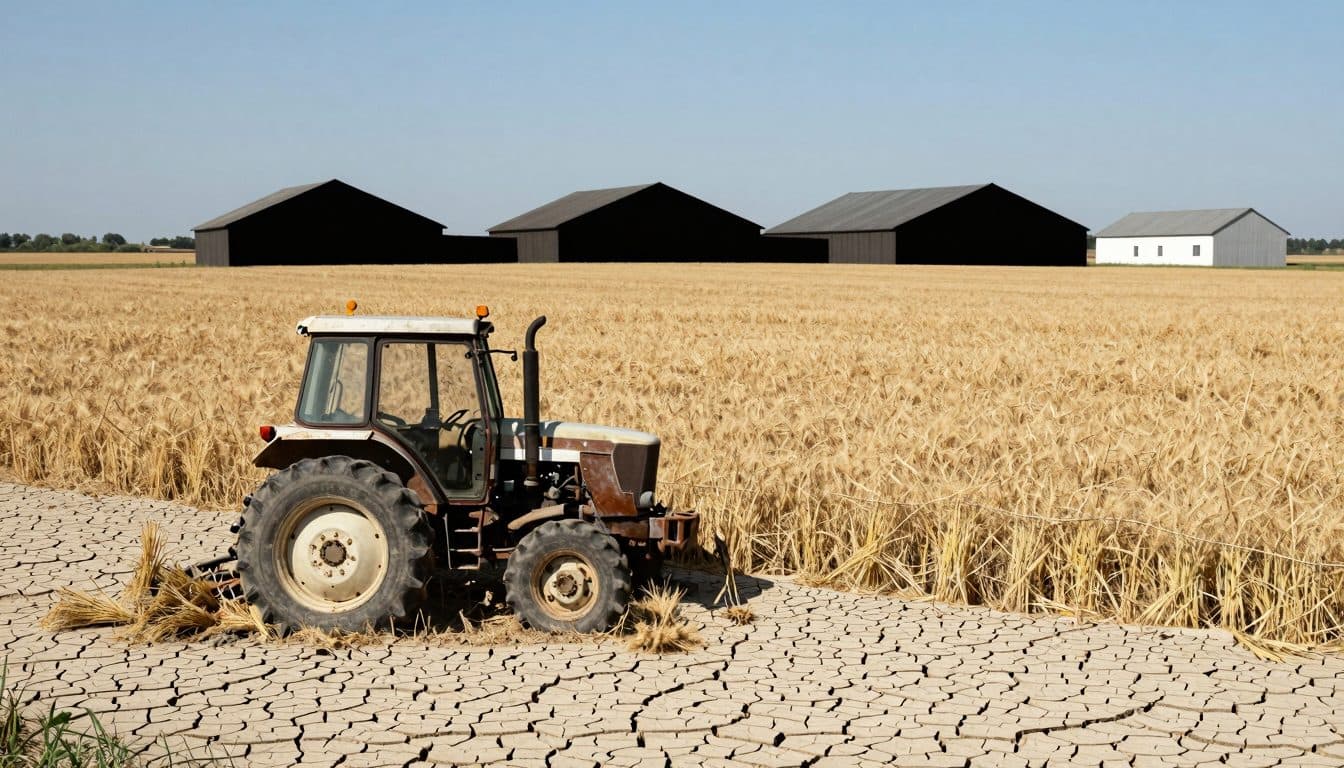
AI-generated image (z-image via Kie.ai)
Summary
The persistent drought in Austria is leading to a decline of 15 to 20 percent in the grain harvest compared to the previous year, according to the Chamber of Agriculture. President Josef Moosbrugger speaks of one of the weakest harvests of the past ten years and calls for higher producer prices to cover rising costs.
Vienna, July 24, 2026
The Austrian Chamber of Agriculture expects a grain harvest that is 15 to 20 percent lower than the previous year due to the persistent drought, making it one of the weakest harvests of the past ten years.
Drought Hits Several Crops Simultaneously
Josef Moosbrugger, President of the Austrian Chamber of Agriculture, painted a bleak picture of this year's season in an interview with the APA. Conditions were similar to those of the drought years 2017 and 2018, he said. "Die Bauern retten, was zu retten ist" is the situation assessment from the industry. According to Moosbrugger, the main growing regions in the east of the country are particularly affected, where precipitation has been absent for weeks.
Significant losses are also emerging for silage maize. Moosbrugger said: "Die Silomaisbestände sind aktuell noch nicht realistisch abzuschätzen, aber auch hier sieht man Flächen, die als Totalausfall verzeichnet werden müssen." The consequences are not only lower feed volumes for livestock farming, but also economic losses for the affected farms.
In grassland, meaning meadows and pastures, harvest volumes are "deutlich unter dem Durchschnitt" according to the Chamber of Agriculture. This has a direct impact on the feed supply for domestic livestock. Farmers, who are already struggling with rising operating costs, are increasingly having to purchase additional feed.
Potatoes, Fruit, and Vegetables Under Pressure
Andreas Pfaller, crop production expert at the Austrian Chamber of Agriculture, pointed to the particular risks for potato cultivation. "Die Hauptanbaugebiete von Erdäpfeln liegen in Niederösterreich, wo die Niederschläge schon am längsten ausgeblieben sind," Pfaller told the APA. This means that both quantitative and qualitative losses are to be expected, because the tubers grow unevenly in dry soil.
For fruit, the Chamber of Agriculture expects a decline of 20 to 25 percent compared to the previous year. The persistent drought is inhibiting crop growth, according to the data. The weather is also worsening the situation in vegetable growing: "Schädlinge seien im Gemüseanbau aber bei den Extremtemperaturen eine große Herausforderung, um die für die Vermarktung geforderten Qualitäten ernten zu können," said the Chamber of Agriculture chief.
In the Weinviertel and Northern Burgenland, two of Austria's most important wine-growing regions, concern is growing over a significantly smaller wine harvest. If the drought continues in the coming weeks, farmers' representatives expect "eine deutlich kleinere" vintage. As a result, the volume yield for wine this year could also be significantly below average.
Rising Costs Weigh on Profitability
At the same time, production costs for farmers have risen sharply. According to the Chamber of Agriculture, fertilizer prices are currently around 50 percent higher than last year. Fuel and energy costs also remain high. "Eine rentable Produktion ist angesichts der derzeitigen Erzeugerpreise aktuell nur schwer darstellbar," warned Moosbrugger.
The economic predicament of farms is exacerbated by the opposing price trend on international markets. On the Paris commodity futures exchange, the wheat price has risen by around 20 percent since the beginning of July to 245 euros per ton. The background to this is the weak harvests in several European countries.
International Wheat Price Rises – Not in Austria
In Austria, however, this international price increase has "noch nicht angekommen" in the grain trade, as the Chamber of Agriculture chief noted. Prices have fluctuated between 170 and 270 euros per ton in recent years, but are currently not at a level that offsets the increased costs.
Moosbrugger is therefore calling for a significant increase in producer prices. Higher wheat and maize prices are "dringend notwendig, um die gestiegenen und nach wie vor steigenden Dünger-, Treibstoff- und Energiepreise decken zu können," according to Moosbrugger. Otherwise, many farms in Austria face existential problems.
Battle Over EU Agricultural Budget and Political Support
The tone is also hardening at the political level. In an interview on the negotiations over the EU agricultural budget, Moosbrugger announced: "Wir gehen kämpferisch in die Verhandlungen." Regarding the responsible Agriculture Commissioner Hansen, he also said: "Ich verhehle nicht, dass seine Ankündigungen größer waren als das, was er bisher geliefert hat." The Chamber of Agriculture is calling for better funding of the EU agricultural policy in order to support domestic farmers in the crisis.
Little Prospect of Rain in the Coming Weeks
The weather forecasts offer little hope of improvement for the time being. Should the drought persist in the coming weeks, farmers' representatives expect further losses across all crops still in the fields. In addition to grain and maize, this also applies to fruit and wine.
The current situation highlights the growing vulnerability of domestic agriculture to climate change. With a view to long-term security of supply, the Chamber of Agriculture warns that Austria will become increasingly dependent on imports without sufficient yields and without fair producer prices. Farmers are therefore calling for both short-term price adjustments and long-term political support.
Questions & Answers
Who is Josef Moosbrugger and what role does he play in the current debate?
Josef Moosbrugger is President of the Austrian Chamber of Agriculture and one of the most important representatives of the interests of domestic farmers. In the ongoing drought crisis, he assesses the situation, calls for higher producer prices, and negotiates over the EU agricultural budget.
How large are the expected harvest losses in Austria specifically?
The Chamber of Agriculture expects a decline of 15 to 20 percent in grain compared to the previous year, corresponding to one of the weakest harvests of the past ten years. A decline of 20 to 25 percent is expected for fruit; silage maize and wine are also affected.
Why are grain prices rising internationally, but not in Austria?
On the Paris commodity futures exchange, the wheat price has risen by around 20 percent since the beginning of July to 245 euros per ton because the harvest is weak in several countries. In Austria, however, according to the Chamber of Agriculture, this increase has not yet arrived in the grain trade, which further aggravates the economic situation of farmers.