Closure of Nussensee in Bad Ischl lifted – Bomb Disposal Service gives all-clear
Bad Ischl, 28 July 2026
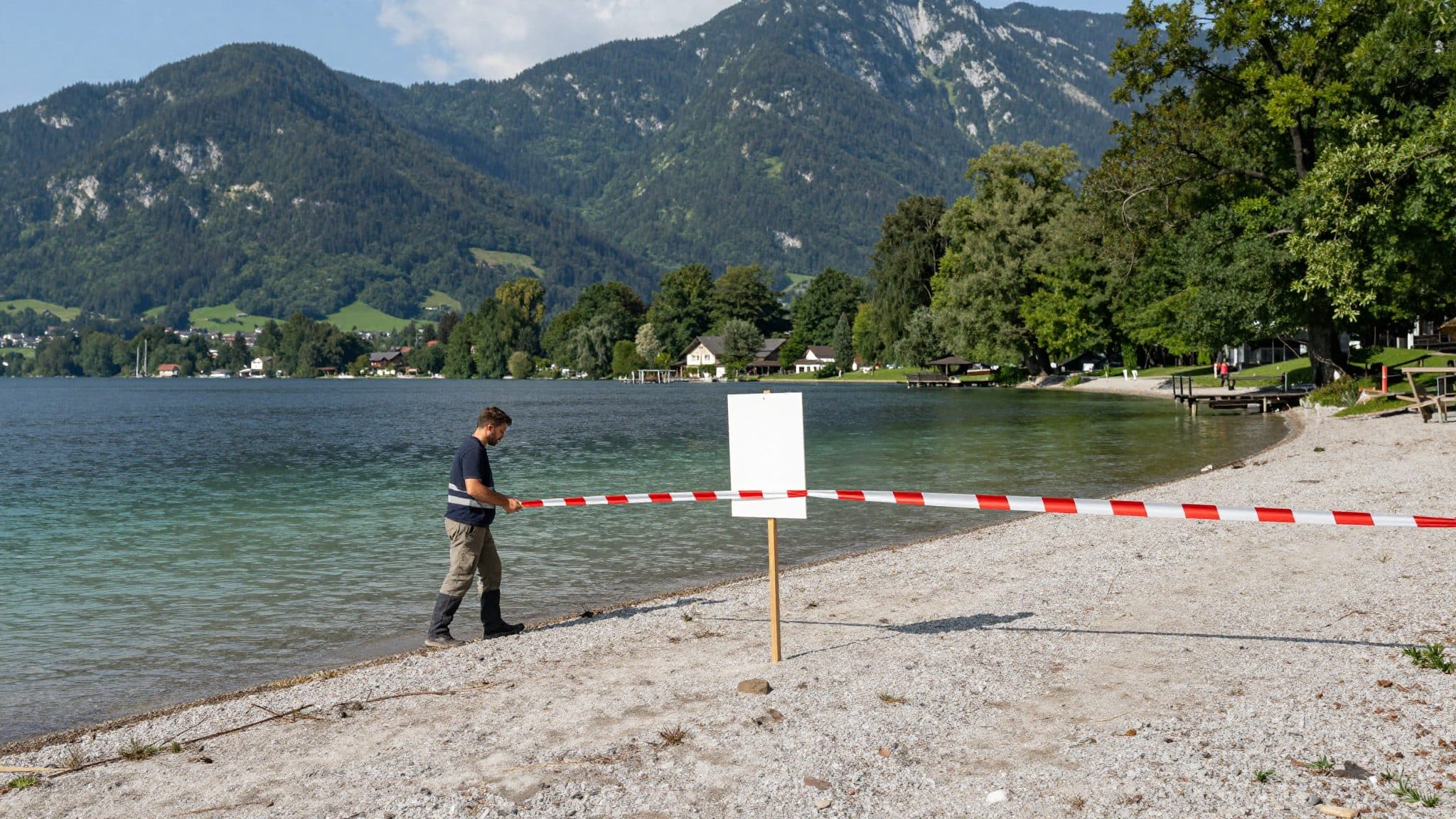
AI-generated image (z-image via Kie.ai)
Summary
The Bezirkshauptmannschaft (District Authority) Gmunden lifted the closure of the Nussensee in Bad Ischl on Monday afternoon. Following the discovery of approximately 200 kilograms of wartime material by a 35-year-old man, the Bomb Disposal Service assessed that there was no further acute danger.
Bad Ischl, 28 July 2026
The Bezirkshauptmannschaft Gmunden lifted the access ban around the Nussensee in Bad Ischl on Monday, 27 July 2026, after the Bomb Disposal Service of the Austrian Armed Forces found no further acute danger during a renewed search.
On Monday afternoon at 2:40 p.m., a multi-day closure around the Nussensee in the Upper Austrian municipality of Bad Ischl came to an end. As the Bezirkshauptmannschaft Gmunden announced, the hazardous situation could be lifted according to the assessment of the Bomb Disposal Service. The area is accessible again. Employees of the municipality of Bad Ischl subsequently removed the barricades and warning signs.
Trigger: Find by a passer-by
The operation had been triggered by the discovery of wartime relics by a 35-year-old man from the district of Gmunden on the evening of 25 July 2026. The initially discovered objects were pull igniters from the Second World War. Because of the potential danger to visitors, swimmers and local residents, the closure was provisionally extended to the entire shoreline area as well as the hiking trail around the Nussensee.
District Captain Alois Lanz reported that the Bomb Disposal Service of the Armed Forces had secured two one-kilogram TNT explosive devices, which had been stored in aluminum housings, as well as hundreds of igniters, screws and two stick grenades. Due to the ongoing drought, the water level of the approximately 15-meter-deep Nussensee had dropped by five to ten metres, according to the District Captain. As a result, wartime relics from the Second World War had come to light.
Authorities extend closure to entire shoreline
The OÖN had previously reported: 200 kilos of ammunition and explosive devices: Nussensee in Bad Ischl officially closed. The lake is located in the municipal area of Bad Ischl in the district of Gmunden in Upper Austria. Due to the high level of danger for tourists, swimmers and local residents, Lanz had extended the access ban to the entire shoreline area as well as the adjacent hiking trail around the lake.
On 26 July, the first day of clearance, the emergency services encountered further suspicious objects along the shore and subsequently enlarged the search area. During this process, small quantities of igniters, grenades and infantry ammunition were also found. Among them were two one-kilogram TNT explosive devices, which were secured by the Bomb Disposal Service and subsequently removed.
Renewed search on 27 July
On Monday, 27 July 2026, a renewed search was conducted between 8:30 a.m. and 2 p.m. for possible remnants from the Second World War. In the course of the extensive operations, approximately 200 kilograms of ammunition, ignition and explosive material were ultimately secured. The Bomb Disposal Service described the secured material as kilogram by kilogram war scrap.
Following the completion of the further search measures and the expert assessment by the Bomb Disposal Service, the hazardous situation could now be lifted. The area is accessible again. According to the assessment of the Bomb Disposal Service, there was no further acute danger, as the authority announced.
Drought exposes lake bed
The Nussensee, which is normally about 15 metres deep, had lost five to ten metres of water level due to the ongoing drought. The exposed shore had repeatedly revealed ammunition parts from the Second World War era, which had been stored underwater for decades and had now come to light through the receding water.
The Bomb Disposal Service of the Austrian Armed Forces and the police had carried out the operation jointly. Following an extensive operation by the Bomb Disposal Service of the Austrian Armed Forces and the police, the search for wartime relics at the Nussensee in Bad Ischl could be concluded, according to the Bezirkshauptmannschaft.
The closure had originally been imposed because of the discovery of approximately 200 kilograms of ammunition and explosive devices. The authorities had closed off the entire shoreline area and the hiking trail around the lake to visitors in order to protect the population. With the lifting at 2:40 p.m. on Monday, access to the lake shore and the adjacent hiking trail is again possible without restriction.
Area accessible again
Passers-by and swimmers can now use the area again. The municipality of Bad Ischl had the barricades and warning signs removed immediately after the access ban was lifted. The lake is thus fully accessible again as a recreational area for the coming days and weeks.
The Bezirkshauptmannschaft Gmunden lifted the previously applicable access ban at 2:40 p.m. The imposed access ban was lifted on Monday. The authority emphasized that the safety of visitors had been the top priority.
Overall, the emergency services secured two one-kilogram TNT explosive devices in aluminum housings, hundreds of igniters, screws, two stick grenades, small quantities of infantry ammunition as well as additional grenades. The material was properly removed and rendered harmless.
Background: Wartime relics in Upper Austria
The drought of the past weeks had caused the lake's water level to drop so significantly that parts of the lake bed were exposed. In this exposed area, the relics from the Second World War had been located, which had been hidden in the mud for decades.
The case shows how much climate-related changes can also expose previously hidden dangers from past wars. The authorities in Upper Austria stated that they will continue to keep comparable locations under observation in the future should water levels drop further.
Local residents and tourists expressed relief on Tuesday about the lifting of the closure. The Nussensee is a popular excursion destination in the Bad Ischl region and attracts numerous visitors especially in summer, who use the lake as a bathing spot and hiking area.
The Bezirkshauptmannschaft Gmunden thanked the Bomb Disposal Service of the Armed Forces and the police in its statement for the smooth execution of the multi-stage search and clearance operations. Without their work, the closure might have had to be maintained for longer.
Questions & Answers
Who ordered the closure of the Nussensee in Bad Ischl and lifted it again?
The Bezirkshauptmannschaft Gmunden under District Captain Alois Lanz had imposed the access ban and lifted it again on Monday, 27 July 2026, at 2:40 p.m. after the assessment of the Bomb Disposal Service.
Which dangerous finds were secured at the Nussensee?
The Bomb Disposal Service of the Austrian Armed Forces secured two one-kilogram TNT explosive devices in aluminum housings, hundreds of igniters, screws, two stick grenades and small quantities of infantry ammunition – a total of approximately 200 kilograms of ammunition, ignition and explosive material from the Second World War.
Why did the wartime relics come to light at the Nussensee?
Due to the ongoing drought, the water level of the approximately 15-metre-deep Nussensee had dropped by five to ten metres, causing previously submerged relics from the Second World War to become visible on the shore.
Nussensee Bad Ischl: Closure lifted after ammunition find | allfacts360