Sick notes from the first day: Coalition plans and criticism | allfacts360
Coalition agrees on tightening of sick note rules: Criticism from doctors, unions, and SPD-affiliated politicians
Berlin, 04 July 2026
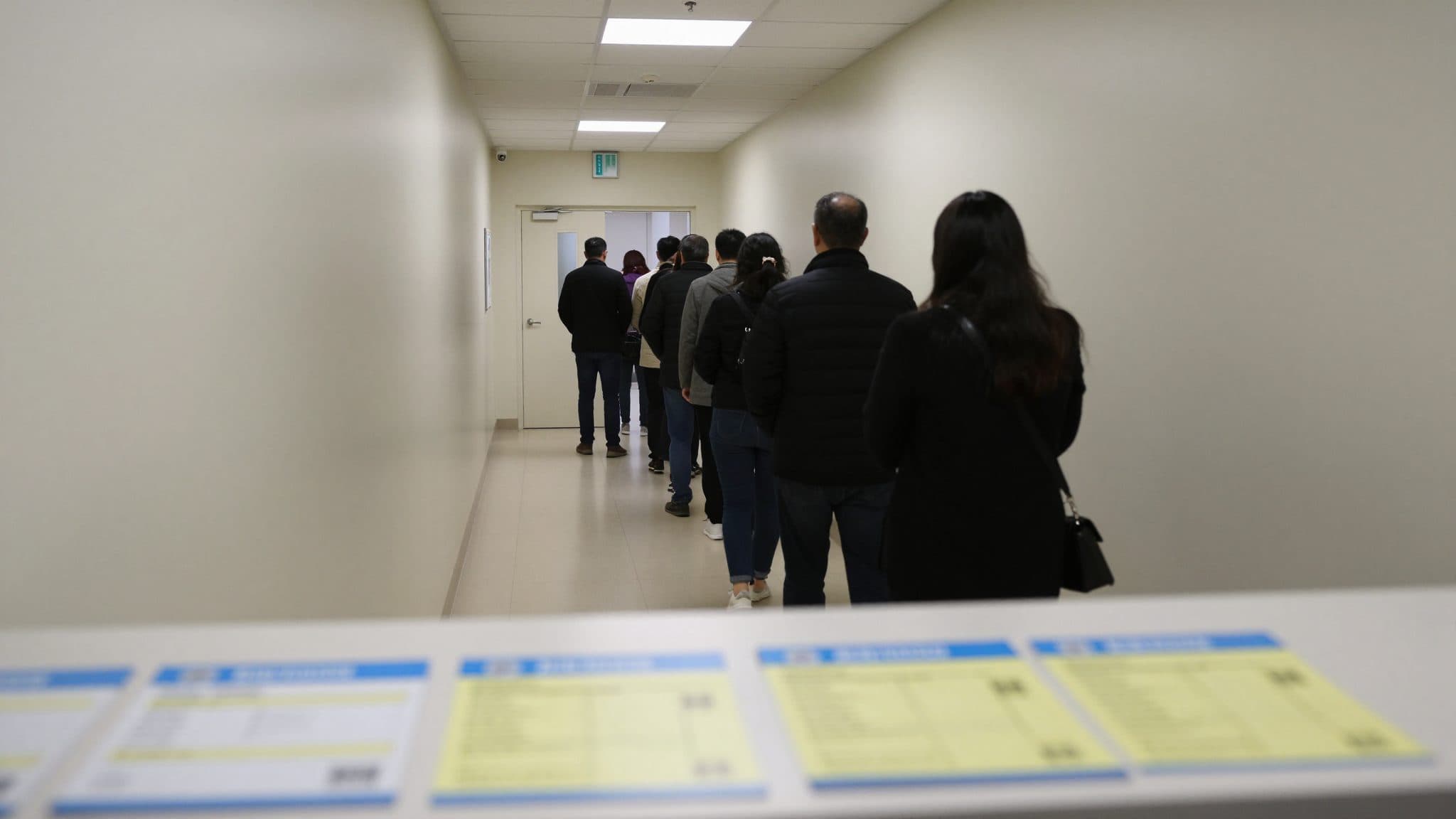
AI-generated image (z-image via Kie.ai)
Summary
The Union and SPD have agreed in the coalition committee on a tightening of sick note rules. In the future, a certificate of incapacity for work will generally have to be submitted from the first day of illness, and telephone sick notes are to be abolished. Family doctors, the patients' representative, and parts of the SPD warn of fuller practices and more sick days.
Berlin, 04 July 2026
The coalition committee of CDU/CSU and SPD agreed this week on changes to the certificate of incapacity for work; in the future, employees will have to submit this to their employer from the first day of illness, and the telephone sick note will be scrapped without replacement.
The federal government announced the plans on Thursday. According to its own statements, the coalition's goal is to reduce the high level of sick leave and strengthen the economy. The coalition is also relying on a primary care physician system: family doctors are to refer patients to specialists in a more targeted manner and thus shorten waiting times. A so-called appointment guarantee for specialists is also part of the reform package.
Federal Chancellor Friedrich Merz (CDU) sees the reform as a return to the regulations that applied before the coronavirus pandemic. "Wir kehren zu der Regelung zurück, die wir vor Corona hatten", said Merz. Currently, the medical certificate is only required from the third day; a sick note can be issued by a doctor. In the future, a certificate of incapacity for work should fundamentally be required from the first day of illness.
Decision of the Coalition Committee
Merz also pointed out that employees are not necessarily required to go to the practice on the first day: "Sie müssen nicht am ersten Tag in die Arztpraxis. Sie müssen vom ersten Tag eine Arbeitsunfähigkeitsbescheinigung haben." Doctors can already today certify incapacity for work retroactively in exceptional cases, for a maximum of three days. A sick note can also continue to be issued via video consultation; so far, it is only certain that the video consultation is to be retained.
Companies can already today, under Section 5 of the Continued Remuneration Act (Entgeltfortzahlungsgesetz), demand a certificate from the first day without having to give a reason. In addition, employees can already now be obliged to submit a certificate from the first day through their employment contract, works agreement, or collective bargaining agreement. With the new regulation, this step would become mandatory for everyone.
Headwind is coming both from the coalition party SPD and from family doctors and trade unions. The federal government's patients' representative, Stefan Schwartze (SPD), told the Funke Mediengruppe: „Das Aufsuchen einer Arztpraxis sei bei vielen Krankheitsbildern eine unnötige Belastung für alle und erhöhe die Ansteckungsgefahr". He fears „dass sich noch mehr Arbeitnehmende krank zur Arbeit schleppten, nicht genäsen und letztendlich aufgrund langwieriger Verläufe mehr Krankheitstage aufwiesen". Schwartze called on policymakers to continue expanding digital and telemedicine offerings.
Criticism from the medical profession and the patients' representative
The federal chairwoman of the German Association of Family Physicians (Hausärztinnen- und Hausärzteverband), Nicola Buhlinger-Göpfarth, spoke of "reiner Symbolpolitik" in a conversation with the Rheinische Post (Saturday edition). „Die geplante Neuregelung werde weder den Krankheitsstand reduzieren noch Missbrauch verhindern", she said. The German Trade Union Confederation (DGB) expressed a similar view.
Markus Blumenthal-Beier, chair of the German Association of Family Physicians, warned: „Es werden in dieser Kombination mehrere Millionen mehr Patientinnen und Patienten in unsere sowieso schon sehr vollen Praxen drängen." In addition, in combination with the planned primary care physician model, it would presumably become more difficult to get short-term appointments. Buhlinger-Göpfarth therefore demands that action be taken instead against dubious providers of video consultations, rather than abolishing the telephone sick note.
The National Association of Statutory Health Insurance Physicians (Kassenärztliche Bundesvereinigung) expects at least 30 million additional practice visits per year as a result of the reform. The background is also that, according to analyses by the Central Institute for Statutory Health Care Physicians' Care (Zi) and Barmer, the telephone sick note recently accounted for only 0.8 to 1.2 percent of all certificates of incapacity for work. There is no evidence that the telephone sick note is a significant driver of higher absenteeism.
The role of telephone and video consultation sick notes
Blumenthal-Beier put it this way: „Mit der telefonischen Krankschreibung hat das alles gar nichts zu tun." The telephone sick note was introduced as a special regulation during the COVID-19 pandemic to reduce the risk of infection in practices and has since become regular practice – currently it is possible for up to five days.
From the SPD, there is open criticism of the coalition's own compromise. SPD General Secretary Tim Klüssendorf and party chairman Lars Klingbeil pointed out that the Union had originally demanded a waiting day without continued pay; the SPD had rejected this. Klingbeil defended the compromise in principle but made clear on ZDF that the concrete implementation is still open: „Natürlich müssen wir das jetzt so machen, dass niemand krank zur Arbeit geht ... Nun müsse man ‚gute, pragmatische Lösungen finden‘.
Resistance from the SPD
SPD health politician Christos Pantazis demanded a sound scientific basis: „Tiefgreifende Änderungen bei den Regelungen zur Arbeitsunfähigkeit müssen auf einer belastbaren wissenschaftlichen und empirischen Grundlage beruhen." The Berlin SPD chief Steffen Krach also sharply criticized the plans in a conversation with the Süddeutsche Zeitung: „Das ist komplett absurd, das muss jeder in der Union verstehen, der noch bei Verstand ist." The package was "ein Widerspruch in sich", because it aimed to reduce bureaucracy, "aber damit belaste man das Gesundheitssystem in einer unfassbaren Form zusätzlich". Krach announced that, as the SPD's top candidate for the Berlin election coming up in September, he would continue to fight for changes.
Within the Union as well, the reform is being promoted with different accents. Union parliamentary group leader Jens Spahn pointed to around 18 sick days per employee per year on average and said the new regulation helps employees decide to go to work and is "auch fairer gegenüber den Kollegen". Those who wake up sick in the morning, "sitzt auf der Bettkante und überlegt: Passt das heute?". The Union parliamentary group and the Chancellor see the measure as a signal against what they consider to be an excessively high level of sick leave.
For the reported days of incapacity for work per insured employee, the company health insurance fund BKK records an increase from 18 days in 2016 to 22 days. According to DAK, DAK-insured persons were on sick leave for an average of 19.5 calendar days in 2025. Respiratory illnesses increased significantly: in 2016 there were 2.7 sick days per employed insured person, and by 2024 this had risen to 4.4 days.
Figures on sick leave
Experts estimate that 40 to 60 percent of the increase since 2022 is attributable to the electronic sick note (eAU), which automatically transmits every sick note to the health insurance funds. An IGES survey for DAK also found that 92.2 percent of employees stated that they never "skipped work" ("blauzumachen"); 7 percent said they did so rather rarely.
In international comparison, according to IGES data, Germany is in the middle of the field with 3.6 weeks of illness-related absence per year. Norway leads the comparison with almost six weeks, followed by Finland and Spain with five weeks each. However, according to the IGES Institute, self-reported data allows better international comparability than purely administrative data.
International comparison and tougher penalties
In parallel, the coalition is tightening the penalties under Section 278 of the Criminal Code (Strafgesetzbuch), which punishes the issuing of incorrect health certificates with imprisonment of up to two years or a fine. Government spokesperson Stefan Kornelius stressed in Berlin that the reform still needed to be fleshed out in concrete terms: „Das heißt nicht, dass man am ersten Tag zum Arzt gehen sollte." This is intended to prevent employees from having to go to a crowded practice even with mild symptoms.
The family doctor associations are reacting cautiously to this assurance. The planned abolition of the telephone sick note and the certificate requirement from the first day would inevitably lead to more patient contacts in practice – and this in a system in which, according to the Techniker Krankenkasse, more than half of those with statutory insurance wait longer than four weeks for a specialist appointment.
Questions & Answers
What have the CDU/CSU and SPD coalition decided on sick notes?
The coalition committee of the Union and SPD agreed this week that employees should generally have to submit a certificate of incapacity for work from the first day of illness; at the same time, the telephone sick note is to be scrapped without replacement.
Why are family doctors and the patients' representative criticizing the plans?
The federal chairwoman of the German Association of Family Physicians, Nicola Buhlinger-Göpfarth, calls the plans "reine Symbolpolitik"; the patients' representative Stefan Schwartze fears that in the future employees will drag themselves to work sick even more often in order to avoid going to the practice, and will be absent for longer as a