
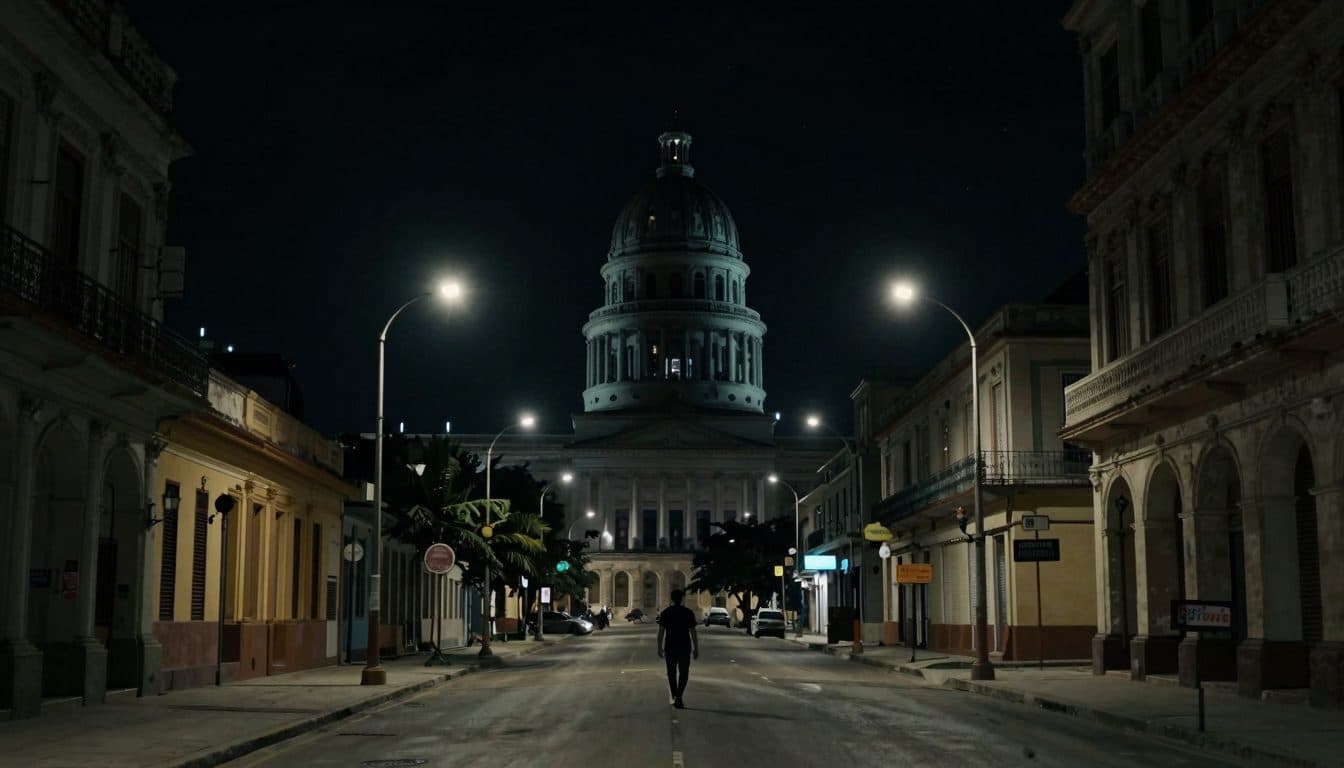
Havana, July 11, 2026
Cuba suffered on Friday the second complete collapse of its national electricity grid within a week, as confirmed by the state-run energy provider UNE.
The collapse occurred in the afternoon at around 4:30 p.m. local time (10:30 p.m. CEST), as UNE announced on online media. The company explicitly spoke of a "complete collapse of the national electricity grid." As a result, power was cut off across the entire island, including the capital Havana and all provinces.
The official newspaper of Cuba's Communist Party, "Granma," wrote on the platform X: "El colapso se produjo en medio de una crisis energética crítica que ya golpea con fuerza al país." With this, the mouthpiece of the ruling party placed the incident within a longer-term energy supply crisis and indirectly acknowledged the severity of the situation.
Background: An island in an energy crisis
Just a few days ago, according to official information, a similarly widespread outage had occurred. This is the second nationwide blackout within a week. The frequency of such incidents highlights the vulnerability of the Cuban power grid, which is among the oldest and most heavily strained in the region.
After the collapse, emergency protocols were activated. These include, among other measures, the gradual restoration of supply to strategically important facilities – including hospitals, waterworks, and telecommunications nodes. The complete normalization of the grid typically takes several hours to days, as the power plants must be brought back online gradually.
Impact on the population
For the population, a nationwide power outage means significant restrictions in daily life. Without electricity, refrigerators, air conditioners, elevators, and water pumps do not work. During the hot summer months, people suffer particularly from the consequences, as even nighttime relief becomes impossible without fans.
The current energy crisis in Cuba has multiple causes. A central role is played by the high oil demand of the thermal power plants that generate the bulk of the island's electricity. Bottlenecks in fuel supply and outdated facilities, some of which have been in operation for decades, further aggravate the situation.
Causes of the ongoing crisis
Economic problems and foreign currency shortages have further exacerbated the already strained situation in recent years. Maintenance work at power plants is delayed, and spare parts are scarce. International sanctions also complicate the import of energy equipment and fuels, significantly limiting the government's room for maneuver in managing the crisis.
The Cuban government had increasingly turned to renewable energies and photovoltaic systems in recent months to reduce dependence on imported fossil fuels. However, the expansion of these capacities is still in its infancy and cannot yet compensate for the loss of conventional generation.