Ebola Outbreak in Congo Growing Faster Than the Containment: Over 2,000 Cases and 754 Deaths
Geneva, July 15, 2026
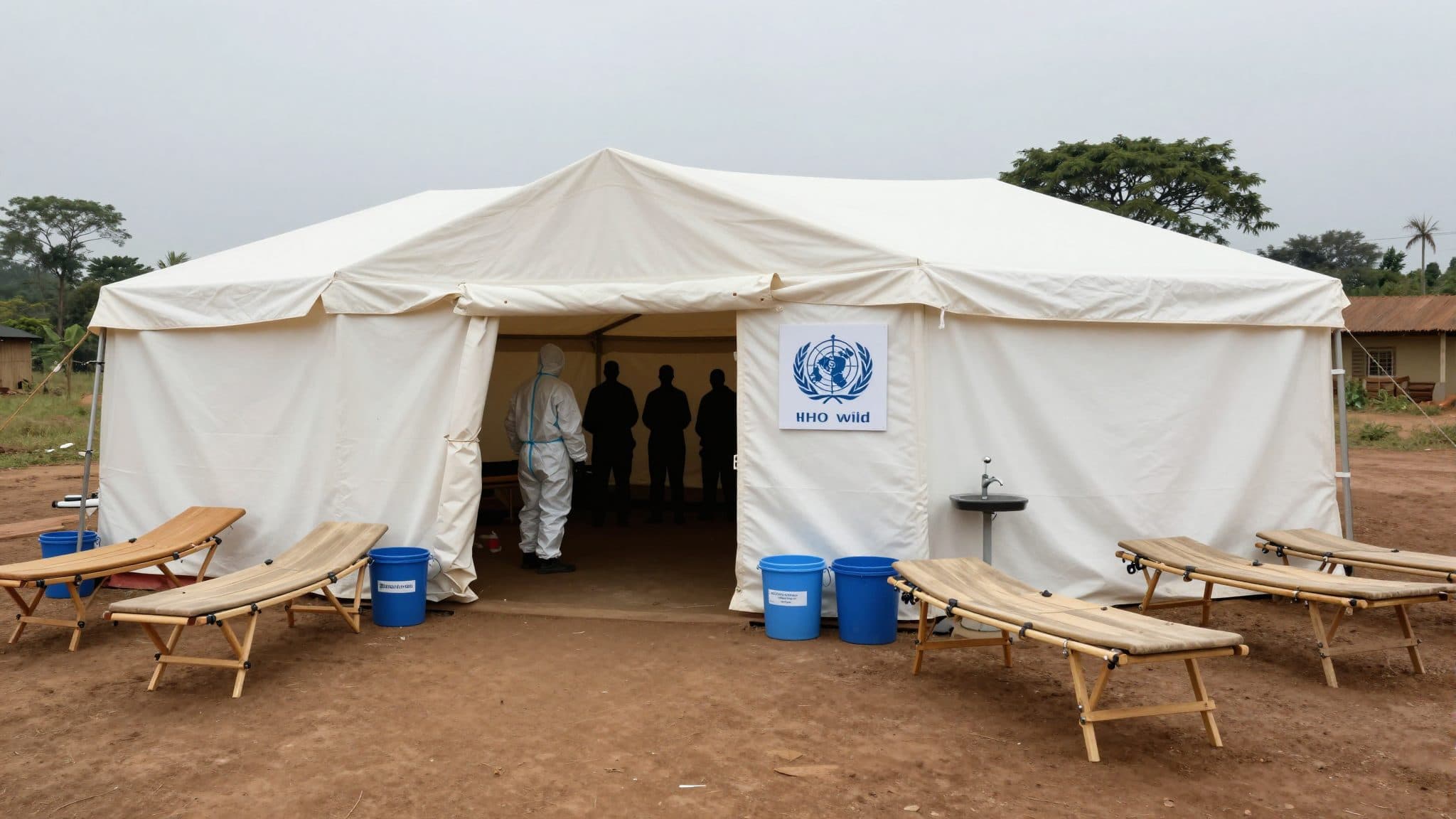
AI-generated image (z-image via Kie.ai)
Summary
In the east of the Democratic Republic of Congo, the Bundibugyo strain of the Ebola virus is spreading faster than aid workers can respond. According to official data from Kinshasa, more than 2,011 infections and 754 deaths have now been confirmed – Africa CDC describes it as the fastest Ebola outbreak ever documented on the African continent.
Geneva, July 15, 2026
In the east of the Democratic Republic of Congo, the Ebola outbreak has, according to official data from the government in Kinshasa, expanded to 2,011 confirmed cases and 754 deaths, with the World Health Organization warning that around 80 percent of new infections come from unknown chains of transmission.
The current outbreak in the Democratic Republic of Congo is particularly difficult to contain. It involves the Bundibugyo strain of the Ebola virus, for which there is neither an approved vaccine nor a specific therapy. Work is, however, being done on a vaccine, and clinical trials for Ebola treatments began last week.
Ebola is a life-threatening disease. The virus is transmitted through physical contact and contact with bodily fluids. Deceased patients are considered highly infectious and must be buried under strict hygiene rules to prevent further infections. According to the WHO, 90 percent of all contacts of an infected person would need to be identified and monitored for 21 days to stop the spread – a threshold that aid workers are currently failing to meet in many areas.
No Vaccine, No Therapy
On Tuesday, the number of confirmed Ebola cases rose to 2,011, according to official data from the government in Kinshasa. As early as Monday, 54 cases had been confirmed alone in the provinces of Ituri, North Kivu, and Haut-Uele. According to one statistic, a total of 1,926 people have been infected in the three affected provinces since the outbreak began. According to the latest government figures, 754 infected people have died.
The actual number is likely considerably higher, partly because of the drastic quarantine measures for those infected. WHO Emergency Director Chikwe Ihekweazu told reporters in Geneva after a visit to Bunia that in Ituri province, 70 to 80 percent of new cases had not previously been on a contact list. Ihekweazu also stated that the true extent of the outbreak could be two to four times as large as officially reported.
Unreported Cases and Unknown Chains of Transmission
According to the WHO, Bunia is one of the hardest-hit cities. There, treatment capacity is rising weekly to now nearly 800 beds. Laboratory capacity has also grown from one laboratory to 14 laboratories. Nevertheless, according to the WHO, the contact-tracing rate, depending on the region and source, is only between 55 and 64 percent – too low to contain the virus.
The Africa Centres for Disease Control and Prevention declared the outbreak to be the fastest-growing Ebola event ever documented on the African continent. Wessam Mankoula of Africa CDC said at a press conference that the current Ebola outbreak is the one with the fastest growth ever: «nicht nur im Vergleich zu früheren Bundibugyo-Ausbrüchen, sondern auch im Vergleich zu allen anderen Ebola-verursachenden Virusarten».
The Congolese authorities had declared a new Ebola outbreak on May 15 – however, by that point the virus had already been spreading unnoticed for weeks. According to the WHO, the pathogen had been circulating for weeks before the official declaration. On June 2, WHO Director-General Tedros Adhanom Ghebreyesus acknowledged that the disease had had a head start and that the WHO was trailing behind the epidemic.
Fastest Outbreak of All Time
The expression of helplessness is also reflected in a WHO statement from early July: «as of today, 80% of new cases are outside our contact lists and so are coming to us from unknown chains of transmission». Ihekweazu also said: «Perhaps the most alarming finding is that many of the newly reported deaths are people who died in their communities without ever reaching a health facility and without receiving care».
John Bahati Nguna told the news agency: «Wir beerdigen Menschen, die vier Tage lang ohne medizinische Hilfe zu Hause waren, und es ist offensichtlich, dass sie an Ebola starben». According to this, many newly reported deaths occur in the communities without the patients ever reaching a health facility.
Tropical medicine specialist Martin Grobusch expects that the current outbreak could last into the coming year. Tedros, too, had emphasized at the end of May during a visit to eastern Congo that the outbreak could only be contained if the affected communities were at the center of the response and the population supported the measures.
Conflicts, Mistrust, and Strikes
The response is being made more difficult by several factors: a funding gap, attacks on health centers, an ongoing conflict in eastern Congo, and mistrust among local communities are hampering containment efforts. In Ituri province, dozens of armed groups are active, and hundreds of thousands of people have been displaced. The outbreak has now spread to 42 of 117 health zones in three provinces.
Many donor countries have drastically cut their humanitarian aid payments in the past year. International aid organizations are receiving less money, leading to the closure or limited functionality of health centers. Because of the cuts, the World Food Programme (WFP) no longer has sufficient food for all those in need. Olivier Nkakudulu of WFP in Ituri warned in an interview in June: «Die Hygienemassnahmen sehen vor, dass Menschen in bestimmten Gebieten bleiben sollen. Aber wenn diese Menschen keine Nahrungsmittelhilfe bekommen, halten sie sich natürlich nicht an die Anordnung. Sie werden sich etwas zu essen suchen, auf den Märkten oder an anderen Orten. Dabei können sie andere Menschen anstecken.»
Consequences for Uganda and the USA
In Rwampara District, dozens of employees of an Ebola treatment center – including epidemiologists, drivers, and gravediggers – walked off the job on Monday. Some clinic workers had already begun striking the previous week. On Tuesday, those on strike agreed to resume work on the condition that the government pays them within 72 hours. They told the AP news agency that they had not been paid for almost two months. The strikers declared: «Just one day of strike action has already caused damage. Patients were unable to access the center» and announced: «We hold the government solely responsible for any loss of life if the site closes after this ultimatum».
The fear of a cross-border spread is acute. In neighboring Uganda, 20 Ebola cases have been confirmed according to official data, including two deaths. The USA, meanwhile, is resorting to strict measures to prevent the infection from being brought into the country. US citizens staying in the DR Congo are no longer allowed to travel directly to their homeland. They must first stay in a third country for at least 21 days before they are allowed back into the USA. On July 11, the US Centers for Disease Control and Prevention (CDC) announced that a US citizen who had been working for an aid organization in Congo had tested positive for the Ebola virus.
Despite all the adversities, the ongoing clinical trials and the expanded laboratory capacity show that the international community is not giving up on the outbreak. Whether the measures will take effect quickly enough, however, remains uncertain – the WHO speaks of a race that the aid workers have not yet won: «we have not caught up in the race».
The authorities and aid organizations are under enormous pressure. The coming weeks are considered decisive for whether the containment strategy – contact tracing, safe burials, vaccine development, and food aid – can be halted. (APA, 15.7.2026)
Questions & Answers
Which type of Ebola has broken out in Congo?
The rare Bundibugyo strain of Ebola is circulating in Congo, for which, according to the WHO, there is neither an approved vaccine nor a specific therapy. Work is, however, being done on a vaccine.
Why is the virus spreading so quickly?
According to the WHO, around 80 percent of new cases come from unknown chains of transmission, because contact tracing is only between 55 and 64 percent. Armed conflicts in Ituri, attacks on health facilities, mistrust among the population, and strikes by clinic staff due to unpaid wages are additional obstacles to containment.
What measures are other countries taking?
In neighboring Uganda, 20 Ebola cases with two deaths have been registered. The USA has imposed an entry ban on US citizens returning directly from Congo; they must first stay in a third country for at least 21 days.
Ebola Congo 2026: Over 700 Dead, Fastest Outbreak | allfacts360