Ebola in DR Congo: 676 cases, outbreak spreads to new zones | allfacts360
Ebola outbreak in DR Congo spreads to three more health zones, with 676 confirmed cases
Berlin, 12 June 2026
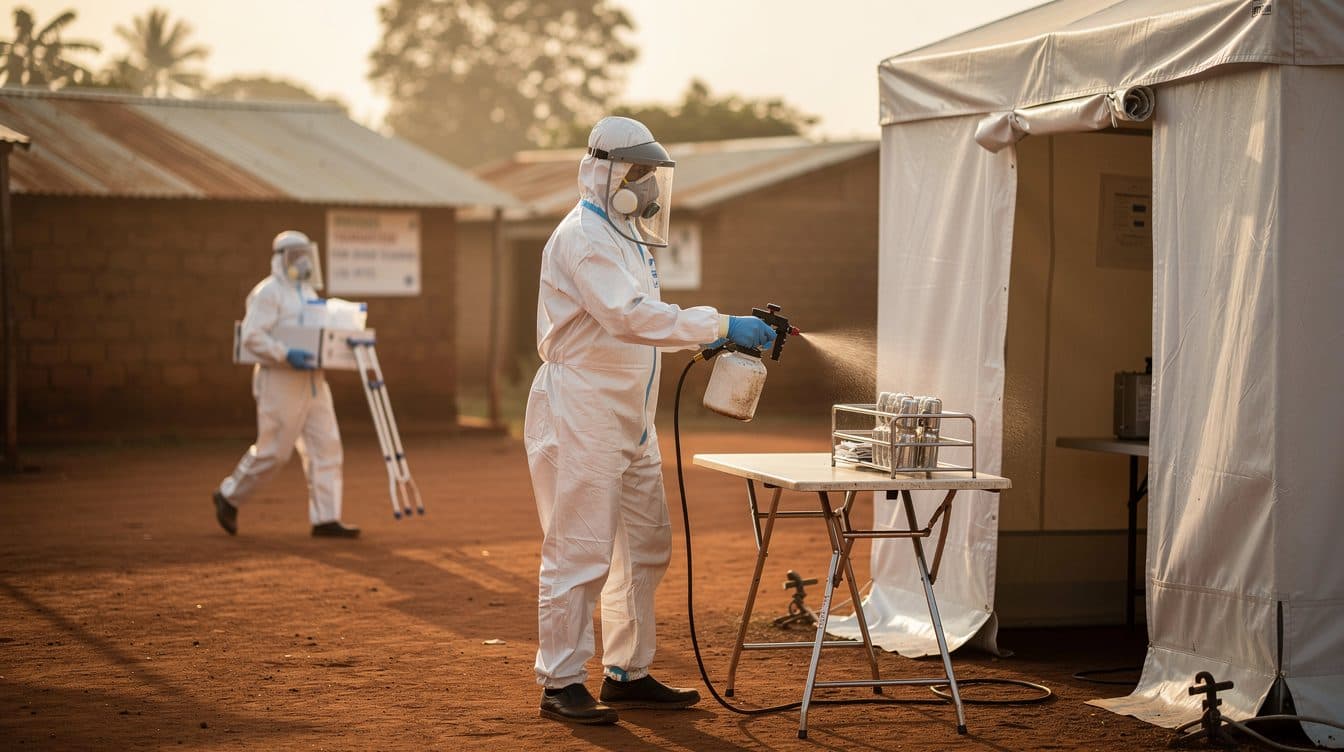
AI-generated image (flux-2/pro-text-to-image via Kie.ai)
Summary
The Democratic Republic of the Congo has reported 676 confirmed Ebola cases, including 136 deaths, as the outbreak spreads to three additional health zones in North Kivu and Ituri provinces. Distrust of health workers and attacks on burial teams have complicated efforts to contain the epidemic in conflict-affected eastern Congo.
Berlin, 12 June 2026
The Democratic Republic of the Congo has reported 676 confirmed Ebola cases, including 136 deaths, as the outbreak that began in May has spread to three additional health zones in the conflict-affected provinces of North Kivu and Ituri.
Scale of the outbreak
According to the country's health ministry, the number of confirmed Ebola cases has risen to 676, with 136 deaths recorded among those confirmed infections. The figures were announced on Wednesday evening local time, and a government report published on Thursday confirmed the geographic expansion of the epidemic. "Die Zahl der bestätigten Fälle sei inzwischen auf 676 gestiegen, teilte das Gesundheitsministerium gestern Abend mit," the ministry said, according to Deutschlandfunk, which broadcast the report on 12 June 2026.
The outbreak is caused by the Bundibugyo strain of the Ebola virus and was officially announced on 15 May. Health officials say it went undetected for weeks before the first cases were confirmed, allowing the virus to circulate in several communities before response teams could be deployed. "blieb den Behörden zufolge jedoch wochenlang unentdeckt," the broadcaster reported.
The epidemic is now raging in three provinces of eastern Congo that have long been shaped by armed conflict: Ituri, North Kivu, and South Kivu. Together, these provinces account for the bulk of the confirmed caseload and have repeatedly been described by humanitarian organizations as among the most difficult operating environments in the world. "Die Epidemie wütet in drei von bewaffneten Konflikten geprägten Provinzen: Ituri, Nord-Kivu und Süd-Kivu," the report said.
How the Congolese health system is organised
In the Congolese health system, a health zone comprises a network of clinics and a referral hospital serving approximately 100,000 to 150,000 people. There are more than 500 such zones nationwide. The three newly affected zones are in North Kivu and Ituri, raising concerns that the virus is moving into areas that are hard to reach and where health infrastructure is already stretched thin. "Betroffen sind jetzt drei weitere sogenannte Gesundheitszonen in den Provinzen Nord-Kivu und Ituri," the broadcaster reported.
Public health experts point to a pattern familiar from previous epidemics in the region: distrust toward health personnel, combined with attacks on burial teams and treatment centers, has slowed the response. "Misstrauen gegenüber Gesundheitspersonal und Angriffe auf Bestattungsteams und Behandlungszentren erschwerten die Bekämpfung," the report noted. In some communities, families have resisted safe burial practices, which are considered critical to limiting transmission.
Obstacles to containment
The current outbreak is being described as a "Massiver Ausbruch," a massive outbreak, by both the health ministry and independent observers. Earlier reporting by Deutschlandfunk referred to "fast 600 bestätigte Ebola-Fälle" before the official tally climbed higher. The trajectory of the curve, combined with the geographic spread, has prompted international concern that the epidemic could grow further if containment measures are not reinforced.
The 2018–2020 Ebola epidemic in the Democratic Republic of Congo, which caused more than 2,200 deaths, remains the world's second-largest Ebola epidemic on record. "darunter die zweitschwerste Epidemie weltweit von 2018 bis 2020 mit mehr als 2200 Toten," the broadcaster reported, underscoring how difficult it has been historically to bring such outbreaks under control in the country's east. That earlier epidemic also unfolded largely in North Kivu and Ituri, the same provinces now at the center of the current response.
A country shaped by past epidemics
The Democratic Republic of the Congo has experienced several devastating Ebola outbreaks over the past decades, and health workers have built up significant experience in surveillance, contact tracing, and the use of vaccines. "Das zentralafrikanische Land hat bereits mehrere verheerende Ebola-Ausbrüche erlebt," the report noted. The challenge this time, observers say, is the combination of active armed conflict, population displacement, and community mistrust, which together create conditions under which the virus can spread quickly.
Health zones in the eastern provinces are not only the front line of the Ebola response but also serve populations that have been displaced by years of fighting between government forces, militia groups, and other armed actors. Movement of people across zones, and across borders with neighboring countries, raises the risk of wider regional spread. Aid agencies have warned that surveillance at internal checkpoints and cross-border points will be essential to keep the outbreak from spilling into new areas.
Treatment centers in the affected zones are being expanded, and vaccination rings are being organized around confirmed cases using the Ervebo vaccine and, where appropriate, newer formulations shown to be effective against the Bundibugyo strain. Safe and dignified burials, contact tracing, and community engagement are also central to the response, though all of these depend on the cooperation of local populations and on access, both of which are limited in conflict zones.
Vaccines, treatment, and the role of partners
The health minister announced the updated case figures on the short-message platform X the previous evening, local time, "teilte der Gesundheitsminister gestern Abend (Ortszeit) auf der Kurznachrichtenplattform X mit," the broadcaster reported. Public communication through social media is considered important in reaching younger Congolese audiences, who often get information first from platforms rather than from traditional health messaging.
International partners, including the World Health Organization, Médecins Sans Frontières, and the International Federation of Red Cross and Red Crescent Societies, are supporting the Congolese response with personnel, laboratory capacity, and supplies. Coordination between the central government in Kinshasa and provincial health authorities in Goma and Bunia is being strengthened, and additional mobile laboratories are being deployed to speed up diagnostic turnaround times in the newly affected zones.
The health ministry has not yet released a projected end date for the outbreak. The standard benchmark for declaring an Ebola outbreak over is 42 days, or two incubation periods, after the last confirmed case tests negative for the virus. Given the rate of new infections and the geographic expansion into three more health zones, officials acknowledge that target is still far off. Until then, the focus is on slowing transmission, protecting health workers, and rebuilding trust with communities that have sometimes been hostile to outside responders.
What comes next
For now, the immediate priorities are clear: reaching the newly affected zones, identifying and isolating contacts of confirmed cases, ensuring safe burials, and maintaining vaccination rings. Whether those efforts succeed will depend heavily on whether attacks on health workers can be reduced and whether community confidence in the response can be restored in the weeks ahead.
Questions & Answers
How many confirmed Ebola cases has the Democratic Republic of the Congo reported?
According to the country's health ministry, the number of confirmed Ebola cases had risen to 676 as of Wednesday, with 136 deaths recorded among those confirmed infections.
Which provinces are most affected by the current Ebola outbreak?
The epidemic is concentrated in three conflict-affected provinces in eastern Congo — Ituri, North Kivu, and South Kivu — with three additional health zones in North Kivu and Ituri newly affected.
Why is the response to the outbreak proving so difficult?
Distrust toward health personnel and attacks on burial teams and treatment centers have hampered containment efforts, particularly in provinces where armed conflict limits access and population movement is high.