DR Congo Ebola Outbreak: 900+ Suspected Cases, WHO Raises | allfacts360
Ebola Outbreak in DR Congo Surpasses 900 Suspected Cases, Over 200 Dead
Bunia, 29 May 2026
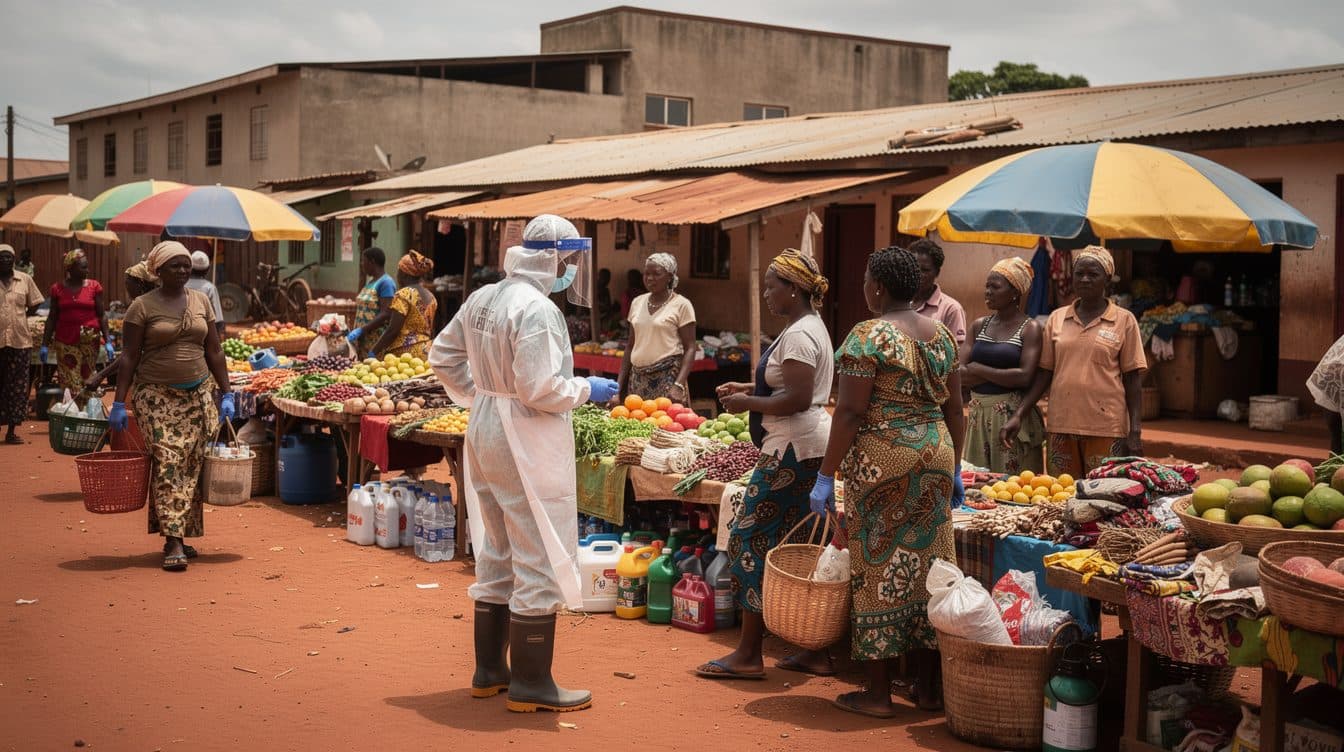
AI-generated image (flux-2/pro-text-to-image via Kie.ai)
Summary
The World Health Organization reports more than 900 suspected Ebola cases in the Democratic Republic of the Congo, with over 200 fatalities. The outbreak, driven by the Bundibugyo virus variant, is spreading in urban centers amid deep public mistrust and ongoing armed conflict.
Bunia, 29 May 2026
The World Health Organization (WHO) has confirmed that more than 900 suspected Ebola cases have been registered in the Democratic Republic of the Congo, as the death toll surpasses 200 and the risk of national spread is raised to 'very high.'
A Late and Complex Response
The outbreak is concentrated in the eastern provinces of North Kivu, South Kivu, and Ituri, where the Congolese army has been battling the Rwanda-backed M23 militia for years. The militia seized territory in both Kivu regions last year and is attempting to establish its own administration, further complicating humanitarian access.
WHO Director-General Tedros Adhanom Ghebreyesus announced the updated case count on Sunday, noting that the epidemic has already reached several regions. The agency raised the national spread risk to 'very high' on Friday, while the regional risk is considered 'high' and the global risk remains 'low.'
The current epidemic is caused by the Bundibugyo variant of the Ebola virus, which was first identified in 2007. According to the Congolese government, this variant carries a mortality rate of approximately 30 to 50 percent.
Scouts on the Frontline of Prevention
Local volunteers, including members of the Scout movement, are working to educate communities about prevention. Francois Kasereka, a Scout leader, has been speaking directly with residents about the dangers of physical contact with infected individuals.
"Nicht anfassen!" Kasereka tells his listeners, explaining that they must not touch a sick family member. He emphasizes the importance of hygiene measures such as handwashing and avoiding any contact with the deceased.
"Ich bin Mitglied der Pfadfinder. Wir arbeiten im Moment als Freiwillige, um die Leute vor Ebola zu warnen und sie darüber aufzuklären, wie sie sich vor Ansteckung schützen können," Kasereka explains.
The volunteers face significant challenges due to deep-seated mistrust of authorities among the population. Discussing the disease and protective measures requires considerable tact, especially when it involves handling the bodies of loved ones.
Mistrust and Mobility Fuel Transmission
"Wir tun alles, was wir können, damit die Bevölkerung Hygienemaßnahmen wie das Händewaschen einhält, Kranke nicht anfasst, und auf gar keinen Fall Tote berührt," Kasereka says.
Health workers say the response began much later than usual. "Normalerweise beginnen wir mit den Gegenmaßnahmen, sobald die ersten wenigen Fälle bekannt werden. Nie so spät wie diesmal, als es schon mehrere hundert Fälle gab," a responder noted, describing the outbreak as already large and multi-regional.
The mobility of the population in Ituri province is another complicating factor. "Wir haben es also mit einem großen Ausbruch zu tun, der schon mehrere Regionen erreicht hat. Hinzu komme, dass die Menschen in Ituri sehr mobil seien," the responder added.
The outbreak has also reached urban centers where hundreds of thousands of people live, which facilitates further transmission. "Und dann kommt auch noch hinzu, dass der Ausbruch in städtischen Zentren angekommen ist, wo mehrere Hunderttausend Menschen leben. Leider erleichtert das die Verbreitung noch mehr," the responder said.
The Virus and Its Urban Spread
Kasereka and his fellow Scouts are focusing on direct communication to explain what Ebola is and how the virus is transmitted. "Wir wollen mit den Menschen reden und ihnen erklären, was Ebola ist und wie das Virus übertragen wird," he says.
The goal is to minimize the risk of infection in their city and province. "Wir wollen das Ansteckungsrisiko in unserer Stadt und unserer Provinz so gering wie möglich halten," Kasereka states, acknowledging that this will require sustained effort from all helpers in the coming weeks.
The WHO and other international partners are supporting the Congolese government's response, but the volatile security situation in the east, where armed groups like M23 operate, hampers the delivery of medical supplies and the movement of health personnel.
The Bundibugyo variant, while less deadly than the Zaire strain that caused the 2014-2016 West African epidemic, still poses a serious threat. Early symptoms include fever, muscle pain, and sore throat, progressing to vomiting, diarrhea, and in severe cases, internal and external bleeding.
Challenges in a Conflict Zone
Health authorities stress that early treatment significantly improves survival chances. However, many affected communities lack easy access to healthcare facilities, and the ongoing conflict has displaced thousands, creating conditions that favor the virus's spread.
The Scouts' door-to-door awareness campaign is one of the few effective tools in areas where formal health messaging is met with suspicion. By using trusted local voices, responders hope to break transmission chains that are fueled by traditional burial practices involving direct contact with the body.
The WHO has called for urgent funding and logistical support to scale up surveillance, contact tracing, and vaccination efforts. An experimental vaccine is available, but reaching those most at risk remains a logistical challenge in the conflict-affected region.
As the outbreak continues to evolve, the international community is watching closely. The WHO's risk assessment underscores the potential for further spread within the DRC, though the likelihood of a global epidemic remains low at this stage.
Questions & Answers
What is the Bundibugyo variant of Ebola and how deadly is it?
The Bundibugyo variant was first identified in 2007 and causes the current outbreak in DR Congo. It has a mortality rate of approximately 30 to 50 percent, according to the Congolese government.
Why is the Ebola response in DR Congo more difficult this time?
The response began much later than usual, after hundreds of cases had already appeared, and is complicated by ongoing armed conflict with the M23 militia in the eastern provinces, as well as deep public mistrust of authorities.
How are local volunteers like Francois Kasereka helping to fight the outbreak?
Scout volunteers are going door-to-door to educate people about Ebola transmission and prevention, teaching them to avoid touching sick or deceased individuals and to practice hand hygiene.