Ebola Outbreak in the Congo: Authorities Report the Fastest Rise in Case Numbers of All Time
Geneva, 10 July 2026
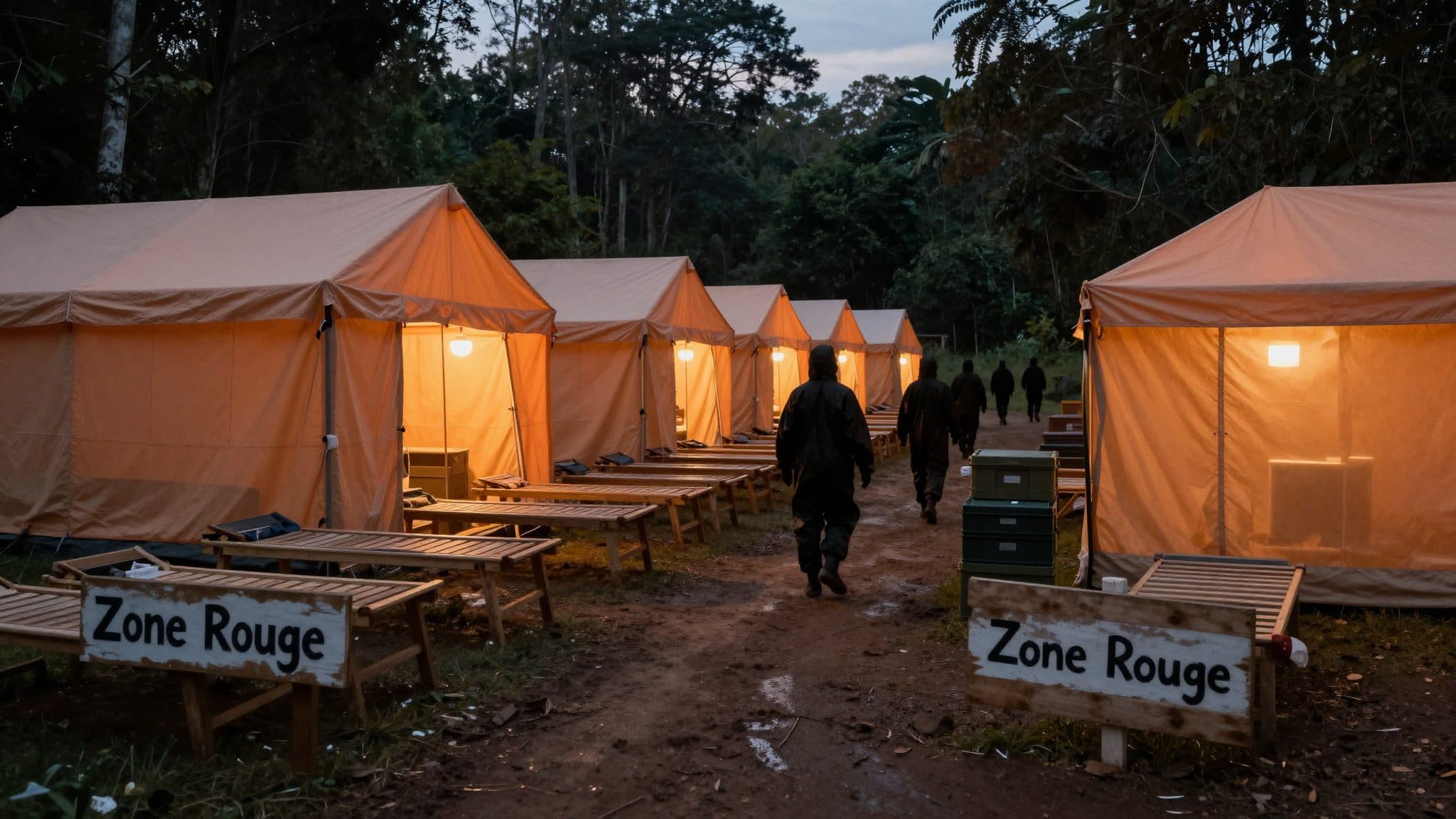
AI-generated image (z-image via Kie.ai)
Summary
In the Congo, the Ebola virus is spreading faster than ever before. The Africa CDC speaks of the fastest-growing outbreak since the disease was first identified; 600 people have already died. Aid workers warn that beds, tests, and vaccines against the current variant are lacking.
Geneva, 10 July 2026
In the eastern Democratic Republic of the Congo, the Ebola outbreak that has been ongoing since May is spreading faster than any previously documented outbreak of the virus, according to the Africa CDC.
An Outbreak at Record Speed
On Thursday, the Africa CDC described it as the fastest-growing Ebola outbreak ever recorded. Wessam Mankoula, head of the Emergency Preparedness and Response Division at the Africa CDC, stated: "This is the fastest growing Ebola outbreak ever, not only among the previous Bundibugyo outbreaks, but all the different viruses that are causing Ebola" and added that the virus continues to outpace the response of aid workers: "Unfortunately the virus is still ahead of our response. It's moving faster than deploying the resources to control the situation". According to the CDC, health authorities in more than half of cases only receive information about a suspected Ebola case 72 hours after the first symptoms appear.
According to government figures, there have been 1,759 laboratory-confirmed cases since the start in May. The World Health Organization (WHO) has now confirmed 1,561 Ebola cases in the affected areas, with 600 people dying from the dreaded disease. The number of cases increased by 25 percent within one week, said Wessam Mankoula, a representative of the African health authority Africa CDC. The number of new infections is currently doubling approximately every 28 days, according to the Africa CDC.
For comparison: The current outbreak reached 1,596 cases in its first six weeks; during the same period of the West Africa outbreak from 2013 to 2016, there were 994 cases. That West Africa outbreak is considered the deadliest ever recorded. "We must immediately increase the number of available hospital beds by approximately 50 percent," Mankoula demanded. 95 percent of capacities are exhausted, while between 15 and 30 new suspected cases are reported daily. In total, approximately 1.4 billion US dollars are needed for the disease and humanitarian response, according to the CDC.
The Bundibugyo Variant: No Vaccine, No Specific Therapy
The current outbreak in the Congo involves the rarer Bundibugyo variant of the virus, for which no approved vaccine currently exists. Ebola is a life-threatening disease; the virus is transmitted through physical contact and contact with bodily fluids such as blood, saliva, or vomit. Airborne transmission is considered impossible. However, clinical testing of two antiviral therapies against the virus has been underway since last week.
Working Under Difficult Conditions in Beni
Theresa Berthold, project coordinator for Doctors Without Borders, reports from the epicenter in Beni. "Vor Ort bei uns in Beni stehen wir noch ganz am Anfang. ... eine Eindämmung ist aktuell leider noch nicht in Sicht," said the 39-year-old, who previously worked for the organization in Sierra Leone, Afghanistan, Nigeria, Syria, Chad, and Yemen. "In den vergangenen Wochen ist mir vor Augen geführt worden, wie groß diese Krise wirklich ist, und wie schwer es sein wird, sie einzudämmen." The organization, which received the Nobel Peace Prize in 1999, recently completed twelve rooms in two local health centers for patients coming to them with Ebola symptoms: "Am Tag der Eröffnung der beiden Zentren waren direkt alle Zimmer belegt."
In Beni itself, there is only one laboratory belonging to the Ministry of Health that can test for the Bundibugyo virus. According to the Africa CDC, a capacity of 2,000 Ebola tests per day has now been reached in the Congo, though in practice this varies by region. There are also repeated delays in the collection and transport of samples. According to Doctors Without Borders, the laboratory is lacking diesel for its generator; the supply has now been secured.
In the outlying areas of the city of Beni and surrounding villages, there are repeated attacks on the civilian population by armed groups. Deliveries for aid workers are delayed because trucks must cross front lines: "Zuletzt saßen sie mehrere Tage an einem Kontrollpunkt fest," Berthold said. Within the city itself, the organization works closely with the Ministry of Health. The aid organization Doctors Without Borders plans to set up additional Ebola treatment centers in the Congo.
A pregnant woman with Ebola symptoms was referred to one of the health centers a few days ago. "Sie kam sehr spät, das ungeborene Baby war bereits verstorben und sie selbst war in einem extrem kritischen Zustand. Leider hat auch sie nicht überlebt," Berthold reported. "Auch wenn es noch keine Impfung und keine Medikamente gegen das Bundibugyo-Virus gibt, können wir die Symptome behandeln." However, in the same week, the first person in Beni to survive infection with the Bundibugyo virus was discharged from the hospital.
Outlook: Uganda as an Example, Congo as a Challenge
In neighboring Uganda, which also recorded cases linked to the outbreak in the Congo, one patient is still currently being treated. In total, there were 20 Ebola cases in Uganda linked to the outbreak in the neighboring country; two people died there from the disease. "Gleichzeitig zeige das Beispiel Ugandas, dass die Kontrolle von Ebola möglich sei," the Africa CDC stated.
The Africa CDC also emphasizes that containment is possible but points to enormous logistical and financial gaps. Repeated delays in sample collection and transport, as well as the precarious security situation in the region, are also making the work of aid workers more difficult. With each day that case numbers continue to rise, the risk of the virus spreading beyond the borders of the Congo is growing, according to aid organizations.
Questions & Answers
Who is Wessam Mankoula and what does he say about the outbreak?
Wessam Mankoula is the head of the Emergency Preparedness and Response Division at the Africa CDC. He stated on Thursday that this is the fastest-growing Ebola outbreak of all time, that case numbers are doubling approximately every 28 days, and that the virus is outpacing the response of aid workers.
Why is the Bundibugyo variant of the Ebola virus particularly dangerous?
According to Doctors Without Borders, neither an approved vaccine nor a specific therapy exists for the Bundibugyo variant of the Ebola virus. Two antiviral therapies are currently being clinically tested.
What is the situation in neighboring Uganda?
In Uganda, there were a total of 20 Ebola cases linked to the outbreak in the Congo; two people died. One patient is currently still being treated there; the Africa CDC points to Uganda as an example that containment is possible.
Ebola in the Congo: Case Numbers Rising Rapidly | allfacts360