EU cuts tariff-free steel import quotas and introduces 50 percent tariff
Brussels, 30 June 2026
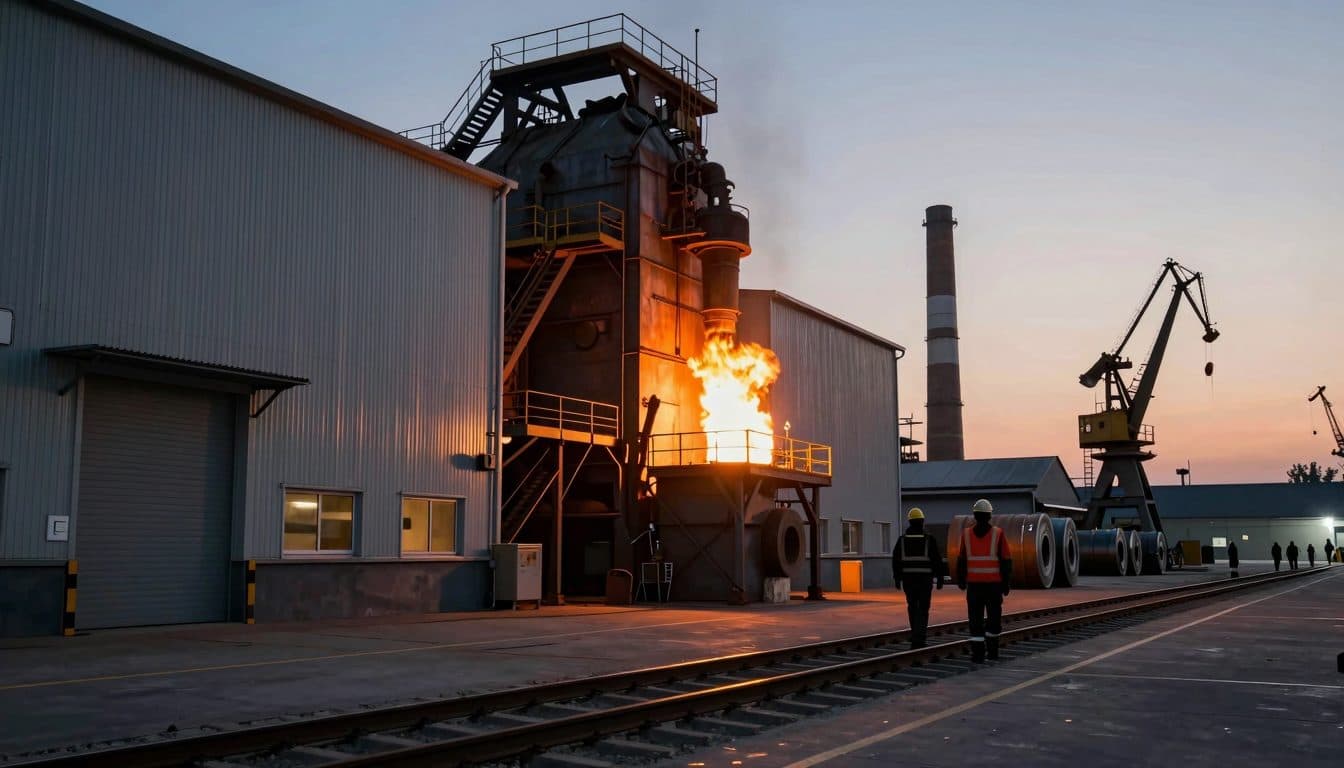
AI-generated image (z-image via Kie.ai)
Summary
The EU Commission is cutting tariff-free steel import quotas from July by 47 percent to 18.3 million tonnes. For imports outside these quotas, a 50 percent tariff will apply to 26 product categories, in order to protect the European steel industry from global overcapacity.
Brussels, 30 June 2026
The EU Commission presented new protective rules for the European steel market on Tuesday, which from July will cut tariff-free import quotas by 47 percent to 18.3 million tonnes and introduce a 50 percent tariff outside these quotas on 26 product categories.
With the rules taking effect on Wednesday, the EU is responding to growing overcapacities in the global steel industry. "Zum Schutz europäischer Stahlhersteller hat die EU-Kommission die jährlichen zollfreien Einfuhrquoten der EU gesenkt", the authority said on Tuesday in Brussels. "Für 26 Kategorien von in die EU eingeführten Stahlerzeugnissen wird zudem ein Zoll von 50 Prozent außerhalb dieser Quoten eingeführt."
The new provisions replace the previous eight-year protection regime, which expires at the end of June. In future, only 18.3 million tonnes of steel per year may be imported into the EU free of duty. The import levy becomes due as soon as this quota, which has been halved compared to the old regime, is exhausted. According to the EU Commission's calculations, this corresponds to an average reduction in duty-free imports of 47 percent compared with the previous steel safeguard measures.
Background: Growing overcapacity worldwide
The background is a global production capacity that is spiralling out of control. As the EU Commission notes, global overcapacities have already reached an unsustainable level. They currently stand at more than 620 million tonnes – more than five times the EU's annual steel consumption. The OECD forecasts that this figure could rise to around 745 million tonnes by 2028; that would be 319 million tonnes more than the amount currently produced in the OECD area.
The main reason for the increase is seen as subsidised production expansions in individual countries. "China, Indien oder die Türkei haben die Produktion ausgeweitet, teilweise mithilfe hoher staatlicher Subventionen", the communication states. In addition, Chinese producers are increasingly pushing into foreign markets because a real estate crisis in China is dampening domestic demand. "Hinzu kommt, dass der Immobiliencrash in China die Nachfrage nach Stahl dämpft. Umso heftiger drängen die Hersteller des Landes auf ausländische Märkte."
At the same time, demand is stagnating, particularly in Europe and the US, for example because fewer cars are being produced in Germany. The weak utilisation is intensifying the pressure on domestic plants: According to the European steel association Eurofer, current capacity utilisation in the EU is around 67 percent. The stated aim of the new rules is to raise this figure to 80 percent.
Industry reaction: Restrained assessment
Eurofer Director Axel Eggert gave a restrained assessment of the measure. "Das entspricht etwa der Hälfte dessen, was in den vergangenen Jahren verloren gegangen sei", he said with a view to the additional production potential of around 15 million tonnes that European manufacturers could call on at full capacity. Given weak demand, the regulation is expected to bring utilisation up to only 73 to 75 percent.
The quotas will in future be split in two halves. One half remains open to all countries; the other half is reserved for trading partners with free trade agreements. "Viele dieser Länder sollen nun länderspezifische Quoten erhalten, die proportional zu dem sind, was sie bisher in die EU geliefert haben", the Commission explained. These allocations will be granted to countries that on average accounted for at least five percent of import volumes in the years 2022 to 2024.
Allocation of quotas and the role of Switzerland
With this construction, thirteen partner states, including Switzerland, are to receive better market access than China, which does not receive preferential access. However, their quotas are also being reduced: the EU is cutting duty-free import volumes for partners with agreements by around 33 percent, while the overall quota is being reduced by 47 percent.
For Switzerland, this concretely means that its quota will be only 65 percent of the average export volume of the years 2022 to 2024. Jean-Philippe Kohl, Head of Economic Policy at the industry association Swissmem, sharply criticised this: "Die Entscheidung aus Brüssel ist enttäuschend und trägt der engen wirtschaftlichen und politischen Partnerschaft zwischen der EU und der Schweiz in keinerlei Hinsicht Rechnung." The two steelworks in Emmen and Gerlafingen, which would be massively restricted, are particularly affected. "Für sie werde es noch schwieriger, im Markt zu bestehen", said Kohl.
The State Secretariat for Economic Affairs (Seco) stated that Switzerland is in contact with the EU and continues to advocate for the measures to restrict bilateral trade as little as possible, or not at all. A "considerable number" of partners have provisionally agreed to the allocations, it was said from Brussels. The member states must adopt the regulation within 14 days.
Commission's justification: WTO-compliant and price-neutral
A spokesman for the EU Commission stressed that the measures are WTO-compliant. "Deshalb zog sie mit Quoten und Zöllen nach, hielt sich dabei aber an Grundsätze der Welthandelsorganisation (WTO)." The new regime will have little impact on prices for end products. "Der Preiseffekt werde letztlich gering sein, da die meisten Produkte nur zum kleinen Teil aus Stahl bestünden, so Autos oder Waschmaschinen", a senior Commission official explained. Overall, "nicht weniger Stahl auf den Markt als bisher".
Within the Commission, particularly in the Directorate-General for Trade, there are still many representatives who advocate for markets that are as open as possible, however. "Allerdings haben sie einen zunehmend schwierigen Stand", it was said. A Commission official said the measures were also in the interest of the US because they were clearly directed against China. Companies from the United States export hardly any steel to Europe.
The background is a trade conflict that has been simmering for years. American President Donald Trump already reacted to this development in 2018 and introduced tariffs – including in response to cheap steel imports from China. The EU is now following suit with a similar, but WTO-compliant, instrument.
Trade policy context: US, China and the EU
On Monday, the EU Commission had also held talks with Chinese Trade Minister Wang Wentao. Wang Wentao had previously also met German Federal Minister for Economic Affairs Katherina Reiche.
Eggert, meanwhile, called for more far-reaching measures. "Um der europäischen Stahlindustrie zu helfen, müsste die Maßnahme möglicherweise auf nachgelagerte Sektoren ausgeweitet werden, etwa auf Unternehmen, die Stahl laminieren oder Bleche für Autos stanzen", the Eurofer director said.
Impact on markets and manufacturers
On the financial markets, the announcements meanwhile caused some movement. As the equity analysts at broker Baader reported, there had been a rush on steel stocks. One trigger had been the EU Commission's announcement to reduce the import quota. Investors expected rising steel prices; the share prices of manufacturers such as ArcelorMittal and Voestalpine had risen in recent months.
In Austria, according to calculations by the economic research institute WIFO the fifth-largest crude steel producer in Europe, around 15,000 employees in 17 companies are affected. In 2022 they produced 7.5 million tonnes of crude steel; the world market share was around 0.4 percent.
A senior EU Commission official summarised the expectation for the new regulation as follows: "Ein leicht höherer Anteil werde aber künftig in der EU und in den Staaten des Europäischen Wirtschaftsraums (EWR) gefertigt." The goal remains to stabilise the European steel market in view of a growing global oversupply.
Questions & Answers
Which new rules apply from July for steel imports into the EU?
The EU Commission is cutting tariff-free import quotas by 47 percent to 18.3 million tonnes per year and introducing a 50 percent tariff on imports outside these quotas for 26 product categories.
What does Swiss industry criticise about the decision?
Jean-Philippe Kohl from the industry association Swissmem calls the decision disappointing and fears that the two steelworks in Emmen and Gerlafingen will be massively restricted, since the Swiss quota amounts to only 65 percent of the previous export volume.
What goal is the EU pursuing with the new protection rules?
The EU wants to protect its domestic steel industry from global overcapacities of more than 620 million tonnes and subsidised competition, and to increase the utilisation of European production capacities from currently around 67 to 80 percent.
EU steel tariffs: Quotas halved, 50 percent tariff from July | allfacts360