
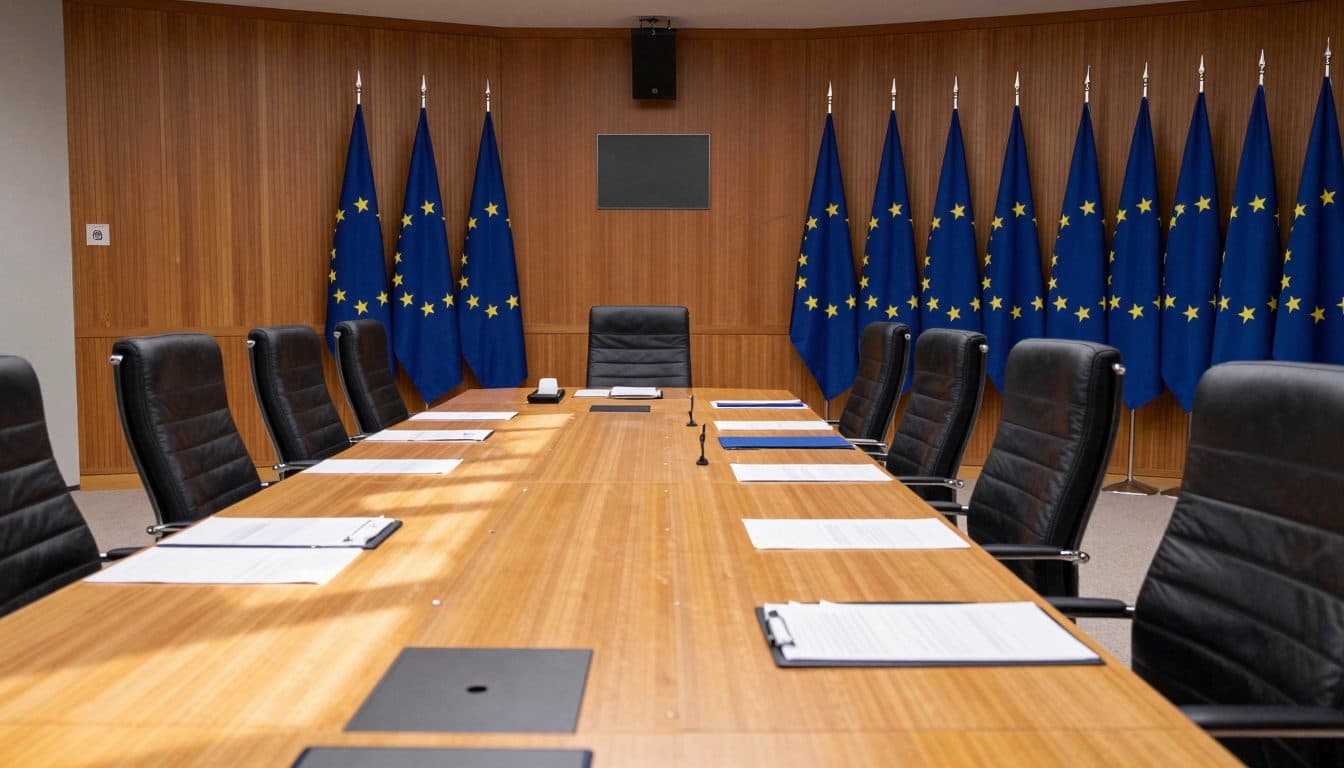
Brussels, July 13, 2026
The foreign ministers of the EU member states are meeting in Brussels this Monday to discuss possible sanctions against Israel over the expansion of illegal settlements in the West Bank, as well as a new sanctions package against Russia.
The foreign ministers of the EU member states intend to discuss the situation in the Middle East and in Ukraine this Monday in Brussels. The key question is whether further sanctions should be imposed in response to the expansion of illegal Israeli settlements in the West Bank.
The EU Commission has drawn up options for action for the consultations. These include restrictions and bans on the import of goods from Israeli settlements. Countries such as Spain, Ireland and Belgium are calling for tough sanctions in response to Israel's settlement policy. Germany and others, however, had opposed this until recently.
Dispute Over Trade Restrictions
Whether such measures can actually be adopted depends on the voting mechanism. If the trade restrictions are classified as foreign policy sanctions, they could only be adopted unanimously. Even if they are not, a qualified majority would still be required for measures in the area of trade policy.
A qualified majority in the EU requires that 15 of the 27 EU member states approve – and these must also jointly represent at least 65 percent of the EU's total population. This limits the scope for rapid decisions, particularly because individual member states reject a tougher line.
Russia Package and Ukraine in Focus
Alongside the Israel complex, further topics were on the agenda of the foreign ministers' meeting. Other topics at the foreign ministers' meeting include recent developments in the Iran war as well as the ongoing Russian war of aggression against Ukraine. Foreign Minister Johann Wadephul (CDU) is expected from Germany to attend the talks.
On Russia, the focus is on a new sanctions package. Plans also include imposing sanctions on further individuals, entities and organizations from Russia. Until recently, it remained unclear whether a comprehensive new package with trade restrictions and other measures could already enter into force. Negotiations on this were still ongoing recently.
Kyiv Guest in Brussels
Ukrainian Foreign Minister Andriy Sybiha has been invited to Brussels for an informal exchange of views. This is intended to provide the member states with a direct report from Kyiv on the situation in the country and on the state of European support.
Observers see the meeting as a litmus test for EU unity on both conflicts. While on the Israel issue economic and legal policy questions are intertwined, the Russia package is primarily about whether the EU can maintain and expand its sanctions machinery against Moscow despite internal differences.
The outcome of the consultations is considered open. Should neither a unanimous nor a qualified majority emerge, decisions could be postponed to a later EU summit.
The dpa-AFX agency reported on the meeting from Brussels.