EU reforms air passenger rights: Higher compensation, clearer rules from mid-2027
Brussels, 13 July 2026
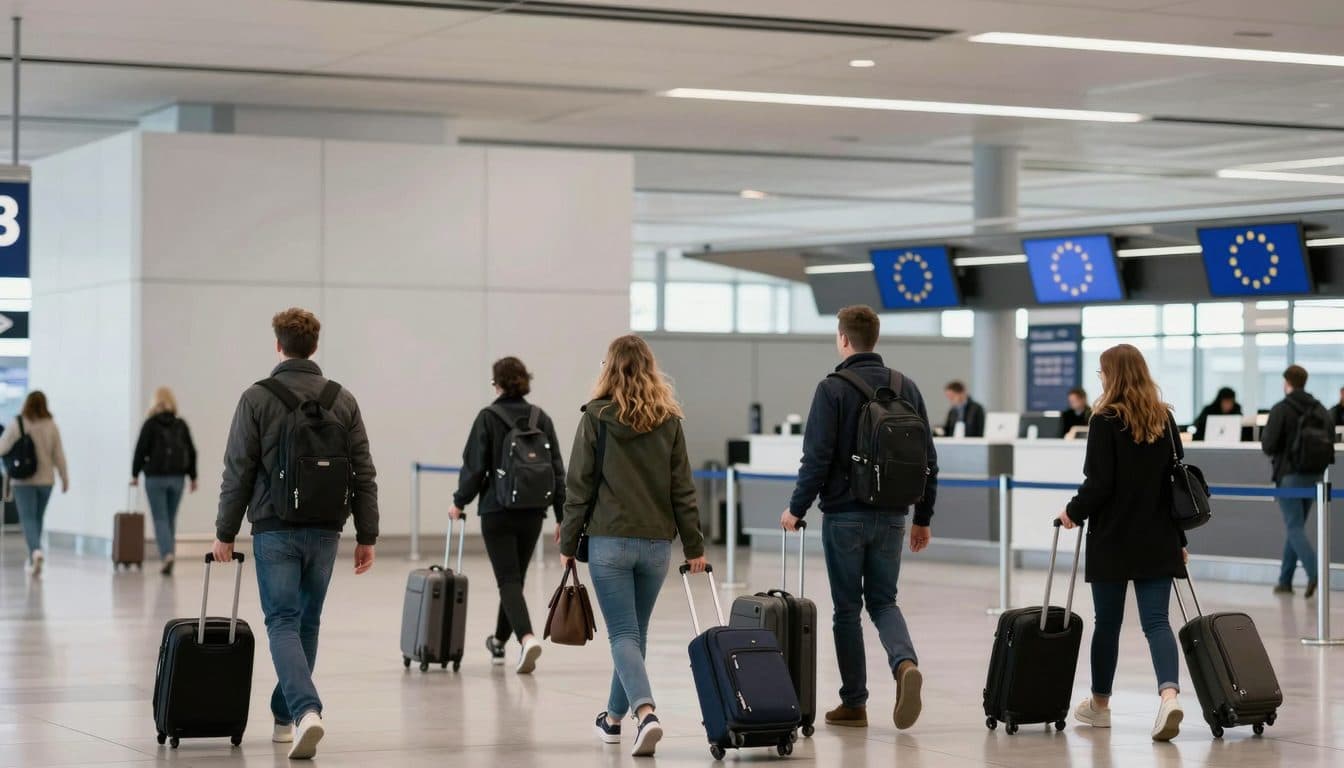
AI-generated image (z-image via Kie.ai)
Summary
EU member states are expected to approve a comprehensive reform of air passenger rights. Travellers will in future receive, among other things, higher compensation for delays, free neighbouring seats for parents with children, and more binding assistance in the event of cancellations. The new rules are set to apply from mid-2027.
Brussels, 13 July 2026
EU member states are expected on Monday to approve a far-reaching reform of air passenger rights, which will bring travellers higher compensation for delays, more assistance in the event of cancellations, and clearer information obligations for airlines.
Agreement in the legislative process
According to the Council of the European Union, this is the final step in the legislative process. Representatives of the European Parliament and the member states had already agreed in June on changes to the enforcement of passenger rights; these still need to be formally confirmed by the Council and Parliament and, according to the Council, are to take effect at the same time as the air passenger rights reform in question today. The European Parliament has already approved the reform ahead of the vote in the Council.
The core of the reform is higher and more uniform compensation. Travellers are entitled to compensation if their flight is delayed by at least three hours. Tiered by distance, the amounts are: 250 euros for distances of up to 1,500 kilometres, 400 euros for distances of up to 3,500 kilometres, and 600 euros for distances of more than 3,500 kilometres, provided the flight is not solely within the EU. These thresholds also apply if the flight was cancelled entirely, as long as this happened less than 14 days before departure. The prerequisite is always that the airline is responsible for the delay or cancellation.
Higher compensation for delays and cancellations
The EU member states had originally wanted passengers to receive compensation only from four hours of delay in future and to receive less money than before. This proposal was rejected in the marathon of negotiations with Parliament. Currently, only a fraction of those affected make such a claim; in future, the routes to doing so are to be made easier.
If a flight is cancelled, passengers get a full refund. According to the Council of the European Union, no booking fee may be withheld either. This concerns online platforms, for example, but also travel agencies. Excluded from this are, for instance, local travel agencies, provided they clearly informed passengers of this rule at the beginning of the booking process.
In the event of a disruption, airlines must in future inform passengers in writing of their rights and the procedure for asserting them within 96 hours of the end of the trip. In addition, a standardised form is being introduced that passengers can use for refund and compensation requests; companies may continue to offer their own forms or apps alongside it.
More rights for families and special travellers
The reform also strengthens the position of families and special travellers. Children under the age of 14 are to be allowed to sit next to their parents on the aircraft without a seat reservation fee being charged. This also applies to pregnant women and people with reduced mobility and their respective companions. Anyone who books an outbound and return flight together but does not take the outbound flight or parts of it ("no-show") is still permitted to take the return flight. No extra charge may be levied for this either.
In the case of downgrades — that is, an involuntary switch to a lower class — airlines must in future automatically refund a proportionate share of the airfare within 14 days. Spelling mistakes in names on tickets must be corrected free of charge, and a boarding pass must be printed out for checked-in guests without any further fee. Flight providers must in future display the price including carry-on baggage by default in order to facilitate price comparison; airlines may still offer cheaper tickets to passengers who voluntarily forgo a large backpack on board.
Alternative transport and self-help
Passengers are to have the right to be transported by alternative means in many cases of disruption. This can also be to a different airport near the destination, via a different route, with another airline, or even, for example, by train. However, the travel conditions must be comparable — so passengers who have booked a direct flight, for instance, may not be forced to take multiple connecting flights. The airline must offer them such an alternative within three hours; otherwise, passengers can organise themselves how to reach their destination.
The airline must reimburse a maximum of four times the original price. If the airline does not provide the assistance, passengers can arrange appropriate solutions themselves and request reimbursement afterwards. There is currently no such cap, which, according to observers, could worsen the situation for travellers with low-cost tickets.
Care during long waiting times
During long waiting periods, assistance is clearly regulated. After two hours of waiting, refreshments are provided; after three hours, a meal; thereafter, a meal every five hours (a maximum of three meals per day). They are also entitled to internet access and at least two telephone calls. If overnight stays are necessary, passengers are to be accommodated in a hotel free of charge and transported free of charge from the airport to the accommodation and back.
Airlines must prove that the circumstances directly caused the disruption when invoking force majeure. Under the planned new rules, airlines are not deemed responsible, for example, for incidents involving unruly passengers, weather conditions, natural disasters, or strikes by airports or ground handling service providers.
Deadlines, seal and scope of application
Travellers are to have nine months in which to assert their claims. Subsequently, the airline must pay out within 30 calendar days or inform the traveller why it is not paying compensation in that case. In future, a voluntary EU seal for air passenger rights is to be introduced, with which airlines can demonstrate that the EU regulations apply to them. According to the Council, the new rules will then apply to all flights taking off from an airport within the EU; for flights landing in the EU, they apply only if the airline is based in the EU. The new rules are then expected to apply from mid-2027.
In parallel, representatives of the European Parliament and the member states agreed in June on changes to the enforcement of passenger rights. These still need to be formally confirmed by the Council and Parliament and, according to the Council, are to take effect at the same time as the air passenger rights reform in question today.
Questions & Answers
What new compensation will passengers receive for delays?
For a delay of at least three hours, the amounts in future will be 250 euros (up to 1,500 km), 400 euros (up to 3,500 km), and 600 euros (over 3,500 km, provided the flight is not solely within the EU). The same thresholds apply if the flight is cancelled less than 14 days before departure.
What new rules apply to families with children?
Children under the age of 14 are to be allowed to sit next to their parents free of charge; the same applies to pregnant women, people with reduced mobility and their companions. Anyone who misses the outbound flight on a return-trip booking is permitted to take the return flight without an additional fee.
When do the new EU air passenger rights take effect?
The new rules are expected to enter into force in mid-2027, at the same time as the parallel agreed changes to the enforcement of passenger rights. They apply to all flights departing from an airport within the EU, as well as to flights into the EU if the airline is based there.
EU air passenger rights reformed: New rules from 2027 | allfacts360