EU States Approve Reform of Air Passenger Rights: New Rules Apply from Mid-2027
Brussels, July 13, 2026
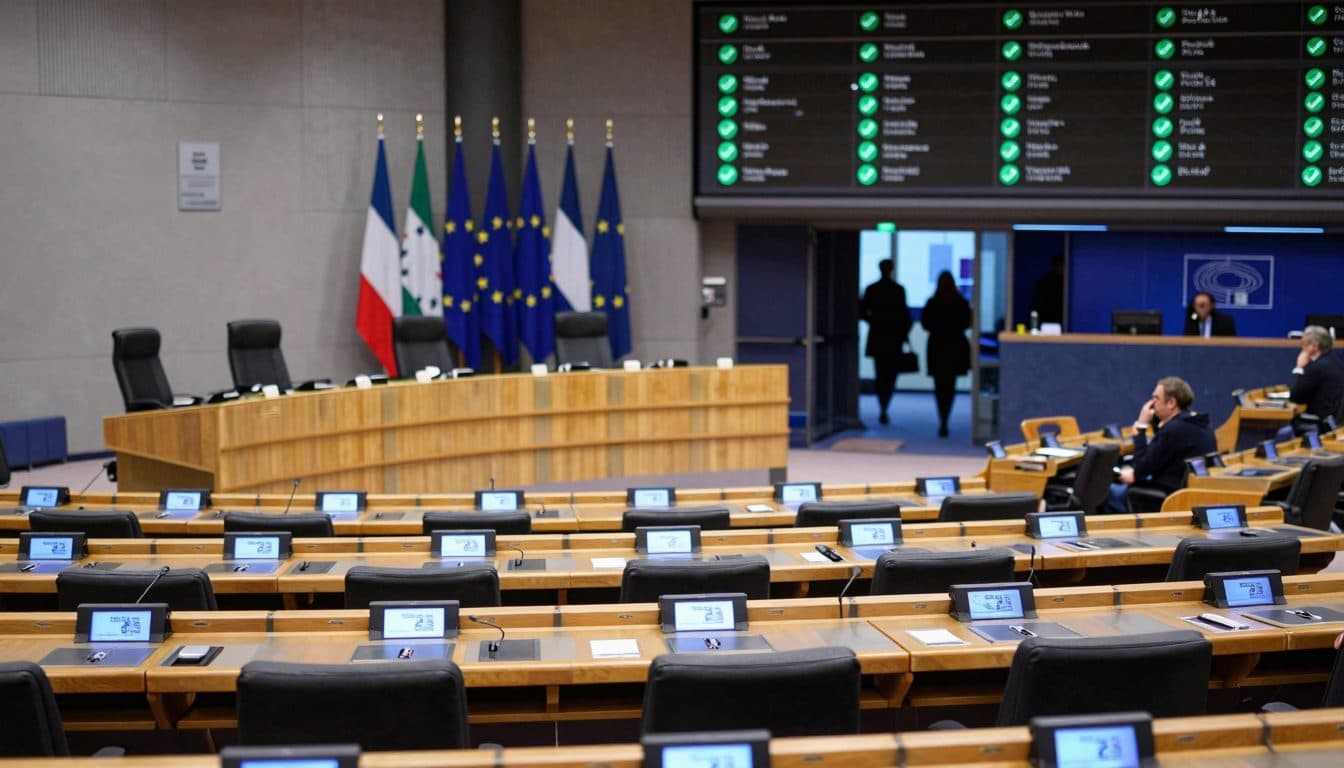
AI-generated image (z-image via Kie.ai)
Summary
After more than a decade of negotiations, EU member states have finally approved the reform of air passenger rights. From mid-2027 onward, stricter information obligations, free adjacent seats for families, and more transparent pricing including carry-on luggage will apply.
Brussels, July 13, 2026
The Council of EU member states on Monday approved the reform of European air passenger rights, which is expected to apply to travelers from mid-2027 onward and provides, among other things, for free adjacent seats for families, transparent pricing including carry-on luggage, and clearer compensation rules.
A Long Road to Agreement
After more than 13 years of negotiations, the ministers of the EU member states on Monday formally endorsed the long-planned reform of air passenger rights. This removes the final hurdle on the path to a modernized European air travel law, according to Council sources in Brussels. The EU Commission had already presented its proposal for updating air passenger rights in 2014.
However, differing positions among EU member states blocked the file for eleven years. In June 2025, the EU ministers finally reached a political agreement. The subsequent negotiations with Parliament began in October 2025 but led to no compromise. After Parliament voted on its position, the Council and Parliament formed a conciliation committee with representatives of both institutions, which found the joint solution now formally endorsed by both.
Compensation Remains Essentially Unchanged
The core rule on compensation remains essentially unchanged: if a flight is delayed by at least three hours or is fully cancelled less than 14 days before departure, passengers are entitled to compensation payments. The prerequisite is always that the airline is at fault for the delay or cancellation. These thresholds also apply when the flight has been fully cancelled, provided this occurs less than 14 days before departure. The EU Parliament prevailed over the wishes of the EU member states on compensation entitlements, as the Council had wanted to grant compensation only after four to six hours.
The amount of compensation continues to be graduated by travel distance: depending on distance, 250 euros (for 1,500 kilometers), 400 euros (for up to 3,500 kilometers), or 600 euros (for more than 3,500 kilometers, provided the flight is not solely within the EU). 400 euros (up to 3,500 kilometers and within the EU) and 600 euros are paid out for more than 3,500 kilometers of travel distance. The prerequisite for payment is that the airline is at fault for the delay.
Scope of the New Rules
The new regulations apply to EU airlines as well as to all airlines departing from EU airports. They concern flights taking off from an airport within the EU. For flights landing in the EU, they apply only if the airline is headquartered in the EU. The new rules apply to all flights departing from within the EU, regardless of the airline. However, if a flight departs from outside the EU and lands in the EU, they apply only if the operating airline is headquartered in the EU.
Clearer Deadlines for Airlines
A key innovation concerns the information provided to travelers: if passengers are entitled to compensation, the airline must inform them electronically within four days of arrival and explain how they can claim the compensation. Consumers then have nine months to do so. The airline must in turn pay out within 30 days or inform travelers why it is not paying compensation in that case. Such deadlines did not previously exist in the regulation.
Airlines must also, for example, correct spelling errors in names on tickets free of charge and print a boarding pass for checked-in guests without further fees. Passengers also no longer have to accept the digital boarding passes that some airlines had made obligatory: they have the right to a paper pass if they wish.
Adjacent Seats for Families and Pregnant Travelers
Families with minor children should in future no longer have to be scattered around the aircraft: they have the right to book adjacent seats free of charge. Children under 14 may then sit next to their parents on the plane without any seat reservation fee being charged. The same applies to pregnant women as well as to people with reduced mobility and their accompanying persons.
New requirements also apply to carry-on luggage and price transparency: airlines must in future display the price including carry-on luggage by default. In future, the prices shown when booking must always include a small carry-on item to make comparisons easier. Additional carry-on items may still incur extra charges.
Care During Delays and Cancellations
In the event of delays or cancellations, the care provisions are also being specified. During waiting times, passengers should receive free internet access and at least two phone calls, according to the text of the regulation. After two hours of waiting, refreshments are due; after three hours, a meal; thereafter every five hours, up to a maximum of three meals per day. If overnight stays are necessary, passengers should be accommodated in a hotel free of charge and transported free of charge from the airport to the accommodation and back.
If alternative transport is not provided within three hours, passengers may organize a suitable solution themselves and have the costs reimbursed – up to four times the original ticket price. This may also be to a different airport near the destination, via a different route, with a different airline, or even, for example, by train. If passengers are booked into a lower class, the partial refund is made automatically within 14 days.
A special protective rule applies to round-trip flights: passengers who do not take a flight or miss parts of it may still use the return flight without any additional fee being charged. This is intended to avoid so-called no-show fees, which had repeatedly caused annoyance in the past.
Extraordinary Circumstances
The new regulation contains a list of extraordinary circumstances that release airlines from the obligation to pay compensation. These include, for example, natural disasters, extreme weather events, or strikes. The airline must, however, prove that the circumstances directly caused the disruption. Also, unruly passengers, weather conditions, natural disasters, or strikes by airports or ground handling service providers may release the airline from liability.
Entry into Force and Implementation
In future, there should also be a voluntary EU label for air passenger rights, with which airlines can show that the EU regulations apply to them. In addition, a standardized form is being introduced with which passengers can submit their compensation or refund requests. The regulation enters into force one year after its publication in the Official Journal. When the new rules come into force, airlines will initially have twelve months to implement them. Airlines may implement them earlier. The new air passenger rights are expected to apply to travelers from mid-2027.
Independently of the air passenger rights reform, the EU Parliament and member states had already agreed in June on changes to the enforcement of travel rights. They still need to be formally confirmed. Observers rate the adoption as an important step toward greater consumer protection in air travel, but see a continuing need for discussion on the question of how the authorities in the member states are to monitor the new requirements in the future.
Consumer advocates particularly welcomed the clear deadlines for information and payment as well as the adjacent seating rule for families. The aviation industry had warned beforehand of additional burdens and pointed to price pressure in the European market. The EU Commission, on the other hand, sees the reform as a balanced compromise between consumer protection and the competitiveness of airlines.
With the Council's approval, the reform can now be entered in the Official Journal of the European Union. From the day of publication, the one-year implementation period begins. Industry experts expect that the first visible improvements for travelers will be felt in the summer of 2027 – right in time for the start of the main travel season.
Questions & Answers
When do the new EU air passenger rights apply?
The new rules are expected to enter into force from mid-2027, as the regulation applies one year after publication in the Official Journal and airlines have a further twelve months to implement them.
How high is the compensation in the event of a delay?
Depending on travel distance, passengers receive 250 euros (up to 1,500 kilometers), 400 euros (up to 3,500 kilometers and within the EU), or 600 euros (over 3,500 kilometers, provided the flight is not solely within the EU), provided the airline is at fault for the delay.
What new rights do families with children receive?
Families with minor children as well as pregnant women, people with reduced mobility, and their accompanying persons will in future have the right to free adjacent seats, without any seat reservation fee being charged.
Air Passenger Rights Reform 2027: New Rules for Delays | allfacts360