Federal Interior Minister Dobrindt opens Joint Defense Center against Hybrid Threats in Berlin
Berlin, June 16, 2026
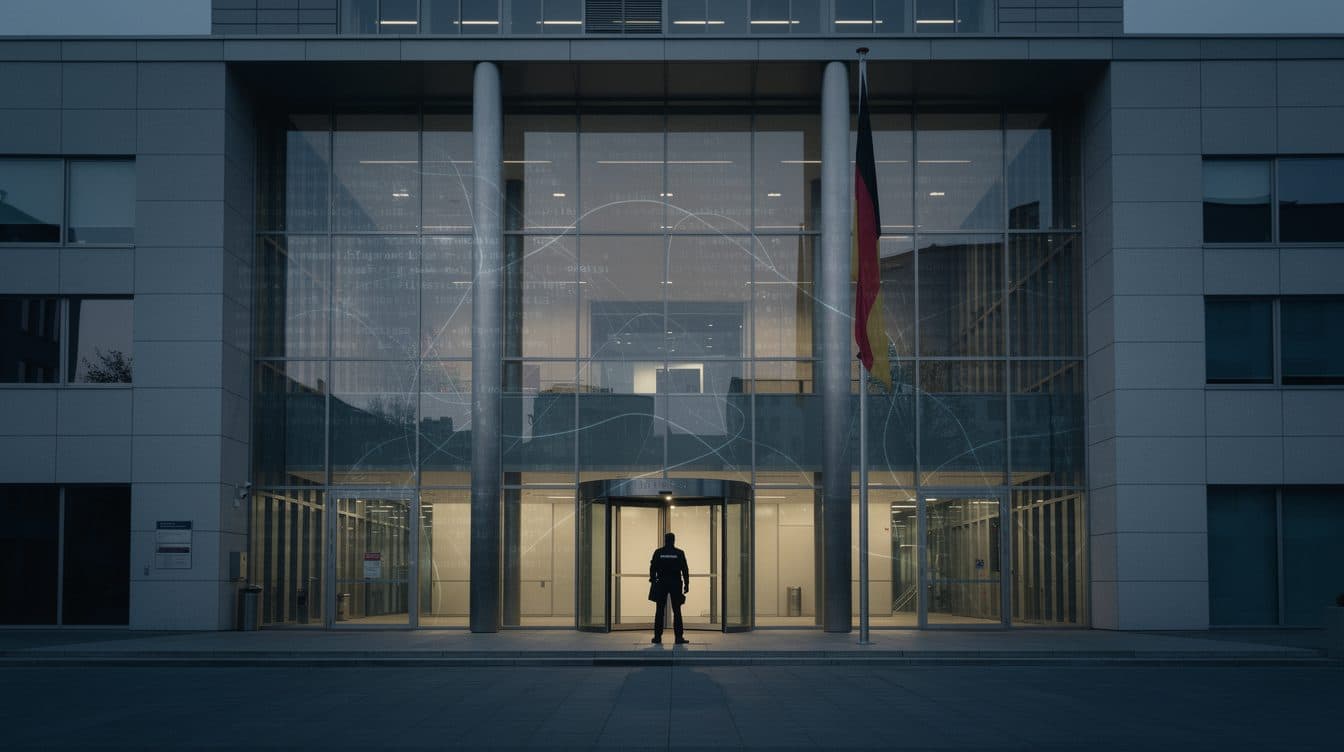
AI-generated image (flux-2/pro-text-to-image via Kie.ai)
Summary
Alexander Dobrindt has opened the Joint Center for the Defense against Hybrid Threats (JDC Hybrid) in Berlin. It is intended to pool intelligence services, police authorities, and other federal agencies in the defense against cyberattacks, sabotage, disinformation, and foreign influence.
Berlin, June 16, 2026
Alexander Dobrindt (CSU) opened the Joint Center for the Defense against Hybrid Threats (JDC Hybrid) in Berlin on Tuesday, which is to serve as a cooperation platform for intelligence services, federal and state police, and other federal agencies such as the Federal Office for Information Security (BSI).
Structure and Organization of the New Center
According to the Federal Ministry of the Interior, the new facility is divided into five working groups: WG Situation, WG Operational Information Exchange, WG Disinformation and Influence, WG Economy, and WG Analysis and Reporting. The host is the Federal Office for the Protection of the Constitution (BfV), which provides organizational support for the center and makes premises available in Berlin. The JDC Hybrid is expressly not an independent authority, but rather a platform on which various security agencies send representatives to regular meetings.
In addition to Dobrindt, Sinan Selen and Jens Rommel also attended the opening. Selen warned of hybrid aggressors who carried out „reale Angriffe auf unsere Gesellschaft, auf unsere freiheitliche Demokratie und die Sicherheit Deutschlands“. Dobrindt stated that hybrid attacks were „der Schattenkrieg des 21. Jahrhunderts“ and a „dunkle Bedrohung, die versucht, sich manipulativ über unser Land“ to lay. With regard to recent incidents, the minister emphasized: „Deutschland befindet sich nicht im Krieg, aber wir sind tägliches Ziel einer hybriden Kriegsführung.“
The background to its establishment is, according to the assessment of the security authorities, above all the activities of Russian intelligence services. Germany has increasingly come into focus for years, not least because of its role as one of the most important supporters of Ukraine, which has been attacked by Russia. In July 2024, for example, a package caught fire in a freight container in Leipzig, which according to later findings contained an incendiary device fitted with a timer. According to the investigations, the package originated from the Baltic Sea region and is suspected of having been sent on behalf of a Russian intelligence service. Had its connecting flight not been delayed, it would probably have caught fire already on board.
Background: Sabotage, Disinformation, and Arson Attacks
In addition to Russia, China is also classified as an important actor in the area of hybrid threats against Germany. The range of incidents extends from cyberattacks on political targets to disinformation campaigns to physical sabotage. For example, before the last federal election, hundreds of cars in four federal states had to be prepared with construction foam. The Ulm public prosecutor's office assumes that three young men and a woman acted on behalf of a client in order to influence the voting behavior of the population. They filled the exhaust pipes of the vehicles with construction foam and attached a sticker with the inscription „SEI GRÜNER!“ along with a picture of the then Federal Minister of Economics Robert Habeck. According to the information, they are said to have received 100 euros for each damaged vehicle.
In parallel, proceedings are underway in Stuttgart against three young Ukrainians who are alleged to have planned attacks on freight traffic in Germany on behalf of a Russian intelligence service. The Federal Prosecutor General's Office had taken over the investigations. From the perspective of the security authorities, the incidents show that hybrid attacks take place not only digitally, but also physically, and target public opinion and critical infrastructure.
At the opening, Dobrindt pointed out that the new center would „erfolgreiches, bewährtes Konzept weiterentwickelt“. The existing structures – above all the Joint Counter-Terrorism Center (GTAZ) in Berlin, which was founded after the attacks of September 11, 2001, as well as the Joint Center for the Defense against Extremism and Terrorism (GETZ) in Cologne and Meckenheim – have proven their worth. The Joint Drone Defense Center (GDAZ), which was launched in Berlin at the beginning of the year and is organizationally attached to the Federal Police Directorate 11, also follows the pattern of platform-based cooperation. „Es geht schlicht darum, unser Land zu destabilisieren“, said Dobrindt with a view to the actions of hybrid actors.
Integration into the Existing Security Architecture
Criticism of the establishment came from Federal Prosecutor General Rommel. Although better coordination is fundamentally to be welcomed, he warned against an unwieldy proliferation of centers. „Aber viele verschiedene Zentren könnten dem Ziel abträglich sein, weil sie zu Reibungsverlusten führen dürften“, said Rommel. He spoke out in favor of further developing the GTAZ and expanding existing structures rather than setting up another center alongside them. Dobrindt himself also sees no danger of duplicate structures and friction losses.
According to the ministry, international partners do not exchange information directly within the framework of the JDC Hybrid, but can be integrated via the Federal Office for the Protection of the Constitution and the Federal Criminal Police Office. Direct cooperation with foreign services is not envisaged. At the same time, the ministry points to European initiatives, for example the Baltic Sea states, which are also arming themselves against Russian hybrid activities.
International Dimension and European Cooperation
With the JDC Hybrid, the federal government primarily wants to cover those areas that are not systematically addressed in the existing centers: disinformation, foreign influence, and economic protection. The WG Economy is to deal with attacks on German companies, which have increasingly come into the focus of Russian services in recent years. Observers see this as a reaction to a changed threat situation in which classic espionage, cyberattacks, and manipulative campaigns interlock.
The opening took place at a time when security authorities in several European countries are warning of an increase in hybrid activities. Only last week, intelligence services in several EU countries pointed to coordinated disinformation campaigns that were deliberately aimed at turning sentiment against the support of Ukraine. The Federal Ministry of the Interior sees the JDC Hybrid as a central instrument for detecting such threats at an early stage and initiating countermeasures.
It remains to be seen how the new center will fit into the existing architecture. The concern that the multitude of parallel platforms – GTAZ, GETZ, GDAZ, and now JDC Hybrid – makes coordination more difficult is also shared in security circles. Dobrindt, however, made it clear that responsibilities were clearly delineated and that there would be no overlaps. Whether this will succeed in practice will become apparent in the coming months.
The approach receives support from academia. Experts in hybrid warfare have emphasized for years that effective defense can only succeed if information flows between the authorities quickly and in a structured manner. The JDC Hybrid focuses precisely on this: it is intended to create interfaces between intelligence services, police, and specialist authorities that previously only cooperated loosely with one another.
Outlook: Initial Work Assignments and Open Questions
For the coming months, the Federal Ministry of the Interior announced that the working groups would gradually be given concrete assignments. These also include the preparation of regular situation reports on disinformation campaigns that are observed in the run-up to elections, votes, or major political events. Another focus will be on cooperation with the business community, which is increasingly becoming a target of espionage and sabotage.
With the opening of the JDC Hybrid, the federal government is pursuing the goal of increasing the responsiveness of the security authorities to hybrid threats. Whether the new center can live up to this claim depends not least on whether the agencies involved are willing to consistently share information. The first meetings of the working groups are scheduled to begin this quarter.
The Federal Prosecutor General's Office announced that it would examine cooperation with the JDC Hybrid within the scope of its remit. At the same time, Rommel emphasized that an effective defense against hybrid threats could ultimately only succeed if the security authorities at the federal and state level pulled together. The JDC Hybrid is intended to provide the framework for this – provided that the existing structures are not weakened by parallel work.
Overall, it is becoming apparent that the threat posed by hybrid attacks will receive a higher priority in the German security architecture in the future. With the JDC Hybrid, the Federal Office for the Protection of the Constitution is given another coordinating role that goes beyond classic counter-espionage. The coming months will show whether the new platform actually contributes to better networking or whether – as feared by Rommel – it hinders coordination through additional bureaucracy.
Questions & Answers
What is the JDC Hybrid and what is its task?
The Joint Center for the Defense against Hybrid Threats (JDC Hybrid) is a coordination platform in Berlin on which intelligence services, federal and state police, and other federal agencies such as the BSI exchange information on cyberattacks, sabotage, disinformation, and foreign influence. The host is the Federal Office for the Protection of the Constitution, which is organized into five working groups.
Which incidents contributed to the establishment of the center?
Triggers include the construction foam attacks on hundreds of cars before the last federal election, an incendiary device in a freight container in Leipzig in July 2024 with an alleged Russian background, as well as ongoing proceedings against three young Ukrainians who are alleged to have planned attacks on freight traffic. Cyberattacks on political targets and disinformation campaigns also played a role.
What criticism did Federal Prosecutor General Rommel express about the new center?
Jens Rommel warned that many different centers could be detrimental to the goal because they would lead to friction losses. He spoke out in favor of further developing the existing Joint Counter-Terrorism Center (GTAZ) rather than setting up another center alongside it. IMAGE_PROMPT
JDC Hybrid: New Defense Center against Hybrid Threats | allfacts360