Federal Ministry of Economics Plans Phase-Out Model for Solar Subsidies for Small Systems
Berlin, July 20, 2026
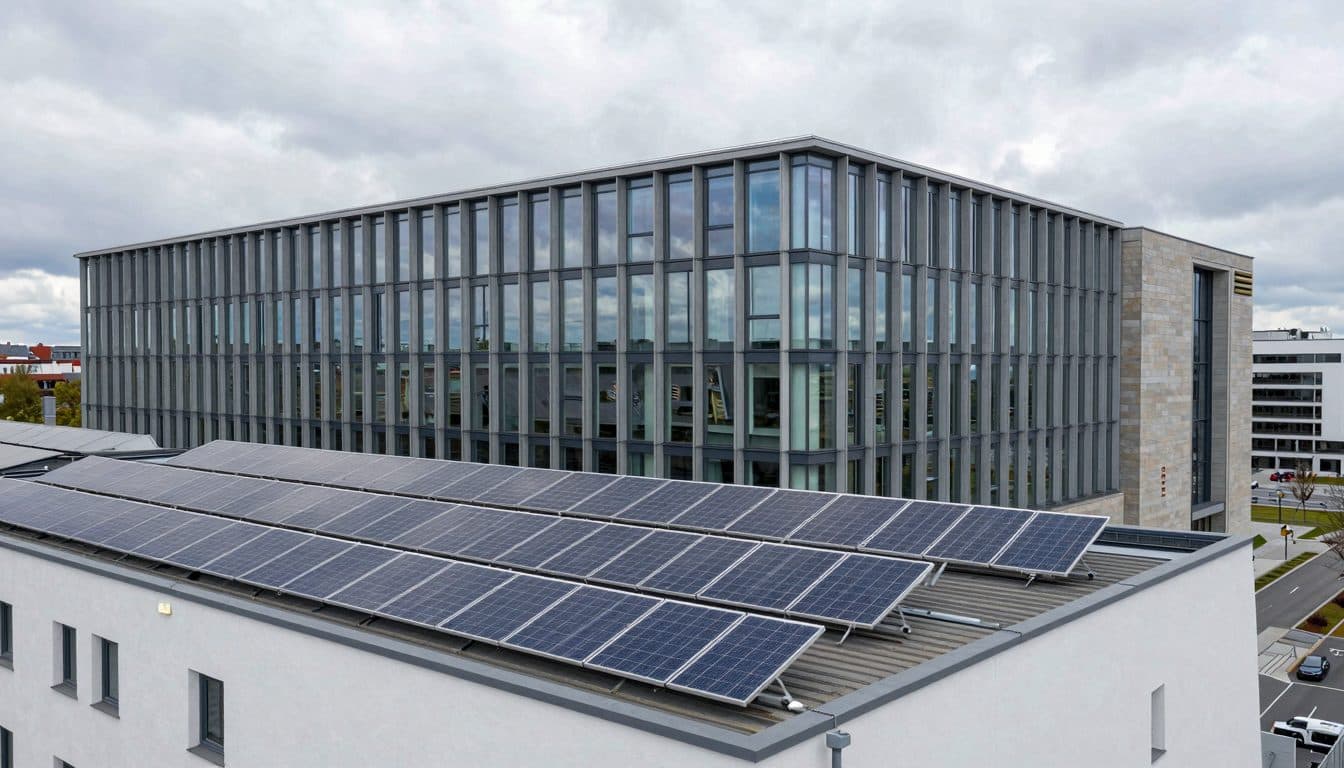
AI-generated image (z-image via Kie.ai)
Summary
The Federal Ministry of Economics has softened its plans for ending the fixed feed-in tariff for small photovoltaic systems under 25 kilowatts. In the future, operators are to market their electricity directly on the exchange, but will continue to receive a reduced tariff during a three-year transition period.
Berlin, July 20, 2026
The Federal Ministry of Economics has softened its plans for phasing out the fixed feed-in tariff for small photovoltaic systems under 25 kilowatts of capacity and has instead presented a transition model with a reduced tariff.
According to the Federal Ministry of Economics' draft for reforming the Renewable Energy Sources Act, small solar systems under 25 kilowatts of installed capacity are no longer to receive permanent subsidies. A spokesperson for Katherina Reiche (CDU) said in Berlin that an "excessive subsidy" should be eliminated and more reliance placed on the market. Until now, owners of small systems up to 25 kilowatts received a fixed price per kilowatt-hour fed into the grid for 20 years – the so-called feed-in tariff.
Instead of a complete elimination of the tariff from 2027, the new model provides for the tariff to be 1 cent below the previous levels and to be paid for only three years. Owners of new small systems will now receive a reduced tariff for three years. In January 2027, the tariff for fed-in electricity is therefore not to be eliminated entirely, but will instead gradually decline over the following three years.
Planned Transition Arrangement and Tariff Rates
For most private operators, the end of subsidies for new systems from 2027 would initially have meant the loss of any tariff for the electricity fed into the grid. After 2029, operators must market their electricity directly, as planned in the Economics Ministry's draft bill. For direct marketing, they are to receive a bonus during the first four years.
Currently, the tariff rates stand at 7.78 cents per kilowatt-hour (kWh) for self-consumption systems up to 10 kilowatts of capacity (kWp). For the capacity portion above 10 kWp, it is 6.73 cents per kWh. For electricity from so-called full feed-in systems, up to 10 kWp one receives up to 12.34 cents, and above 10 kWp still 10.35 cents per kilowatt-hour. The tariff rates for new systems decrease by one percent every six months. The next reduction will take place in August 2026.
Solar Mandate in Several Federal States
In several federal states, including Schleswig-Holstein, Hamburg, and Lower Saxony, a solar mandate applies to all new buildings as well as to changes made to roofs for portions of the roof area. In Mecklenburg-Western Pomerania, no solar mandate is currently planned. In Hamburg, a special subsidy for solar systems installed on a green roof is also available until the end of 2026.
Anyone planning a photovoltaic system can obtain a low-interest loan from Kreditanstalt für Wiederaufbau (KfW) for financing. The installation of battery storage systems is also subsidized. The purchase and installation of PV systems are exempt from value-added tax.
Costs, Self-Consumption, and Subsidy Options
Smaller systems up to 5 kilowatts of capacity (kWp) cost approximately 13,500 euros including installation, according to an evaluation by the Verbraucherzentrale (as of 2025), while systems with approximately 10 kilowatts of capacity cost around 17,000 euros. Around 30 percent of electricity consumption can be consumed directly from a typical PV system, according to a Verbraucherzentrale estimate. If a battery storage system is additionally installed, this share can increase to around 70 percent.
If the roof is not suitable for installing a PV system, it may also be set up in the garden. Those who do not wish to invest in a photovoltaic system themselves can often rent one from local utilities, depending on the region and city. This is because manufacturers only provide the often very long warranties when installation is carried out by a specialist company.
Negative Exchange Electricity Prices and Their Consequences
In 2025, according to the Federal Network Agency, electricity prices on the exchange were negative for a total of 573 out of 8,760 hours. By May 2026, there had already been 242 such hours. Owners of photovoltaic systems that went online after February 25, 2025, no longer receive a feed-in tariff for electricity fed in during periods of negative exchange electricity prices. The affected periods are appended to the end of the approximately twenty-year tariff period – which therefore extends accordingly.
The Verbraucherzentrale recommends 1 kilowatt-hour of battery capacity per 1,000 kilowatt-hours of annual electricity consumption. According to another rule of thumb, the storage system should be able to store about 60 percent of the average daily electricity demand. The Verbraucherzentralen offer on-site suitability checks for roofs for 40 euros (appointment booking at Tel. 0800/809 802 400).
Questions & Answers
What is the Federal Ministry of Economics planning for solar subsidies from 2027?
Small photovoltaic systems under 25 kilowatts are to no longer receive a permanent feed-in tariff. Instead, a reduced tariff for three years is planned, followed by direct marketing on the electricity exchange.
Which solar mandates currently apply in the federal states?
In Schleswig-Holstein, Hamburg, and Lower Saxony, a solar mandate applies to portions of roof areas for new buildings and certain roof modifications. In Mecklenburg-Western Pomerania, no solar mandate is currently planned.
What does a typical small photovoltaic system cost according to the Verbraucherzentrale?
According to a 2025 evaluation by the Verbraucherzentrale, systems up to 5 kWp cost around 13,500 euros including installation, while systems with around 10 kWp cost around 17,000 euros.
Solar Subsidy Phase-Out: What Small PV Systems Can Expect | allfacts360