Hungary Plans Twelve-Year Term Limit for Members of Parliament – Orbán Would Be Affected in 2030
Budapest, 4 July 2026
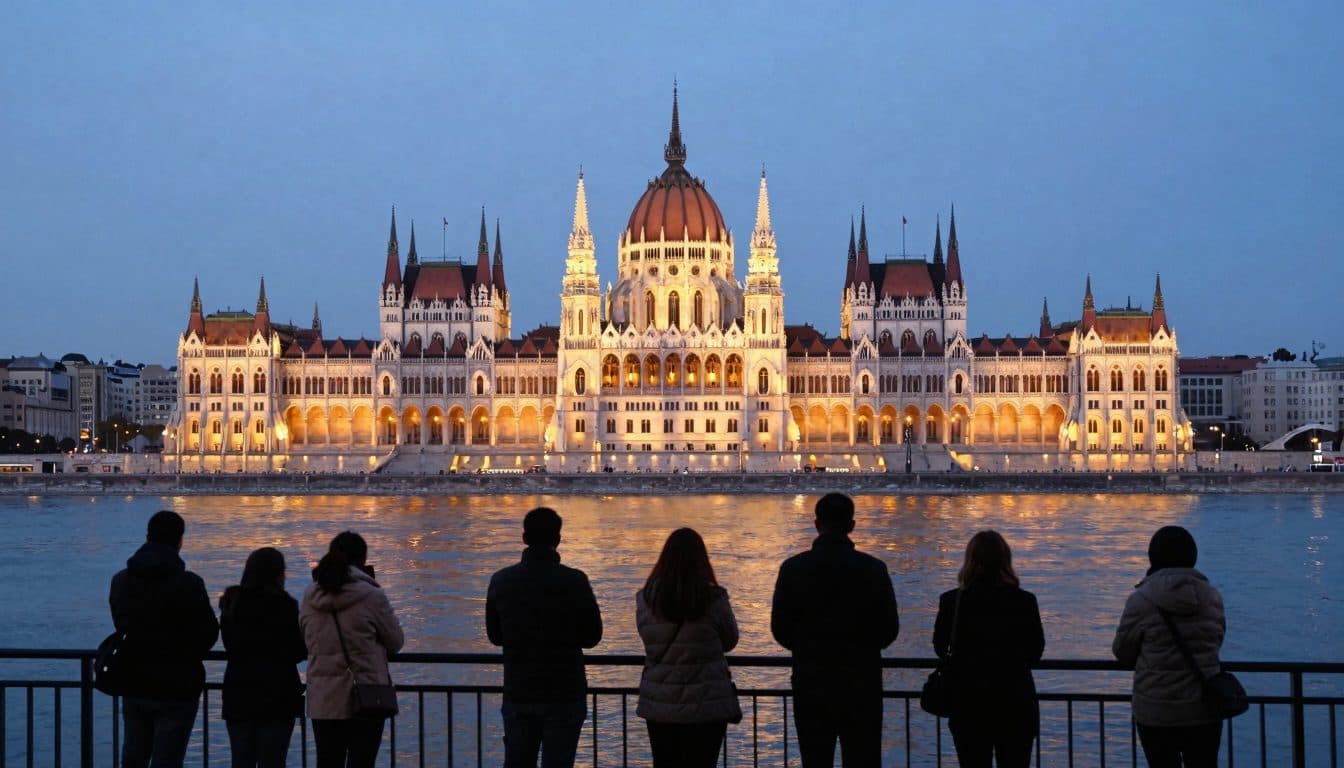
AI-generated image (z-image via Kie.ai)
Summary
The Hungarian government under Prime Minister Péter Magyar plans to limit the term of office of members of parliament to twelve years. The regulation is to become part of a comprehensive constitutional package and will only enter into force with the next regular parliamentary election in 2030. The former prime minister Viktor Orbán, who had sat in parliament without interruption since 1990, would also be affected.
Budapest, 4 July 2026
The Hungarian government plans to limit the term of office of members of parliament to twelve years, as Prime Minister Péter Magyar announced in Budapest; the regulation is to enter into force with the next parliamentary election in 2030 and would also apply to Viktor Orbán.
The Hungarian government wants to restrict the term of office of members of parliament to twelve years. Prime Minister Péter Magyar announced the corresponding step on the sidelines of a parliamentary session in Budapest, as reported by the dpa news agency. The limitation is part of a larger constitutional package that has already been introduced into parliament.
Magyar explained that the time limit should take effect with the next parliamentary election. „Die Befristung der Abgeordnetentätigkeit solle mit der nächsten Parlamentswahl in Kraft treten, erklärte Magyar“, heißt es in der Meldung des Deutschlandfunks vom 4. Juli 2026. He emphasised that the current parliament would explicitly not be affected.
Background: Political Renewal as a Programme
Hungarian parliamentary elections are held regularly every four years. According to Magyar, the next regular election is scheduled for the year 2030. The new regulation would therefore only apply at the earliest from that point – members of parliament who won a mandate in the 2026 election could exercise it without restriction.
Legal Requirements in Parliament
The step is particularly significant with regard to the former prime minister Viktor Orbán. Orbán was a member of parliament without interruption from 1990 until recently. In the April 2026 election he was elected again to parliament as the lead candidate of his Fidesz party, but did not take up the mandate. The new twelve-year limit would prevent him – he is now 63 years old – from standing again as a candidate in 2030 after a total of 36 years as a member of parliament.
Orbán was head of government from 1998 to 2002 and from 2010 until his ousting in spring 2026. Following the victory of Magyar's Tisza party in April 2026, he lost the office of prime minister. The question of whether he could run again as a member of parliament in four years is effectively answered by the planned constitutional amendment.
Open Questions: Design and Transitional Periods
For constitutional amendments, the Tisza party has the required two-thirds majority in parliament, according to the dpa report. The government can therefore in principle push through the limitation of the term of office without the consent of the opposition. Magyar pointed out that the reform is part of a comprehensive package that is still to be passed in this legislative period.
Reactions from Politics and the Public
The twelve-year limitation is oriented towards international standards. Comparable regulations exist, for example, in Russia, where members of parliament may likewise remain in office for only a limited number of consecutive electoral periods. Magyar justified the step with the aim of ensuring a regular turnover of personnel in parliament and encouraging long-serving mandate holders to step down.
Outlook: Further Constitutional Amendments Expected
It initially remained unclear how the twelve years are to be calculated in concrete terms – whether only consecutive or also past mandates are to be added together. Transitional arrangements for members of parliament who have already served for a long time were likewise not explained in detail by Magyar. The constitutional package provides, according to dpa, that the current parliament is excluded from the regulation.
Regardless of how the details turn out, the immediate effect would be limited. Magyar himself stressed several times that the current legislative period would not be touched. All members of parliament elected in 2026 would therefore still have at least until 2030 to exercise their mandates without restriction. Only after that does the new regulation take effect.
Impact on the Political System
Reactions from the ranks of the Fidesz party had not been received by the evening of 4 July 2026. Orbán himself had spoken out publicly on several occasions since his ousting in spring 2026; a statement on the planned mandate limitation was initially not known. Nor was there any initial reaction from the office of President of State Tamás Sulyok, who under the constitution plays a central role in signing constitutional amendments.
Observers pointed out that the reform is primarily of symbolic significance. Since the next regular parliamentary election does not take place until 2030, current mandate holders have sufficient time to plan their political careers. At the same time, the government is sending a clear signal with the reform in favour of limited terms in the legislature.
The limitation of the term of office is not the only project in the current constitutional package. Magyar had previously announced that he wanted to tackle further institutional reforms. According to dpa, these include, among other things, amendments to the rules of procedure of parliament as well as possible adjustments to the staffing of constitutional bodies. A timetable for the individual steps has not yet been made public.
With the two-thirds majority of the Tisza party in parliament, the legal requirements for implementation are considered to be met. Should the constitutional package be adopted in the intended form, Hungary would, with the twelve-year limitation, mark a clear break with previous practice, in which individual members of parliament sometimes sat in parliament for decades.
The reform touches the balance between the governing majority and the opposition. While the Tisza party as the strongest parliamentary group could also be affected by the regulation in the long term, in the short term it primarily hits long-serving mandate holders of other parties. Observers see this also as a course being set for the political renewal of the country following the change of government in spring 2026.
Overall, it remains to be seen in what form the constitutional package will ultimately be adopted. The announcement of 4 July 2026 nevertheless marks the starting point of a debate that will accompany Hungarian domestic politics in the coming months. Magyar described the step as a contribution to strengthening democracy.
Questions & Answers
Who is Péter Magyar?
Péter Magyar is the incumbent Hungarian Prime Minister and chairman of the Tisza party, which, following the parliamentary election in April 2026, has a two-thirds majority in parliament.
Why would the new regulation be relevant for Viktor Orbán?
Viktor Orbán had been a member of parliament without interruption since 1990; a twelve-year limit would prevent him from standing again for a mandate in the next regular election in 2030.
When is the mandate limitation to enter into force?
According to Magyar, the limitation of the term of office of members of parliament is to take effect with the next regular parliamentary election in 2030; the current parliament is explicitly not affected.
Hungary: Twelve-Year Term Limit for Members of Parliament | allfacts360