More than 500 confirmed deaths in the Ebola outbreak in the Democratic Republic of the Congo
Kinshasa, July 6, 2026
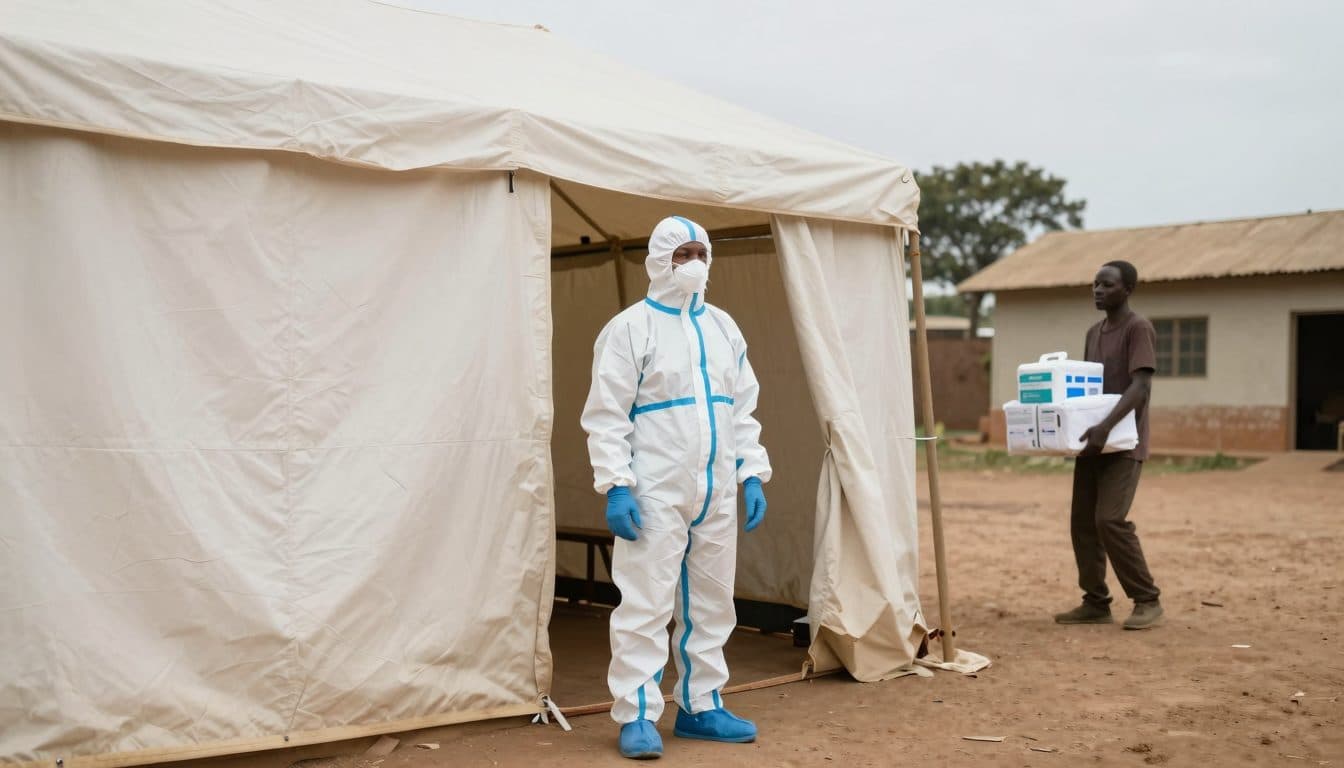
AI-generated image (z-image via Kie.ai)
Summary
The Ministry of Information of the Democratic Republic of the Congo announced on Monday that more than 500 people have died from the Ebola virus since the start of the outbreak declared in May. In neighboring Uganda, 19 cases have been recorded, including two fatalities, linked to the hotspot located in the northeast of the country.
Kinshasa, July 6, 2026
The Ministry of Information of the Democratic Republic of the Congo announced on Monday that the country has crossed the threshold of 500 confirmed deaths from the Ebola outbreak declared in May, with 1,561 cases recorded and patients continuing to flee isolation centers.
A toll exceeding 500 deaths
The current outbreak, which has now lasted nearly two months, continues to spread in the Democratic Republic of the Congo. On Monday, the Ministry of Information of the Central African country indicated that the disease had now caused more than 500 deaths, according to a count based on laboratory-confirmed cases. In total, 1,561 cases have been recorded since the start of the flare-up, the same source added.
Among those being cared for, 628 patients are currently hospitalized or held in isolation centers, while 253 are considered recovered, the ministry added. The Ebola virus, which is transmitted through physical contact and bodily fluids, remains a deadly disease against which the health response is running into numerous logistical and security obstacles in the eastern part of the country.
Cross-border spread and the situation in Uganda
The outbreak is not confined to Congolese borders. In neighboring Uganda, 19 people have fallen ill from the Ebola virus and two of them have died from this highly dangerous disease, directly linked to the hotspot identified in the northeast of the Democratic Republic of the Congo. This figure, confirmed by several regional health sources, illustrates the cross-border dimension of the crisis and the difficulties in containing the spread of the pathogen.
Africa CDC concerned about escapes from isolation centers
The African public health organization Africa CDC has voiced its concerns about a phenomenon that is aggravating the situation: patients who tested positive for the Ebola virus have, on several occasions, fled isolation centers. These escapes undermine efforts to break the chains of transmission and expose surrounding communities to an increased risk of contamination, in areas where access to care remains limited and where distrust of health facilities is sometimes strong.
The scientific context further complicates the task of health authorities and humanitarian organizations mobilized on the ground. The strain responsible for the current outbreak, identified as the Bundibugyo type, has to date neither a licensed vaccine nor any authorized specific therapy. This lack of proven preventive and curative tools makes the response particularly difficult to organize and slows the ability of medical teams to protect the most exposed populations.
A strain without a licensed vaccine or treatment
In the face of this therapeutic gap, clinical trials have nevertheless been launched. Since the previous week, two antiviral treatment protocols against the Ebola virus are being tested, in order to assess their efficacy and tolerability in infected patients. These trials represent a hope for caregivers and patients, even though results are not expected for several weeks.
The flare-up, officially announced in May, is one of the deadliest recorded in recent years in the Democratic Republic of the Congo, a country already confronted on several occasions with outbreaks of viral hemorrhagic fever. Health authorities, supported by international partners, are trying to intensify epidemiological surveillance, contact tracing and the care of patients in the affected areas.
Local communities located near treatment centers play a central role in the fight against the spread of the virus. Awareness-raising about hygiene measures, safe burials of the deceased, and rapid identification of suspected cases are among the operational priorities, but their implementation remains uneven depending on the regions and the logistical capacities available.
Several structural factors are worsening the ongoing health crisis. The persistent insecurity in certain provinces of eastern Congo, population displacements linked to armed conflicts, and the degraded state of health infrastructure are limiting the reach of interventions. These obstacles complicate the delivery of medical equipment, the training of caregivers and the deployment of vaccination teams when a vaccine is available.
Structural obstacles to the response
The appearance of cases in Uganda highlights the vulnerability of neighboring countries, where cross-border population movements — often intense and informal — favor the spread of the virus. Ugandan authorities have stepped up surveillance at entry points and in border districts, in coordination with the World Health Organization and Africa CDC, in order to detect any new cases early.
International mobilization is being organized around several actors, including the World Health Organization, Médecins sans frontières and other medical NGOs present in the region. Their technical and financial support is considered essential to bolster local health facilities, train medical staff and ensure continuity of care in a context marked by humanitarian emergency.
Congolese authorities have called for the cooperation of the population to contain the outbreak, stressing the need to go quickly to a health center in case of symptoms and to comply with isolation protocols in the event of confirmed contamination. Without broad community buy-in, containment efforts risk being compromised, as illustrated by the repeated escapes reported by Africa CDC.
As the toll mounts, pressure is intensifying on health authorities and their partners to accelerate therapeutic research and strengthen response capacities. The ongoing clinical trials on two antivirals are in this respect a hopeful signal, but their outcome will depend on the scientific rigor of the protocols and the ability to include enough patients in the cohorts being studied.
Toward an intensification of the international response
The international community is closely monitoring developments in the situation, aware that an uncontrolled outbreak in this densely populated region, beset by multiple fragilities, could have major humanitarian consequences. The symbolic threshold of 500 deaths marks a turning point in the perception of the crisis and underscores the urgency of a coordinated response, proportionate to the health and logistical challenges to be met.
Questions & Answers
How many people have died from Ebola in the Democratic Republic of the Congo?
According to the Congolese Ministry of Information, more than 500 people have died from the Ebola virus since the start of the outbreak declared in May, out of a total of 1,561 confirmed cases. This toll was announced on Monday.
What is the situation of the outbreak in Uganda?
Nineteen people have fallen ill from Ebola in Uganda and two of them have died, it was learned from an official source. These cases are linked to the epidemic hotspot located in the northeast of the Democratic Republic of the Congo.
Why is the current outbreak particularly difficult to contain?
Africa CDC reported that patients who tested positive have on several occasions fled isolation centers, complicating the breaking of transmission chains. In addition, the Bundibugyo strain responsible for the outbreak has neither a licensed vaccine nor any authorized specific therapy.
Ebola in DRC: more than 500 deaths as the toll rises | allfacts360