Netanyahu Accuses Israel of Rescue from Nuclear Threat by Iran – Opposition Criticizes Framework Agreement
Jerusalem, 16 June 2026
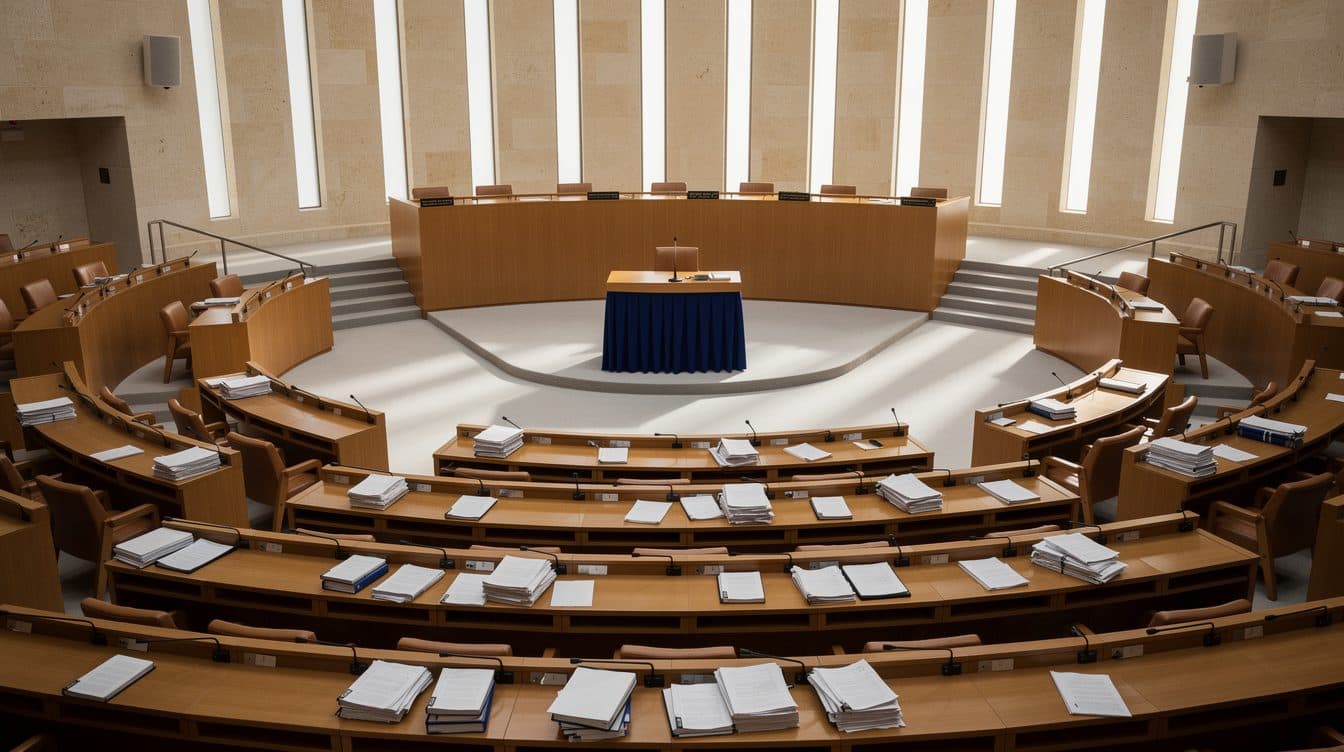
AI-generated image (flux-2/pro-text-to-image via Kie.ai)
Summary
Israeli Prime Minister Benjamin Netanyahu has declared that his country was saved from nuclear annihilation through the wars against Iran. At the same time, he announced that the Israeli army will remain in security zones in the Gaza Strip, southern Lebanon, and Syria for as long as necessary. The framework agreement between the USA and Iran is to be signed on Friday in Switzerland.
Jerusalem, 16 June 2026
Israeli Prime Minister Benjamin Netanyahu has declared that his country was saved from a nuclear threat by Iran through military attacks conducted jointly with the United States, while the USA and Iran are preparing a framework agreement to end the war, which is to be signed on Friday in Switzerland.
Background of the Statement
Israeli Prime Minister Benjamin Netanyahu addressed the planned framework agreement between the United States and Iran in a series of statements on Tuesday. He said Israel had been "saved from the threat of nuclear annihilation." The wars against Iran and its allies had prevented the Islamic Republic from acquiring nuclear weapons. In his exact words, he declared: "We have saved the State of Israel from the threat of nuclear annihilation."
Netanyahu justified his assessment with reference to the military cooperation with Washington. Without the massive attacks carried out jointly with the USA, "Iran would already have nuclear bombs," he said. At the same time, he emphasized that the fight against Iran and its regional allies was not yet over. According to his words, the nuclear threat from Tehran has been pushed back "by years" through the war operations.
Contents of the Framework Agreement
The prime minister also turned against any negotiating weakness toward Tehran. He assured that he would never tolerate a nuclear armament of Iran – regardless of whether the agreement comes about or not. "With an agreement or without an agreement – Iran will not have nuclear weapons," said Netanyahu. He added: "As long as I am Israel's prime minister, this will not happen."
In terms of content, the framework agreement provides, among other things, for an extension of the ceasefire and the reopening of the Strait of Hormuz. After weeks of negotiations, the USA and Iran had agreed on the key points of an arrangement to end the war. The formal signing of the framework agreement is planned for Friday in Switzerland.
Tensions with Washington
According to US Vice President JD Vance, the agreement has already been signed digitally. On the exact content and the details still outstanding, Netanyahu said: "We do not yet know what the agreement will look like." He pointed out that he was responsible for Israel's security policy interests and announced that the details of the arrangement would be carefully examined before Israel takes a final position.
Despite Washington's fundamental approval of the agreement, there are tensions between Jerusalem and Washington. When asked about reports of disagreements with US President Donald Trump, Netanyahu acknowledged that the two were "not always of the same opinion." He thereby picked up on a previously emerged dispute without going into its substance. The relationship between the two governments is considered in the region a decisive factor for the future security architecture in the Middle East.
Security Zones in the Region
Parallel to the diplomatic development, Netanyahu announced that the Israeli army would remain in the security zones in the Gaza Strip, southern Lebanon, and Syria. He phrased it in the words: "for as long as necessary." He did not name a deadline for a possible troop withdrawal. The statement was understood as a signal to Hezbollah in Lebanon, to Hamas in Gaza, and to the Iranian proxies in Syria that Israel intends to maintain its military presence in the region for the foreseeable future.
In Israeli domestic politics, the framework agreement meets with sharp criticism, especially from the opposition. Critics accuse Netanyahu of having turned a success of diplomacy into a capitulation to Tehran through the arrangement. The accusation is also being raised that Netanyahu endangered Israel's security through excessive military escalation. In several statements by opposition politicians, it was said that the government had not resolved the nuclear threat, but merely postponed it.
Domestic Political Criticism
In fact, the Iranian leadership also assumes that the nuclear threat has not been permanently eliminated. Tehran has repeatedly stressed in the past that it does not seek nuclear weapons and that it operates its nuclear program exclusively for civilian purposes. Should Iran adhere to this line in the long term, the arrangement could serve as a lasting de-escalation. Should it be abandoned, however, observers assess that a renewed arms race in the region threatens.
Meanwhile, Netanyahu sticks to his portrayal that Israel's conduct of the war made the decisive difference. Without the "massive attacks" carried out jointly with the USA, Iran would, in his words, "already have nuclear bombs." In a scenario in which Iran had come into possession of nuclear weapons, "millions of Israelis" would have been in "mortal danger," he said. These remarks point to the nuclear worst-case scenario that the Israeli leadership cites as the background of its decision to wage war.
Outlook and Open Questions
Security experts in Israel point out that the framework agreement does not represent a definitive solution, even if it is signed as planned. Although Iran's nuclear activities have been set back by the attacks, the underlying technological capabilities remain. A return to the status quo ante – that is, to the situation before the war in June of last year – can, in the view of several analysts, be prevented only through permanent diplomatic and military control.
In his statement, Netanyahu also emphasized that the security zones in Israel's three neighboring countries serve not least to contain Iranian influence. The Israeli army operates in these zones to cut off the supply of weapons to Hezbollah, Hamas, and other Iranian proxies. In doing so, the government closely links regional security policy with the fight against Iran's nuclear armament.
It remains unclear how the agreement will be received by the Israeli public. Opinion polls from recent weeks point to a divided population: while parts of the population favor the diplomatic solution, others see it as a sign of weakness. The final assessment is likely to depend on which concrete conditions are signed in Switzerland and how implementation proceeds in the coming months.
International observers assess the conclusion of the framework agreement as a diplomatic turning point. It would be the first comprehensive agreement between the USA and Iran in years that could durably reduce tensions in the region. At the same time, analysts warn that the arrangement will hold only if the USA and Israel maintain their common line. Disagreements between Netanyahu and Trump, as have recently been hinted at, could jeopardize the success of the agreement.
For the coming days, the Israeli government expects an intense debate over the details of the framework agreement. Netanyahu announced that the arrangement would be examined in detail before Israel adopts a final position. Until the signing on Friday in Switzerland, the discussion in Jerusalem, Washington, and Tehran is likely to continue – with far-reaching consequences for the security situation in the Middle East.
Questions & Answers
What did Netanyahu say about the threat from Iran?
Benjamin Netanyahu declared that Israel had been saved from a nuclear armament by Iran through the military attacks conducted jointly with the USA. He stated verbatim: "We have saved the State of Israel from the threat of nuclear annihilation" and described an Iranian nuclear bomb as an existential danger for millions of Israelis.
When and where is the framework agreement to be signed?
The framework agreement between the USA and Iran is to be signed on Friday in Switzerland. According to US Vice President JD Vance, it has already been signed digitally, although the exact content is not yet fully known.
Why is the opposition in Israel criticizing the agreement?
The Israeli opposition accuses the government of capitulating to Iran with the framework agreement. It criticizes that Israel's security is not permanently guaranteed and that the military escalation is what first led the country into the crisis.
Netanyahu Israel nuclear threat Iran framework agreement | allfacts360