Passenger car density in Germany rises to a record 593 | allfacts360
Record figure: 593 cars per 1,000 inhabitants in Germany
Wiesbaden, 22 July 2026
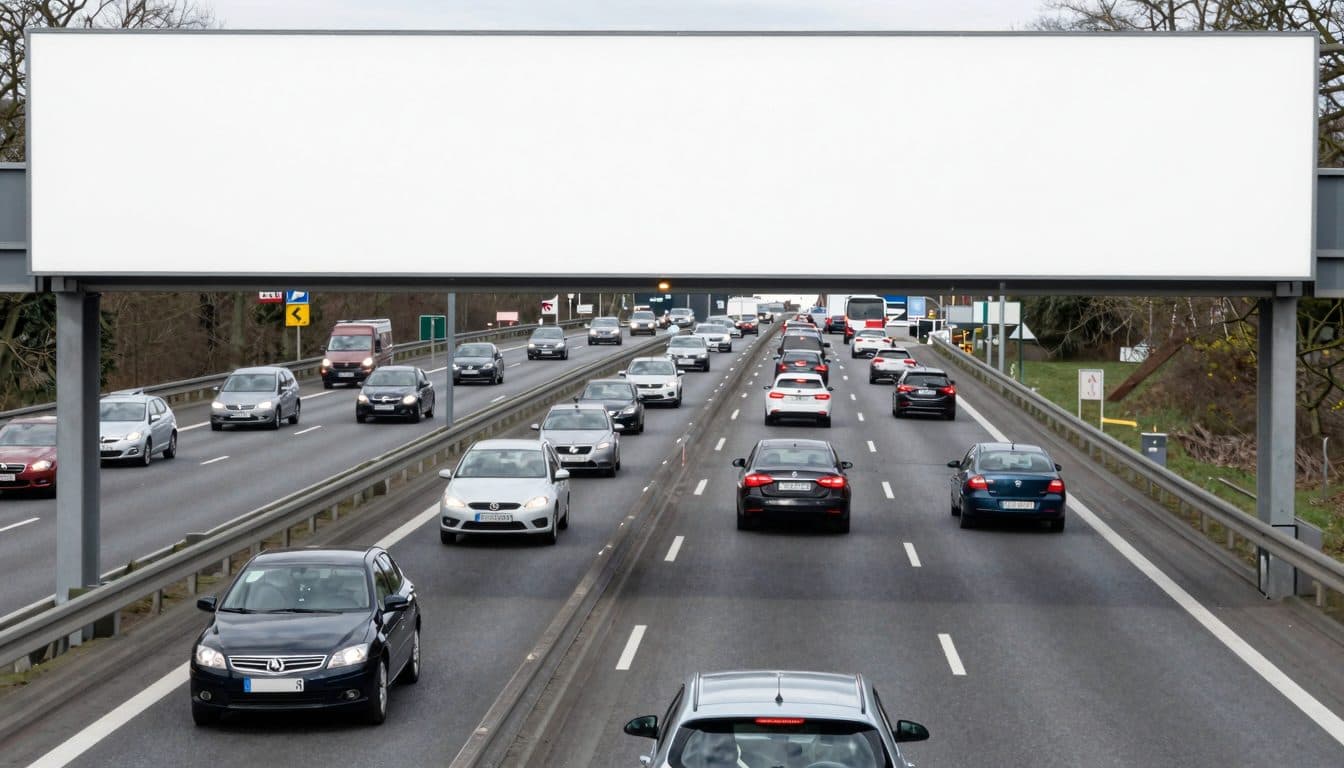
AI-generated image (z-image via Kie.ai)
Summary
As of the reference date 1 January 2026, around 49.5 million passenger cars were registered in Germany – more than ever before. That equates to an average of 593 passenger cars per 1,000 inhabitants, as reported by the Federal Statistical Office in Wiesbaden.
Wiesbaden, 22 July 2026
As of the reference date 1 January 2026, around 49.5 million passenger cars were registered in Germany, pushing passenger car density, according to the Federal Statistical Office's calculations, to a record 593 cars per 1,000 inhabitants.
Background: Record figure for passenger car density
The passenger car density in Germany has reached a new high. As the Federal Statistical Office announced on Wednesday in Wiesbaden, at the beginning of 2026 there were on average 593 passenger cars per 1,000 inhabitants. That was three more than in 2025 and five more than in 2024.
Behind the rise is another increase in the number of registered cars: as of 1 January 2026, around 49.5 million passenger cars were registered in Germany – "more than ever before." Compared with the previous year, that represents an increase of about 200,000 vehicles, after the beginning of 2025 had already seen 49.3 million cars counted. "Since 2008, passenger car density has risen continuously," the assessment stated.
The current figures are based on data from the Federal Motor Transport Authority (KBA) and calculations by the statistical offices of the Federation and the Länder. The statisticians determine density by relating the number of registered passenger cars to the population figure. For the most recent release, the stock as of the reference date 1 January 2026 was evaluated.
Regional differences between city-states and territorial states
The number of cars rose faster than the population. Compared with 2023, density increased by 0.9 percent according to the Federal Statistical Office, placing it 7.0 percent above the level of the corona year 2020. The rising passenger car density thus continues a trend that has been in place since 2008 and also reflects the demand for travel by car.
However, the differences between the Länder are considerable. While car density rose in all territorial states compared with the previous year, the three city-states continue to show markedly lower figures. Berlin recorded the lowest density, at 330 cars per 1,000 inhabitants, followed by Hamburg (432) and Bremen.
At the top of the territorial states is Saarland: there, 1,000 people own an average of 649 cars – three more than a year earlier. The next places go to Rhineland-Palatinate (644) and Bavaria (639). The Federal Statistical Office attributes the higher figures in some regions, among other things, to a lack of transport infrastructure and longer commuting distances: "Gründe dafür könnten laut Statistischem Bundesamt die mangelnde Verkehrsinfrastruktur und längere Pendelwege in diesen Regionen sein."
Mileage in 2024: More kilometres than in the corona year
The many cars are also being used more again. For 2024, the national environmental-economic accounts for Germany show a mileage of 576.3 billion kilometres. In 2019, before the coronavirus pandemic, the number of kilometres driven was still nearly 640 billion. The mileage for 2024 thus clearly exceeded the level of the crisis year 2020, without fully reaching the previous peak.
In a European comparison, Germany is in the middle of the pack for passenger car density. The leader in the EU is Italy with more than 700 vehicles per 1,000 inhabitants. Germany thus belongs to the countries with high, but not the highest, motorisation in the European Union.
Reasons for the high density
The persistently high vehicle density also has implications for road traffic, the environment and urban planning. While rural areas often depend on the car because public transport services are less frequent and journeys to work or school are longer, the city-states rely more heavily on buses, trains and bicycles – which is reflected in markedly lower density figures.
For the coming years, the statisticians expect registration figures to continue rising, should the trend observed since 2008 persist. The increase in passenger car density in the territorial states is attributed above all to rural areas, where the car often remains the only flexible mobility option. Motorised individual transport thus remains a central issue of transport and climate policy.
Passenger car density is regarded as a key indicator of a country's motorisation and is updated regularly by the Federal Statistical Office on the basis of KBA registration data. The next regular publication by the statisticians will show whether the upward trend that has persisted since 2008 continues or weakens again in some regions.
Consequences for transport and climate policy
At the same time, the debate over alternatives is growing: electric cars, car-sharing services and the expansion of local public transport are intended to reduce dependence on one's own passenger car. Whether such offerings can lower density will only become clear in the coming years – for now, the number of registered cars in Germany continues to rise.
Passenger car density in Germany therefore remains at a record level. While Berlin, Hamburg and Bremen as city-states lie clearly below the national average, Saarland, Rhineland-Palatinate and Bavaria top the list of territorial states. In an EU comparison, Germany trails Italy, which counts more than 700 cars per 1,000 inhabitants.
The statisticians emphasise that a high passenger car density does not necessarily mean high mileage – and vice versa. Mileage in the corona year 2020, for example, was lower than in the subsequent years, even though density has changed less markedly since then.
EU comparison: Italy at the top
The message is therefore twofold: on the one hand, the stock is growing; on the other, usage remains below the pre-pandemic level. Both trends together shape the picture of individual mobility in Germany at the beginning of 2026.
The rising passenger car density also mirrors demographic and economic change. In regions with weak public transport connections, owning a car is the only option for many people. Concepts such as on-demand transport, ride-sharing platforms and the expansion of digital booking systems are therefore gaining in importance.
Questions & Answers
How many cars per 1,000 inhabitants are there in Germany at the beginning of 2026?
According to the Federal Statistical Office, at the beginning of 2026 there were on average 593 passenger cars per 1,000 inhabitants – more than ever before (three more than in 2025, five more than in 2024).
Which federal state has the highest passenger car density?
Saarland tops the list of territorial states: there, 1,000 people own an average of 649 cars. It is followed by Rhineland-Palatinate (644) and Bavaria (639); Berlin has the lowest density, at 330.
What reasons does the Federal Statistical Office give for the rising passenger car density?
As possible causes for regionally higher figures, the Federal Statistical Office cites a lack of transport infrastructure and longer commuting distances in the respective regions.