Trump withdraws Hormuz fee after one day – military attacks on Iran continue
Washington, July 14, 2026
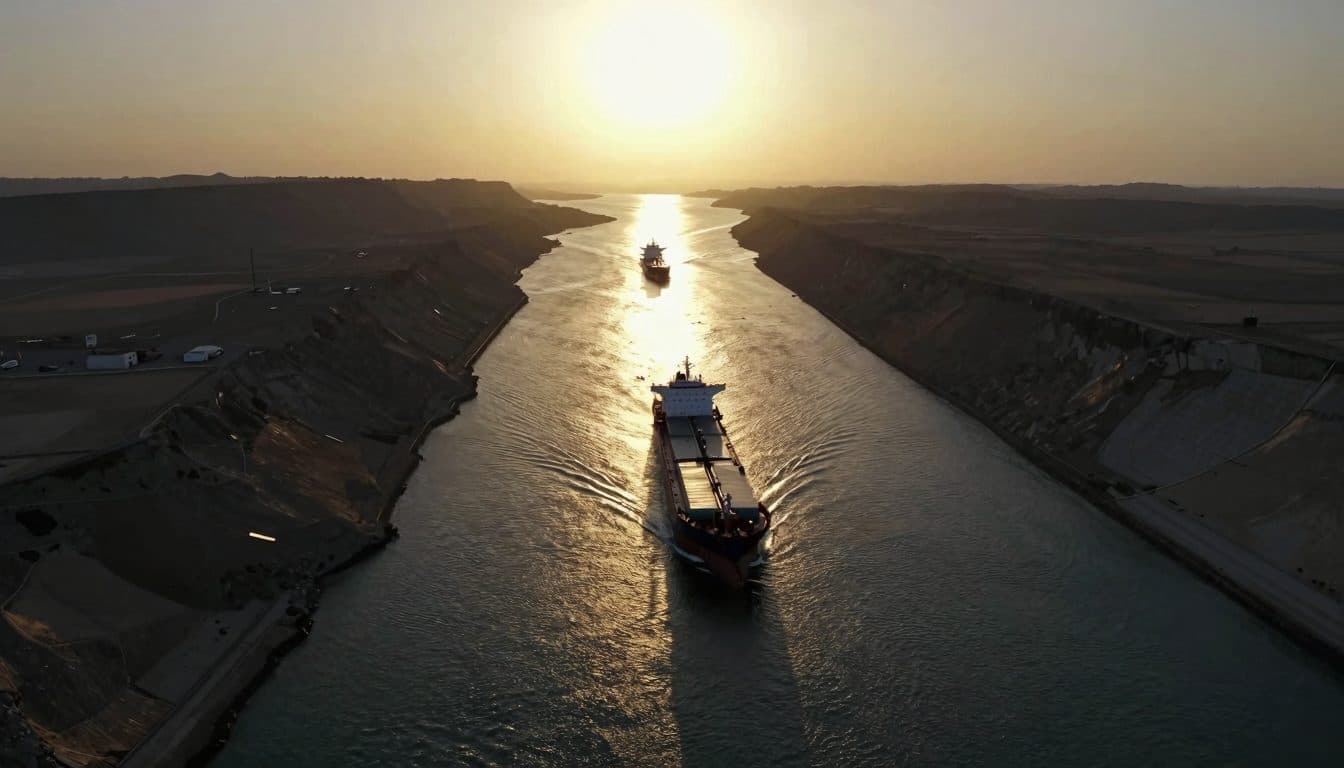
AI-generated image (z-image via Kie.ai)
Summary
US President Donald Trump has scrapped his 20-percent fee on ship cargo transiting the Strait of Hormuz, announced just one day earlier, following massive criticism. Instead, trade and investment agreements with the Gulf states are meant to secure revenues, while US forces continue their attacks on Iran.
Washington, July 14, 2026
US President Donald Trump has scrapped, just one day later, the 20-percent transit fee for ships passing through the Strait of Hormuz that he had announced the previous day, and wants to replace it with trade and investment agreements with the Gulf states.
Surprising About-Face
The reversal came as a surprise. Only about 24 hours after Trump had announced on his platform Truth Social that the United States would henceforth collect 20 percent of cargo value for the safe passage through the strategically important strait, he backtracked on Tuesday. "Due to extremely fruitful conversations with senior representatives from the Middle East, I have decided to replace the 20-percent reimbursement fee of the United States with trade and investment agreements that the various Gulf states will conclude with the United States," the US president wrote. The investments would be "massive" and benefit the Gulf states, he claimed.
At a press conference with the Iraqi prime minister, Trump went even further. He said he "does not like the concept of a fee" and considered it right that "nobody" should charge a fee for using the Strait of Hormuz. With this, the president publicly distanced himself from his own plan just hours before the announced entry into force of the levy at 10:00 p.m. CEST.
The original justification had sounded quite different. The day before, Trump had declared that the United States had to claim revenues amounting to 20 percent of cargo value for "reasons of fairness," since the United States guaranteed the safety of the ships. According to estimates, the fee would have brought the United States around 240 million dollars per day – a sum now to be replaced by opaque investment pledges.
Sharp Criticism from the Business Community
The move is met with sharp criticism. The chief executive of the German Shipowners' Association (VDR), Martin Kröger, told "Wirtschaftswoche": "No single state should unilaterally make free access to an international waterway dependent on fees." A legal expert described the plan as impermissible under international law. Kröger also emphasized: "That would not be legally permissible either." The fee would have massively driven up the cost of international goods traffic.
The economic consequences are already being felt. On the oil markets, there was no relief despite the about-face. A barrel of North Sea Brent for delivery in September most recently cost 85.37 US dollars, putting it 2.5 percent above Monday's level. At the beginning of July, the price had still fallen to around 70 dollars; at times it had risen to over 87 dollars for roughly a month. Analysts see the volatility as a direct consequence of the dispute over the Hormuz passage.
Military Escalation Continues
Regardless of the diplomatic signals, US military operations continue. According to a US official speaking to the Deutsche Presse-Agentur, the armed forces have targeted several military objectives in Iran "to eliminate emerging threats." Trump had accused the Iranian leadership of having led the country onto the "path of complete destruction." In a radio interview, he also hinted that the United States could attack a facility located deep underground in the center of Iran, also known as "Pickaxe Mountain."
The Strait of Hormuz thus remains a flashpoint of the conflict. Trump did declare that the strait was "open to all ship traffic with the exception of Iran." At the same time, he had only on Monday announced the resumption of the maritime blockade against ships heading to or departing from Iranian ports. According to army statements, this blockade was to begin on Tuesday at 10:00 p.m. German time – but was effectively called into question by the about-face.
A Setback for US Strategy
The reversal is a clear setback for US strategy. Just on Monday, Trump had presented the 20-percent fee as a "dramatic course change" for the United States, which had fundamentally championed free passage through international waters since the 19th century. Within a single day, this course was scrapped – an indication of the growing pressure from the region and from his own political environment.
German shipping is also directly affected. According to Martin Kröger, around 20 ships of German shipping companies are still stuck in the Persian Gulf. "At the beginning of the conflict there were 50, so we are initially very relieved about that," Kröger said on WDR5's business magazine. The uncertain situation and a possible US fee had made these goods extremely more expensive, the association chief explained.
The reaction from Tehran remains rejecting. Iranian state media reported that "not a single drop of oil and gas" would be exported from the region as long as the "malicious actions" of the United States continued. The "aggressions" of the United States would delay the reopening of the Strait of Hormuz, it said further. Thus the strategic waterway, through which a significant portion of global oil trade flows, remains a highly sensitive crisis hotspot.
Background: Conflict Since Late June
The background to the conflict is the US-Israeli attacks on Iran on June 28. Since then, the situation in the region has escalated massively. Trump had originally presented the fee as a legitimate compensation for the security services provided by the US Navy. With the evasive maneuver now announced via trade agreements, he is attempting to save face – without, however, providing a clear solution for the blocked shipping or the ongoing fighting.
Observers interpret the swift backtracking as a sign that domestic political and diplomatic pressure on the US government is growing. Allies in the Middle East had apparently intervened directly. How viable the trade agreements now promised actually are remained initially unclear. Trump spoke only of "massive" investments, without naming figures.
For the shipping companies, the situation remains precarious. Even without a formal US fee, rising insurance costs, longer routes, and military risks could significantly increase the cost of goods traffic through the region. The coming days will show whether Trump's reversal actually leads to a de-escalation – or whether the conflict over the Strait of Hormuz will continue to put pressure on global energy markets.
Overall, the episode illustrates the volatility of US foreign policy in the Iran crisis. First the blockade, then the fee, now the agreements – within 48 hours Trump has pursued three different lines. For international shipping, the Gulf states, and the global economy, this instability means above all one thing: ongoing uncertainty.
The coming days will show whether the announced talks with the Gulf states lead to concrete results. Until then, the Strait of Hormuz – one of the most important arteries of global energy supply – remains a powder keg where geopolitics, the economy, and military operations meet directly.
Questions & Answers
What is the current situation on the oil markets?
Despite the reversal, the price of a barrel of North Sea Brent rose to 85.37 US dollars, an increase of 2.5 percent compared to the previous day. At the beginning of July, the price had still been around 70 dollars; at times it had risen above 87 dollars.