World Bank estimates earthquake damage in Venezuela at $19.6 billion
Washington, July 24, 2026
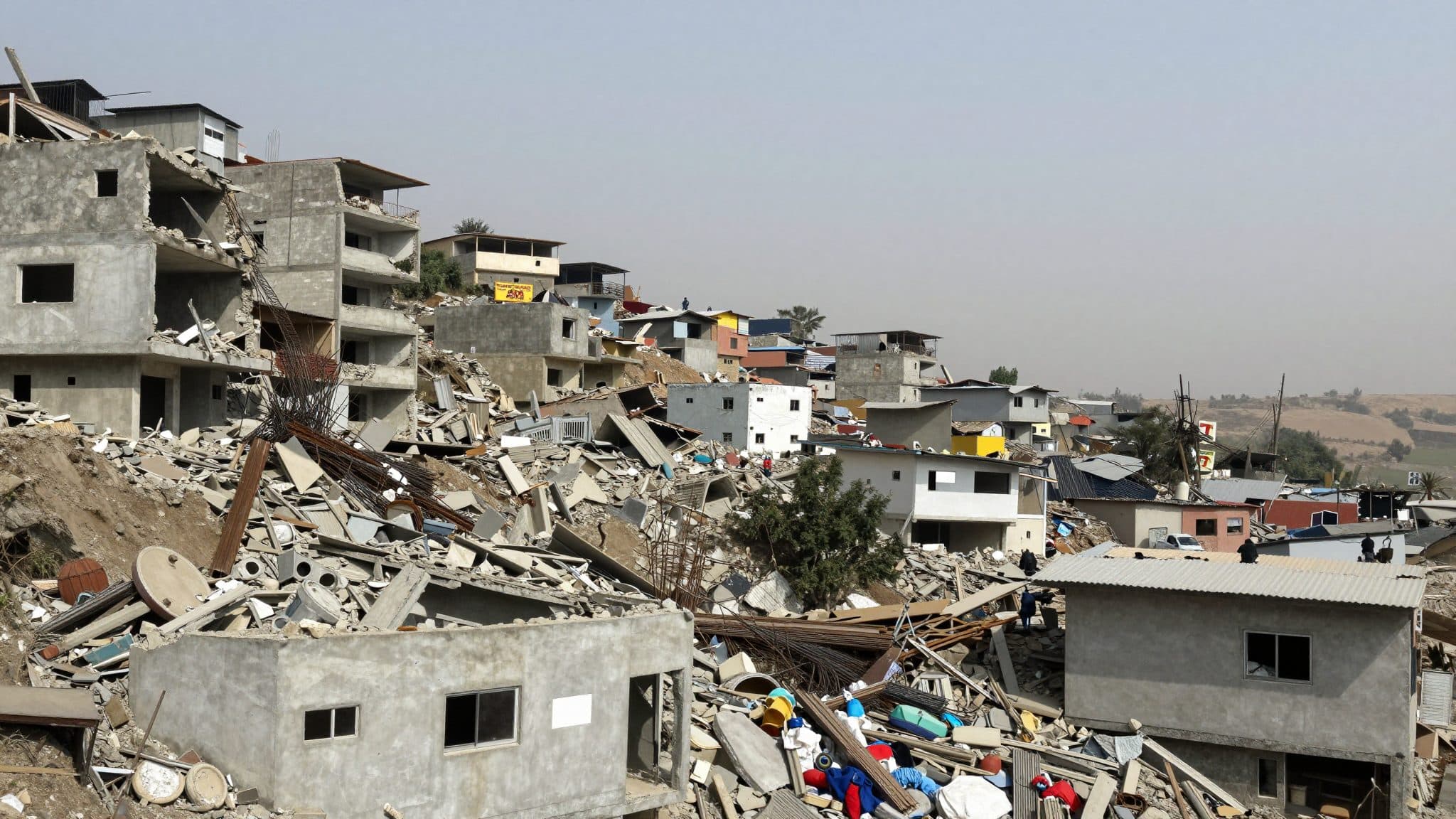
AI-generated image (z-image via Kie.ai)
Summary
The World Bank estimates the direct physical damage from the severe earthquakes in Venezuela at the end of June at 19.6 billion US dollars. Nearly half of this is attributable to residential buildings, while the humanitarian situation with more than 5,000 dead and millions in need of assistance remains critical.
Washington, July 24, 2026
The World Bank has estimated the direct physical damage from the two severe earthquakes in Venezuela at the end of June at 19.6 billion US dollars (approximately 17.2 billion euros), as the Washington-based institution announced.
Roughly one month after the devastating earthquakes in Venezuela, the World Bank has estimated the direct physical damage at at least 19.6 billion dollars (approximately 17.2 billion euros). According to the Washington-based institution, nearly half of this is attributable to residential buildings (47 percent), followed by infrastructure (27 percent) and non-residential buildings (26 percent). On June 24, two quakes measuring 7.2 and 7.5 struck the South American country.
Destruction concentrated in two regions
Geographically, the state of La Guaira as well as the Distrito Capital with the capital Caracas were hit hardest, the World Bank explained. These two areas account for roughly half of the direct physical damage. Hundreds of buildings were damaged or completely destroyed, including residential houses, schools, and health facilities, which now need to be rebuilt.
The number of officially confirmed fatalities has now risen to more than 5,000. According to the president of the Venezuelan National Assembly, Jorge Rodríguez, the number of confirmed fatalities now stands at 5,398. Some 16,740 people were injured. Nearly 18,000 people reportedly lost their homes in the disaster, and tens of thousands are still missing in Venezuela following the severe earthquakes.
Humanitarian situation remains tense
Many families are living in tents that offer them hardly any protection from heat and rain. The Malteser warned of the consequences of poor hygienic conditions in the emergency shelters. According to Save the Children, pregnant women and mothers in particular need medical care, nutrient-rich food, and safe accommodation.
According to UN estimates, around 36,700 pregnant women are affected by the earthquakes, with some 4,000 of them expected to give birth in the coming month. The United Nations assumes that 1.3 million people require humanitarian assistance as a result of the earthquakes.
Water supply as the most urgent task
According to Katja Dombrowski of Welthungerhilfe, the restoration of the water supply is particularly urgent. In the severely affected areas, the water infrastructure has been partially destroyed. People are therefore being supplied with bottled water, among other things, which is not a sustainable solution.
Many people have also lost their jobs, for example in the tourism-dominated coastal region of La Guaira. The economic consequences of the disaster are hitting a region that was already suffering from a severe economic crisis.
First IMF funds for reconstruction
The Venezuelan government is meanwhile trying to mobilize international financial resources for reconstruction. In the middle of the month, the Venezuelan government in Venezuela, according to the acting president Delcy Rodríguez, had drawn down 346 million US dollars from the International Monetary Fund (IMF). The funds from Venezuela's balance with the IMF are to be used for reconstruction and to support the affected families, Rodríguez announced on Telegram.
Venezuela and the International Monetary Fund, based in Washington, officially resumed their relations in April after a seven-year pause. Relations had been frozen after the IMF in 2019 – like the USA and other countries – recognized the opposition government under Juan Guaidó as the legitimate government of Venezuela and not that of ruler Nicolás Maduro. Maduro was overthrown in January by a US military operation, after which the USA and other states recognized the interim government under Rodríguez, and a rapprochement with the IMF followed.
Rapprochement with the IMF after political upheaval
Despite these initial funds, financing the reconstruction remains a central challenge. "Given the country's difficult economic situation and the global cuts in humanitarian aid, financing is a central challenge," said Dombrowski. Venezuela will be dependent on international support for reconstruction, Dombrowski said.
The acute emergency relief phase is now transitioning into a transitional aid phase, the Welthungerhilfe representative explained to the German Press Agency. "Now is the moment when it moves from acute emergency relief to transitional aid, that is, toward reconstruction," said Dombrowski.
Transition from emergency relief to long-term reconstruction
The World Bank pointed out that the estimate of 19.6 billion dollars covers only the direct physical damage. Medium- and long-term economic losses, for example from disrupted supply chains, lost tourism revenues, and the consequences for the local economy, have not yet been taken into account.
International aid organizations are calling for a significant increase in financial support. Welthungerhilfe and Save the Children emphasize that without sufficient funds, the reconstruction of housing, schools, and hospitals, as well as the supply of the population with drinking water and food, cannot be ensured.
International aid organizations call for more support
According to aid organizations, the situation in the affected areas remains precarious. With the end of the rainy season and the approaching winter in the Northern Hemisphere, the situation for the families who have become homeless threatens to worsen further, the Malteser warned. A sustainable solution can only be achieved through coordinated international aid.
The World Bank announced that it would further refine its estimates in the coming weeks and work with the Venezuelan government to develop a detailed reconstruction plan. The construction of more resilient infrastructure is also to play a central role in order to limit future damage from natural disasters.
Questions & Answers
How high does the World Bank estimate the damage from the earthquakes in Venezuela?
The World Bank estimates the direct physical damage at 19.6 billion US dollars (approximately 17.2 billion euros), with 47 percent attributable to residential buildings, 27 percent to infrastructure, and 26 percent to non-residential buildings.
How many people died in the earthquakes?
According to the president of the Venezuelan National Assembly, Jorge Rodríguez, the number of confirmed fatalities stands at 5,398, with more than 16,740 people injured.
What assistance is Venezuela receiving for reconstruction?
Acting president Delcy Rodríguez announced that 346 million US dollars had been drawn down from Venezuelan IMF balances; however, aid organizations such as Welthungerhilfe see a central funding gap in light of global cuts in humanitarian aid.
Venezuela earthquake: World Bank damage $19.6 billion | allfacts360