After Earthquake in Venezuela: International Search Teams Withdraw from Disaster Zone
Caracas, July 8, 2026
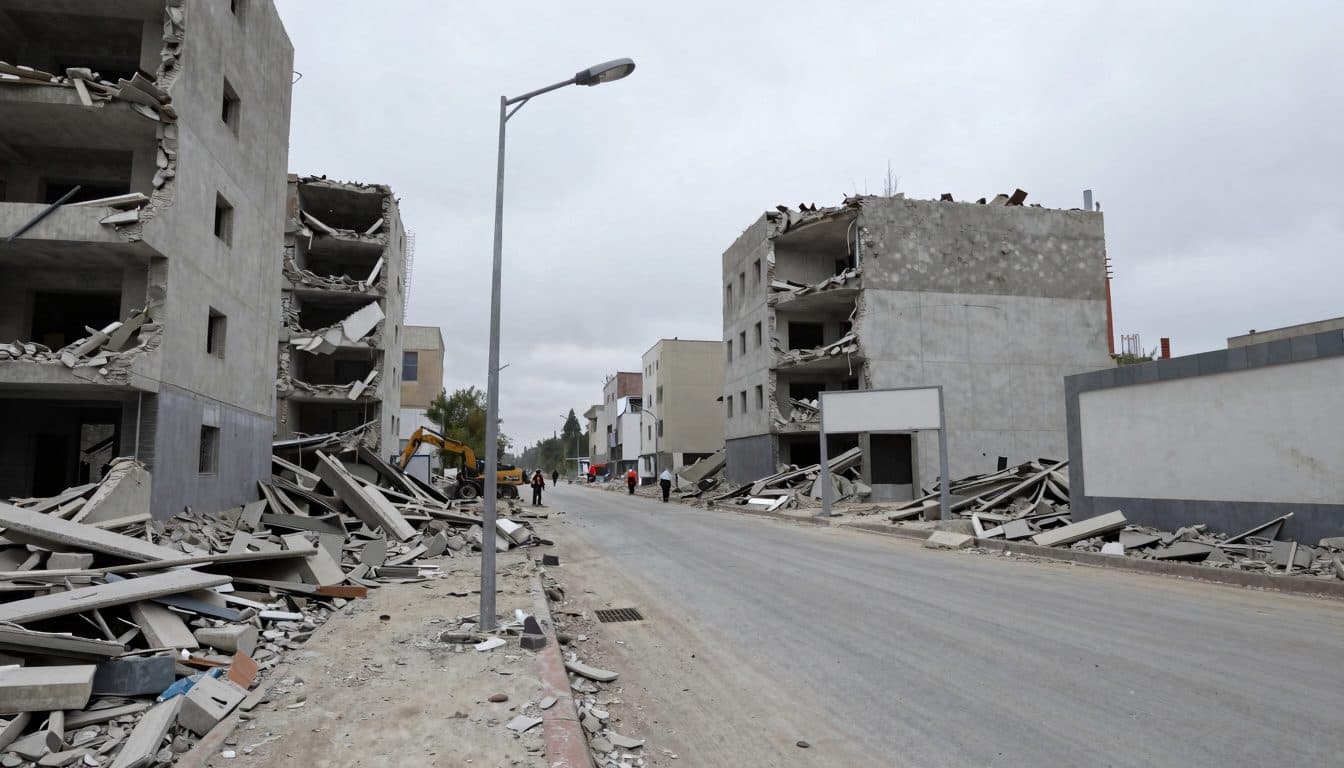
AI-generated image (z-image via Kie.ai)
Summary
Two weeks after the severe earthquakes in Venezuela, international search and rescue teams are pulling out of the disaster zone. The responders are now focusing on clearing debris and supplying survivors with food, water, and medical aid.
Caracas, July 8, 2026
Two weeks after two severe earthquakes of magnitudes 7.2 and 7.5 struck Venezuela, international search and rescue teams have largely left the disaster zone, handing operations over to local responders and clearance crews.
From Rescue Operation to Reconstruction
The earthquakes shook the South American country on June 24. Since then, the number of registered fatalities has risen continuously, according to the government. As the president of the National Assembly, Jorge Rodríguez, announced on Wednesday (MESZ) on the platform X, the death toll increased by around 150 cases within just 24 hours. According to official figures, it now stands at more than 3,600 dead.
Many international rescue teams have already left the country. The transition from the acute rescue phase to a reconstruction phase is explicitly not a surrender, the Mexican response team Topos México explained on platform X: „Das ist kein Aufgeben, sondern ein notwendiger Übergang hin zu einem würdigen Wiederaufbau“. At the same time, pressure is mounting from relatives demanding that the search for the missing not be ended prematurely.
Desperate relatives who still have not found their family members are demanding that the search continue — until their loved ones are found alive or dead, so that they can at least be given a proper burial, as the newspaper „El Nacional“ reported. Local response teams face the difficult task of weighing debris clearance against the hope of finding more survivors.
Relatives Demand Continued Search
In a video, a spokesperson for the international coordination addressed the public: „Wir fragen uns derzeit: Wie können wir diese Koordination in der nächsten Phase aufbauen, was die Versorgung mit Lebensmitteln, Wasser und Unterkünften sowie die benötigten medizinischen Einrichtungen angeht?“, he said. This shifts the focus from rescuing the living to caring for the survivors.
Among those rescued on June 24 is twelve-year-old Fabiana Blanco. She was at home alone at the time of the earthquakes, in the kitchen, when the first tremors shook the building. In an interview with the BBC, she described the moments of panic: „Ich sah Dinge wackeln, fallen, zerbrechen, und dann rissen die Wände. Die Wand, die meine Wohnung von der eines Freundes trennte, stürzte ein. In diesem Moment dachte ich: ‚Ich werde sterben. Ich werde das nicht überleben. Niemand wird mich retten.'“
Fabiana's Survival Under the Rubble
Fabiana Blanco was trapped under the rubble for 32 hours. During that time, she heard the voice of a nurse who had herself been buried and who had previously been caring for residents of the apartment building. The nurse was rescued around midnight, about six hours after the quake, and told the rescue teams that a girl named Fabiana was still alive.
Rescue workers dug a tunnel in the night of June 26 wide enough to extract the girl. Around 2:00 a.m. local time, 32 hours after the earthquakes, Fabiana was pulled out alive. A video showing the smiling girl after her rescue spread rapidly on social media.
In the disaster, Fabiana broke her left foot and suffered abrasions and bruises. She described the situation under the rubble as unexpectedly calm: „Ich bin jemand, der sehr ängstlich und klaustrophobisch wird. Aber ich weiß nicht, warum, eine seltsame Ruhe überkam mich. Vielleicht war mein Geist im Schockzustand.“ To stay conscious, she had searched for something edible among the debris. „Eines meiner Beine war in einer schmerzhaften Position gebeugt, und ich bewegte einige der Trümmer, damit ich es gerade richten konnte. Dabei zog ich mir Schrammen und Schnitte zu, aber ich fand eine Flasche Ketchup und etwas geriebenen Käse. Das hat mich bei Bewusstsein gehalten.“
A Twelve-Year-Old Narrator of the Disaster
After her rescue, Fabiana was taken in by her grandmother. Her mother Karina, who had been teaching a spinning class at the time of the quakes, had immediately set out for her daughter. Fabiana described how surreal the sight after the rescue felt to her: „Als ich herauskam, sah ich meine Familie, ich sah das komplett eingestürzte Gebäude, und es fühlte sich an, als wäre es nicht real, wie in einer Fernsehserie.“
The psychological aftermath of the experience is still felt today. Fabiana said that lying on her back still frightens her, as it reminds her of the time spent under the rubble.
Aid organizations are also expanding their efforts. In addition to foreign teams, local authorities, neighborhood initiatives, and international relief agencies are in operation. According to reports from the disaster zone, the distribution of food, drinking water, and emergency shelters is the top priority.
National Criticism and International Aid
In medical facilities, the injured are continuing to receive treatment. Relief efforts are hampered by damaged infrastructure, disrupted supply routes, and the need to bring in heavy equipment for debris removal. At the same time, rescue teams are trying to follow up on leads regarding additional people still buried.
The national leadership is facing growing pressure to publish transparent information about the number of missing persons. The opposition accuses the government of Nicolás Maduro of downplaying the scale of the catastrophe. Independent estimates are well above the official figures.
International aid is coming from, among others, Mexico, Colombia, and several European countries. Aid organizations such as the Red Cross are also active in the region. The United Nations says it has pledged financial resources for reconstruction.
Open Wounds and an Uncertain Future
For many families, the transition from the rescue to the reconstruction phase means an agonizing waiting period. Many residents of the affected neighborhoods have lost relatives or have been missing loved ones for days. Psychological support for survivors as well as for responders will play a central role in the coming weeks, according to aid workers.
With the withdrawal of the international search teams, responsibility shifts to local structures. The coming days will show whether this new phase of the operation can muster sufficient resources to care for survivors and provide a dignified burial for the dead.
The case of Fabiana Blanco stands as a symbol of the contradictions of the disaster: a girl survives 32 hours under the rubble, while the official death toll continues to rise. The story makes clear how fragile the balance is between the hope of rescue and the sober necessity of cleanup work.
Questions & Answers
What role does the case of twelve-year-old Fabiana Blanco play?
Twelve-year-old Fabiana Blanco was rescued alive from the rubble of her home 32 hours after the quakes, after a previously rescued nurse told rescue teams about her. Her story went viral and illustrates the contradictions between hope and loss.
Earthquake Venezuela: Search Teams Withdraw – Death Toll | allfacts360