Death toll from double earthquake in Venezuela rises to more than 3,300
Caracas, 05 July 2026
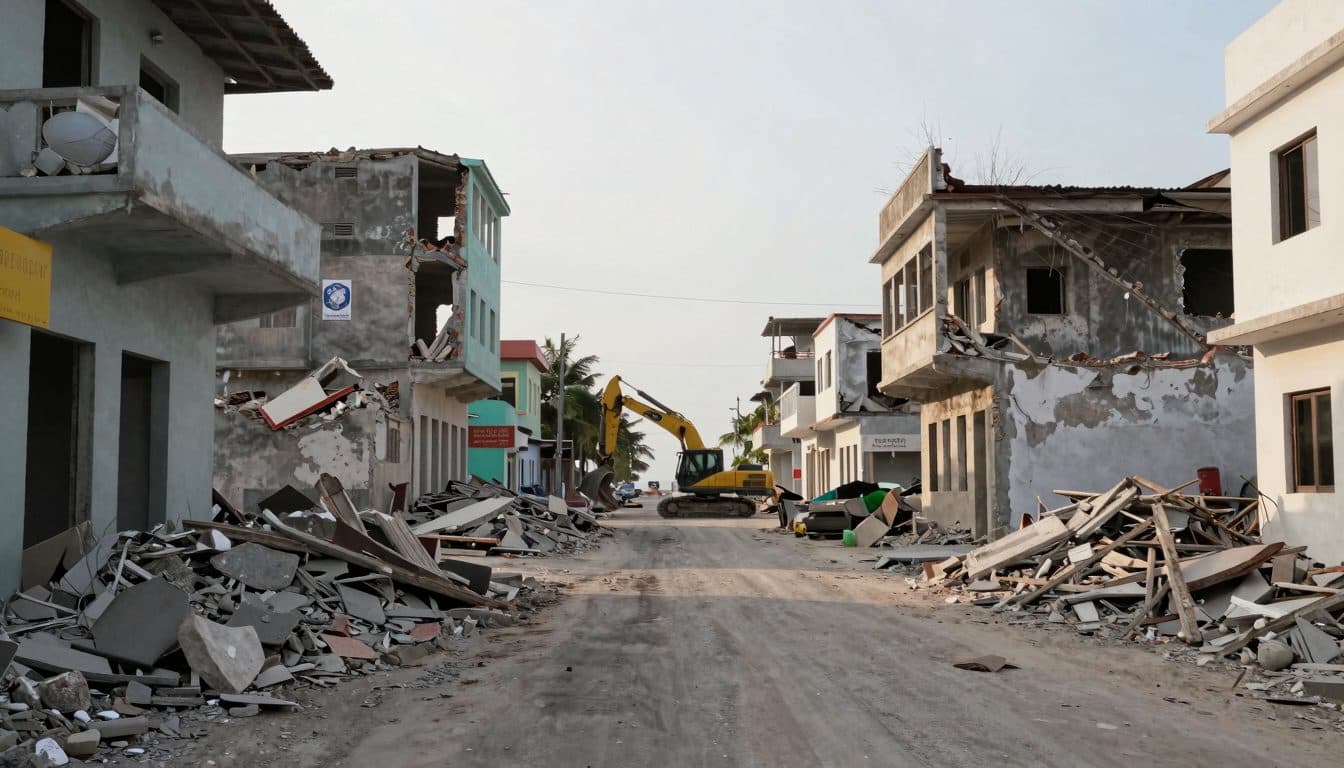
AI-generated image (z-image via Kie.ai)
Summary
Following the double earthquake in Venezuela, the number of recovered dead has risen to 3,342. The government of interim president Delcy Rodríguez faces growing criticism over what is perceived as a hesitant disaster response.
Caracas, 05 July 2026
After the severe double earthquake in Venezuela, the official death toll has risen to 3,342 according to government figures, while international aid workers, survivors, and humanitarian organizations accuse the government of a delayed and inadequate response.
The two earthquakes, of magnitudes 7.2 and 7.5, struck the South American country in quick succession on 24 June. Nearly two weeks later, search and recovery operations are still under way in several affected regions, the Ministry of Information in Caracas announced on Sunday.
According to this, 3,342 deaths have been recovered so far, the government announced yesterday. In addition, there are 16,470 injured, the ministry said. This raised the official toll significantly compared to the previously cited figure of around 2,900 dead.
More than 17,300 people lost their homes according to the figures. According to official data, 190 buildings collapsed as a result of the quakes, and a further 856 houses and buildings were severely damaged. Since the disaster, authorities have also registered 942 aftershocks.
Rising casualty figures and vast scale of destruction
The hardest-hit area was the state of La Guaira, located north of the capital Caracas. The coastal city of Maiquetía and the town of Catia La Mar are also among the most devastated areas along the Caribbean coast.
The US Geological Survey (USGS) estimates that up to 10,000 people may have perished in the natural disaster. According to United Nations estimates, the number of missing persons could be as high as 50,000. The government provided no information on the number of those still missing.
At the same time, frustration is growing over what some have characterized as a delayed and inadequate response to the disaster. Survivors and aid organizations accuse the authorities of sluggishness and inefficiency.
Accusations against the government
Interim president Delcy Rodriguez defended the government's approach in a speech marking the 215th anniversary of Venezuelan independence. "The government acted immediately after the disaster," she stated. She also announced the creation of a new military unit designed to assist in emergencies and disasters.
According to parliamentary president Jorge Rodríguez, 30,000 state emergency personnel have been mobilized. In addition, more than 3,000 international aid workers are deployed. Interim president Rodriguez rejected criticism of the rescue efforts, stating that she had promptly dispatched security forces and activated an emergency unit within the military.
Role of the military and international aid workers
Among other things, there is a lack of heavy equipment for clearing debris, which is why rescue operations are being carried out largely by civilians and foreign aid workers. Above all, there is a shortage of heavy equipment to clear rubble and search for those buried, aid organizations reported.
Eight days after the devastating double earthquake, Hernán Gil was rescued alive from the rubble of a collapsed building on Thursday. The 43-year-old security guard had been buried under the rubble of a collapsed multi-story building in the particularly hard-hit town of Catia La Mar during the earthquakes.
Rescue after eight days: the case of Hernán Gil
Gil lost track of time, but on the third day he heard footsteps, "though very far away," as he reported. He began calling for help and eventually heard a response. Rescue teams had maintained contact with the buried man over several days and supplied him with water.
Two rescuers from Chile and the USA reached him after a more than three-day operation. Emergency personnel from seven countries took part in the rescue. In the coastal city of Maiquetía, a man was also pulled alive from the rubble of a collapsed shopping center.
The security guard described the hours under the rubble to the AFP news agency on Sunday: "Das zweite Beben war unglaublich stark. Als das Gebäude zusammenbrach, fielen Steine auf seinen Kopf. Ich verlor für einen Moment das Bewusstsein. Als ich wieder zu mir kam, war alles dunkel, von da an war alles ungewiss." Regarding his survival, Hernán Gil said: "Ich wurde wiedergeboren."
The political situation in Venezuela remains confused. Delcy Rodríguez assumed power in January after her predecessor Nicolás Maduro was removed through a US-orchestrated overthrow. International recognition of the transitional government is limited, yet humanitarian aid is being coordinated.
Political background and international response
With each new damage assessment, pressure mounts on the transitional government to make its relief efforts more transparent. The United Nations are pressing for unhindered access for international aid workers, while aid organizations warn of a further deterioration of the already tense situation in the country.
The recovery of further victims and the provision of aid to the tens of thousands of homeless are likely to keep the transitional government occupied for weeks. International donor countries are promising additional funds, but are tying them to reliable information about the situation on the ground.
This report was broadcast on 05.07.2026 on Deutschlandfunk. The editorial team relies on information from the Venezuelan Ministry of Information, United Nations estimates, and reports from the AFP news agency.
Even days after the double earthquake, there remains a risk of collapse in several localities. Residents have been urged not to enter damaged buildings. Authorities continue to register aftershocks and are attempting to continue the search for survivors with international support.
The difference between the official 3,342 dead and the UN estimate of up to 50,000 missing underscores the scale of the disaster. Observers assume that the final casualty toll will only be determined once recovery operations are complete.
For those affected, the situation remains precarious: thousands of families are enduring conditions in emergency shelters, medical care is overwhelmed, and the supply of drinking water and food remains precarious in many places. International aid deliveries are to be expanded in the coming days.
Questions & Answers
What is the official death toll following the earthquake in Venezuela?
According to the Venezuelan Ministry of Information in Caracas, 3,342 deaths have been recovered so far, with 16,470 injured also registered.
What criticism is being leveled against the transitional government of Delcy Rodríguez?
Survivors and aid organizations accuse the authorities of sluggishness and inefficiency; interim president Delcy Rodríguez rejects the criticism and points to the immediate deployment of security forces and a new military unit.
How does the US Geological Survey (USGS) estimate the death toll, and how many missing persons do the United Nations fear?
The USGS estimates that up to 10,000 people may have perished, while the United Nations put the number of missing at up to 50,000.
Venezuela Earthquake: Death toll rises to 3,342 | allfacts360